
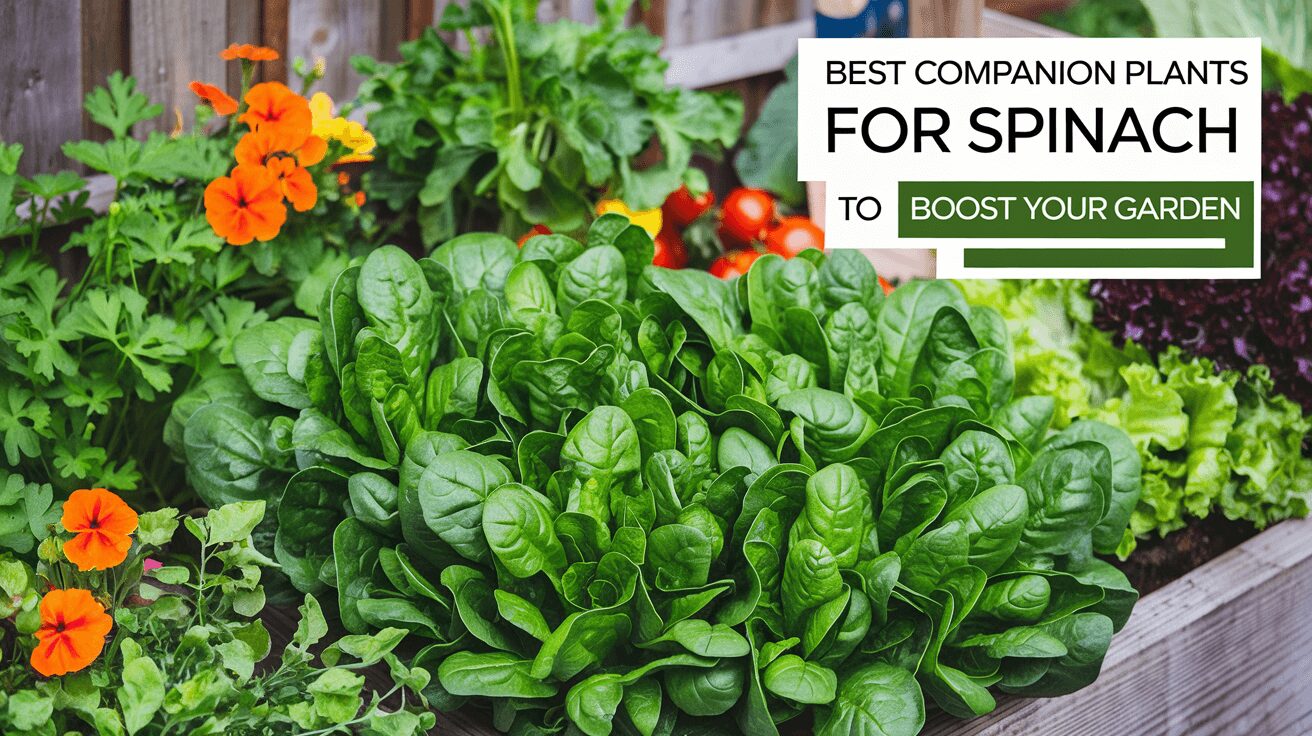
The best companion plants for spinach are radishes (to trap leaf miners), peas (to add nitrogen and shade), garlic (to repel pests), and strawberries (for ground cover). Keep spinach away from potatoes. Keep reading for the full list of 12 companions and a printable chart.
By understanding what to plant with spinach to deter leaf miners, you can create a natural shield that keeps your harvest pristine.
Whether you’re growing spinach under corn for natural shade to beat the summer sun or looking for the best companion plants for spinach in containers to maximize a small balcony, strategic pairing is a game-changer.
In this guide, we’ll explore the benefits of planting peas with spinach for a nitrogen boost and how planting marigolds with spinach for organic pest control can save your crop.
From companion planting spinach and strawberries for ground cover to avoiding the wrong neighbors, you're about to build your most productive salad garden yet.
Why Spinach Needs the Right Neighbors
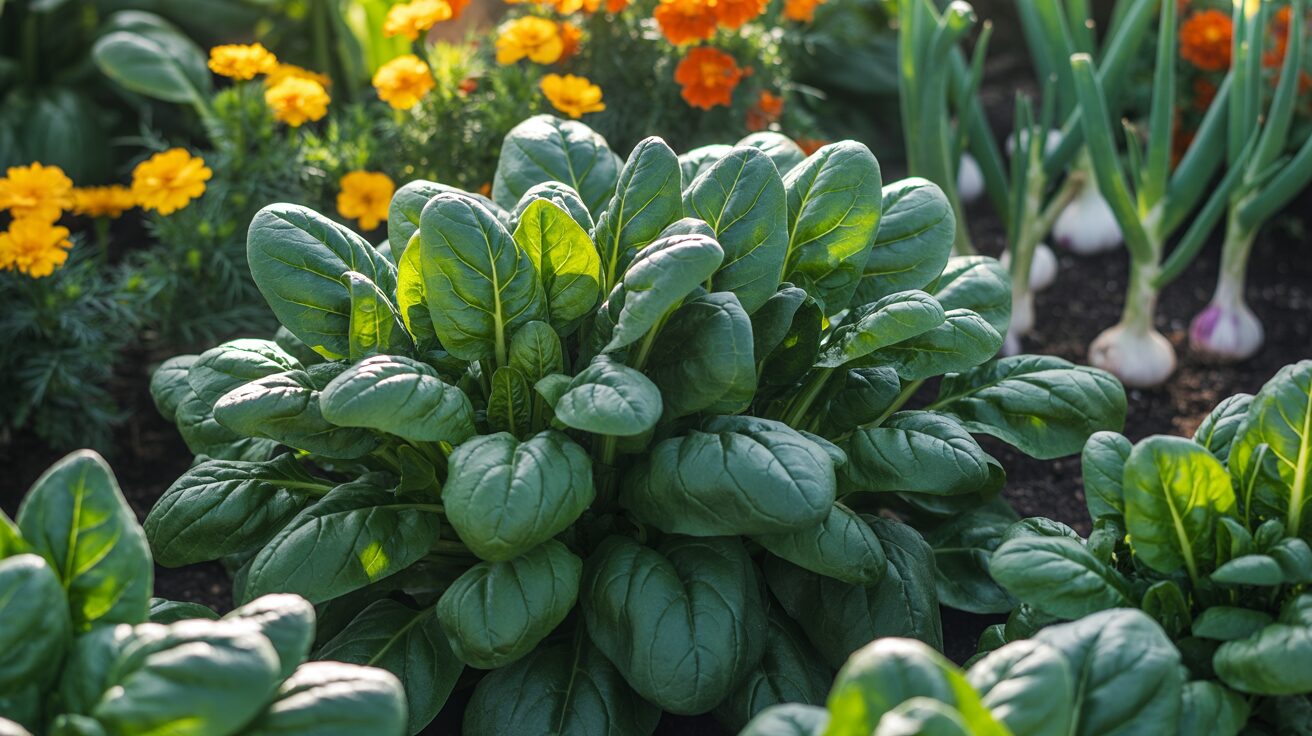
Spinach is a bit picky. It needs lots of nitrogen to grow those dark green leaves. It also hates heat. When the temperature climbs above 75°F (24°C), spinach wants to bolt. Bolting means it sends up a flower stalk and stops making new leaves.
The right neighbors can fix both problems. Some companions add nitrogen to the soil. Others provide shade to keep the soil cool. And some companions confuse the pests that love spinach, especially leaf miners.
Before we get into the specific plants, let me share a quick story. A few years ago, leaf miners destroyed my entire spinach crop. The leaves had ugly brown tunnels winding through them. I almost gave up on spinach altogether.
Then an older gardener told me about radishes. She said, "Plant radishes next to your spinach. The leaf miners will go to the radishes first." I tried it. It worked like magic. For more on starting your garden the right way, check out my beginner guide on how to start urban gardening.
Garden "Enemies": What to Avoid
Before I tell you what to plant with spinach, let me first tell you what to avoid. This is the most common mistake I see.
What Not to Plant Next to Spinach
Potatoes:
Spinach and potatoes do not get along. Potatoes are heavy feeders. They take a lot of nitrogen from the soil. Spinach also needs lots of nitrogen. When you plant them together, they compete. Both plants end up weak and small. Potatoes also attract potato beetles. The beetles will not eat spinach, but they disturb the soil around the roots. This stress can cause spinach to bolt early.
Keep potatoes on the opposite side of your garden. If you really want to grow both, put them in separate raised beds or containers. For more on potatoes, see growing potatoes in straw.
Other heavy feeders to avoid near spinach: Corn, melons, pumpkins, and squash. All of these take more than their share of nutrients. Give them their own space. On a positive note, spinach actually gets along with most other plants. Unlike some vegetables, it is not a bully. It just cannot compete with the really hungry ones.
Pest Protection: Outsmarting the Leaf Miner
Now let me share the most valuable lesson I have learned about spinach. Leaf miners are tiny fly larvae. The adult fly lays eggs on spinach leaves. When the eggs hatch, the tiny worms burrow inside the leaf. They eat the soft tissue between the top and bottom layers.
You will know you have leaf miners when you see winding, white tunnels on your spinach leaves. The tunnels look like someone took a white crayon and drew squiggly lines. The affected leaves are still edible, but they look ugly. Bad infestations can kill the plant.
The good news is that companion planting can stop leaf miners without any chemicals.
What to Plant with Spinach to Deter Leaf Miners
The best defense against leaf miners is confusing them. Leaf miners find spinach by smell. When you plant strongly scented companions nearby, the flies cannot find the spinach. They give up and leave.
Here are the best plants for this job:
Garlic:
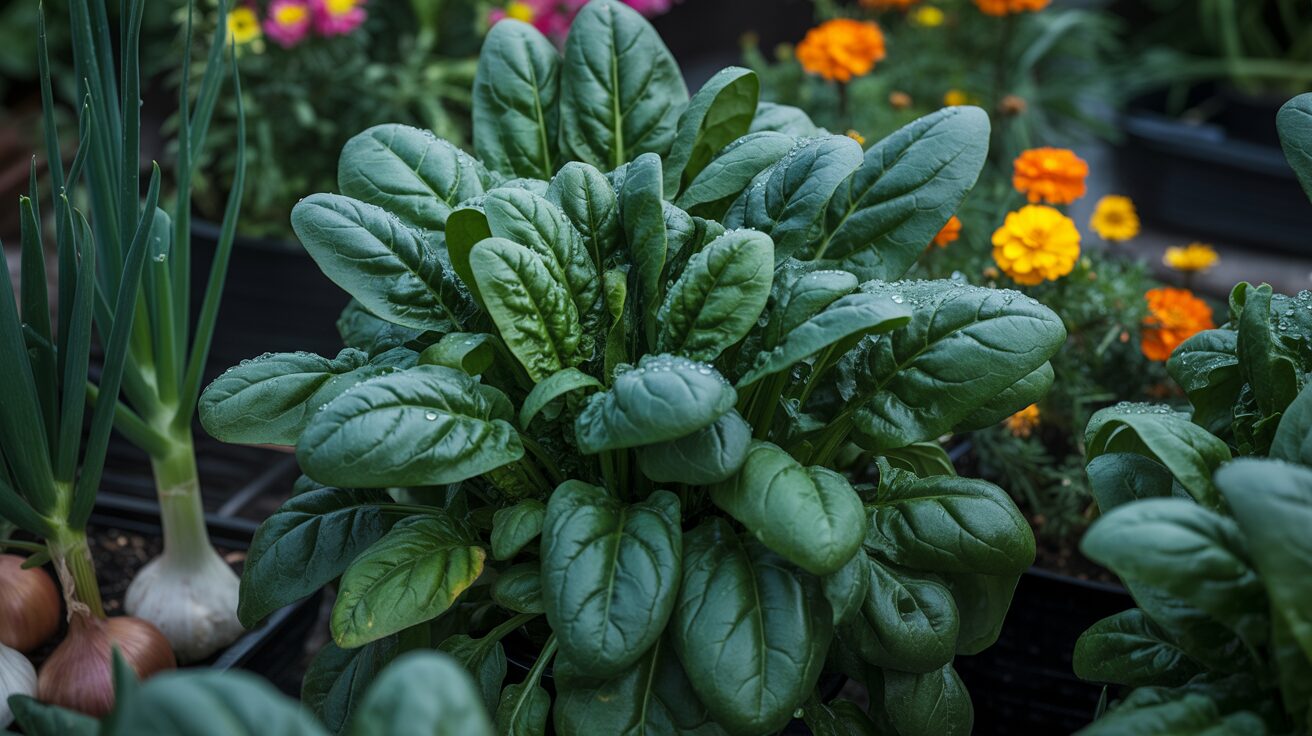
Garlic has a very strong smell. It contains sulfur compounds that many insects hate. Plant garlic cloves around the edge of your spinach bed. The garlic will grow over winter and be ready in summer. As it grows, its scent fills the air. Leaf miners stay away.
For more on growing herbs, see how to grow chives indoors and propagating basil.
Onions:
Like garlic, onions release strong scents. Plant onion sets (small bulbs) between your spinach rows. The onions will mature slowly. By the time you harvest your spinach, the onions will just be getting started.
Marigolds:
I mention marigolds in almost every companion planting guide. There is a reason for that. They work. French marigolds release a chemical from their roots that kills pests in the soil. Their flowers also smell strong, which confuses flying insects. Plant marigold seeds or seedlings around your spinach bed. One marigold per foot of row is plenty. For more details, see my full guide on caring for marigolds.
Growing Spinach and Radishes Together as a Trap Crop
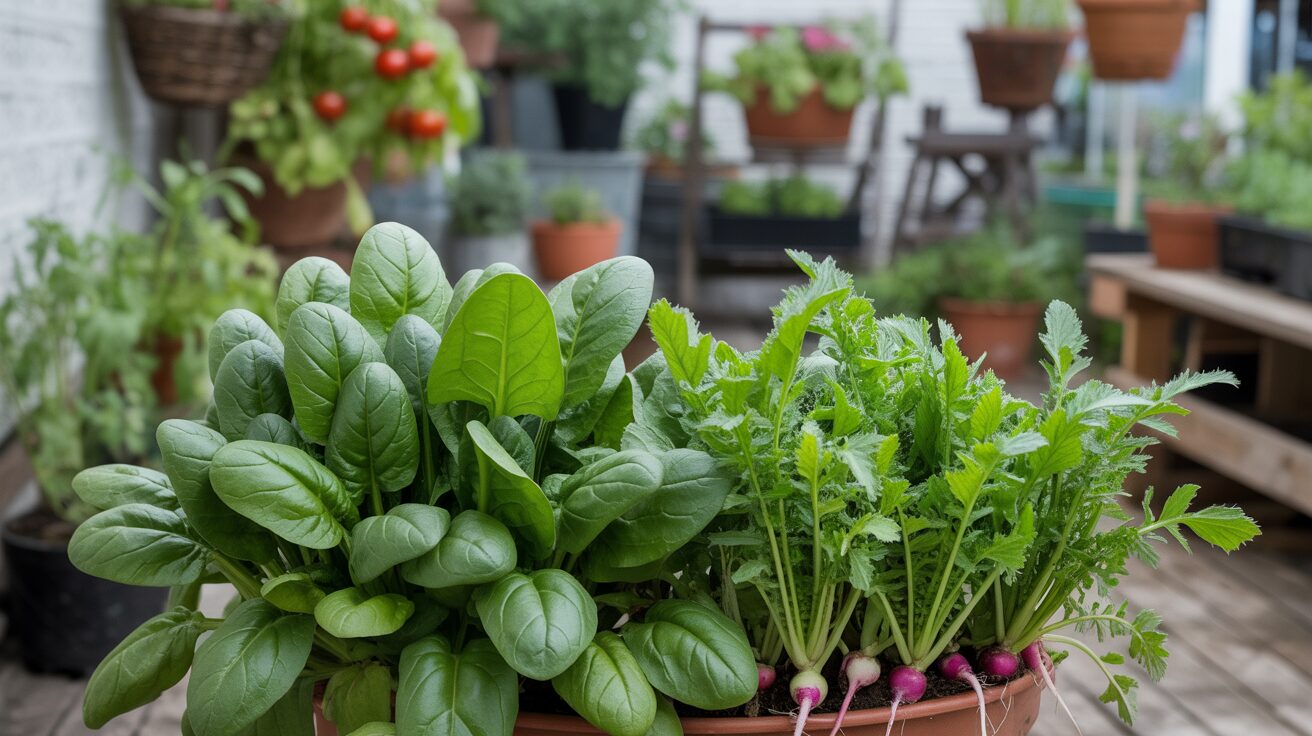
This is my favorite spinach trick. Radishes grow fast. Really fast. You can harvest them in just 25 to 30 days. Leaf miners prefer radish leaves over spinach leaves.
Harvest the radishes when they are young and tender. Then plant another batch of radish seeds in the same spot. Keep rotating radishes all season. The leaf miners will keep going to the radishes. Your spinach will keep growing healthy.
I have been using this method for three years now. It has never failed me. Even in years when my neighbors lost their spinach to leaf miners, mine stayed perfect.
Garlic as a Companion Plant for Spinach Pests
Garlic deserves its own section because it does more than just repel leaf miners. It also repels aphids, spider mites, and even rabbits. The smell is that strong. You have two options for planting garlic with spinach.
For more garlic tips, see planting sprouted onions (onions and garlic grow similarly).
Maximizing Space and Shade
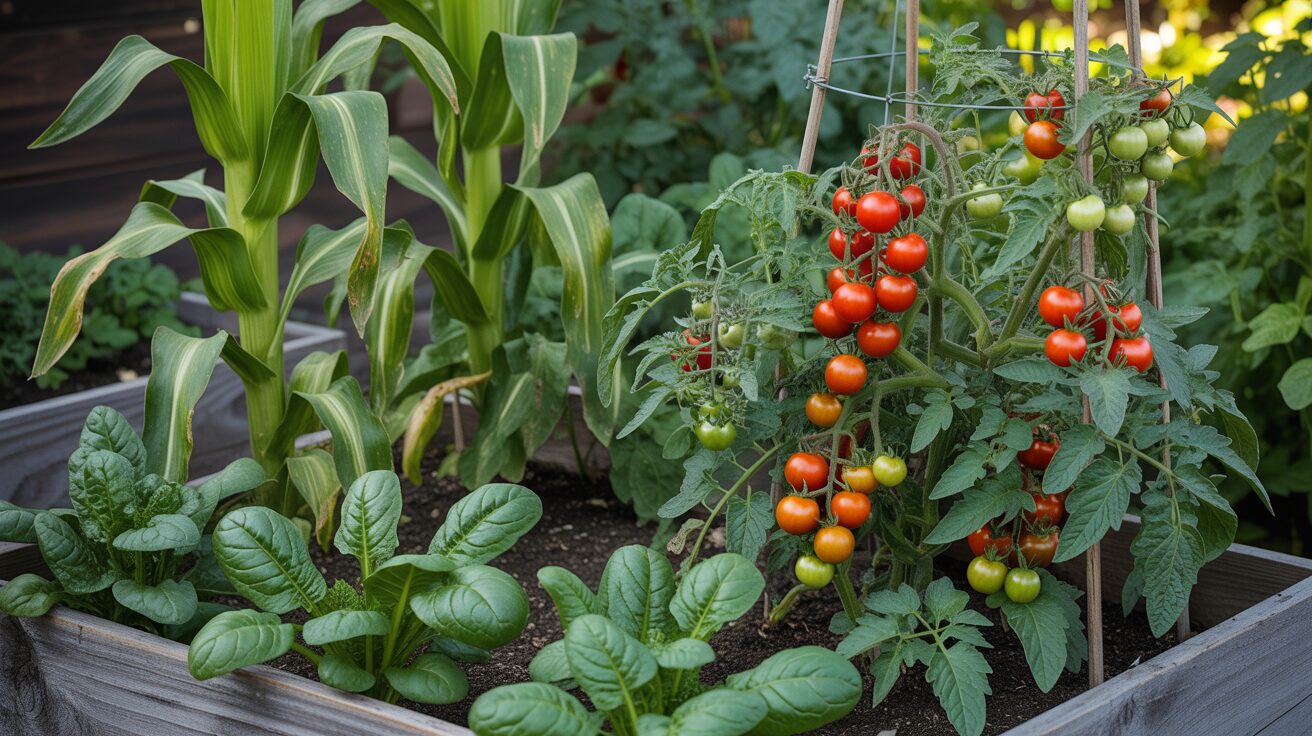
Spinach loves sun in cool weather. But when the weather warms up, it needs shade. Too much direct sun stresses the plant. Stressed spinach bolts quickly. Tall companions provide the perfect solution. They cast dappled shade during the hottest part of the day.
Growing Spinach Under Corn for Natural Shade
Corn is a natural trellis. It grows tall and straight. Its long leaves create shade below. This shade keeps the soil cool and moist. Spinach loves cool soil.
- Plant your corn first. Let it get about 6 inches tall.
- Then sow spinach seeds around the base of each corn stalk.
The corn will grow taller. The spinach will grow in its shadow. This pairing works best for late spring and early summer spinach. The corn provides just enough shade to delay bolting by a week or two.
For more on using corn as a companion, see my guide on cucumber companion plants (corn is covered there).
Companion Planting Spinach and Strawberries for Ground Cover
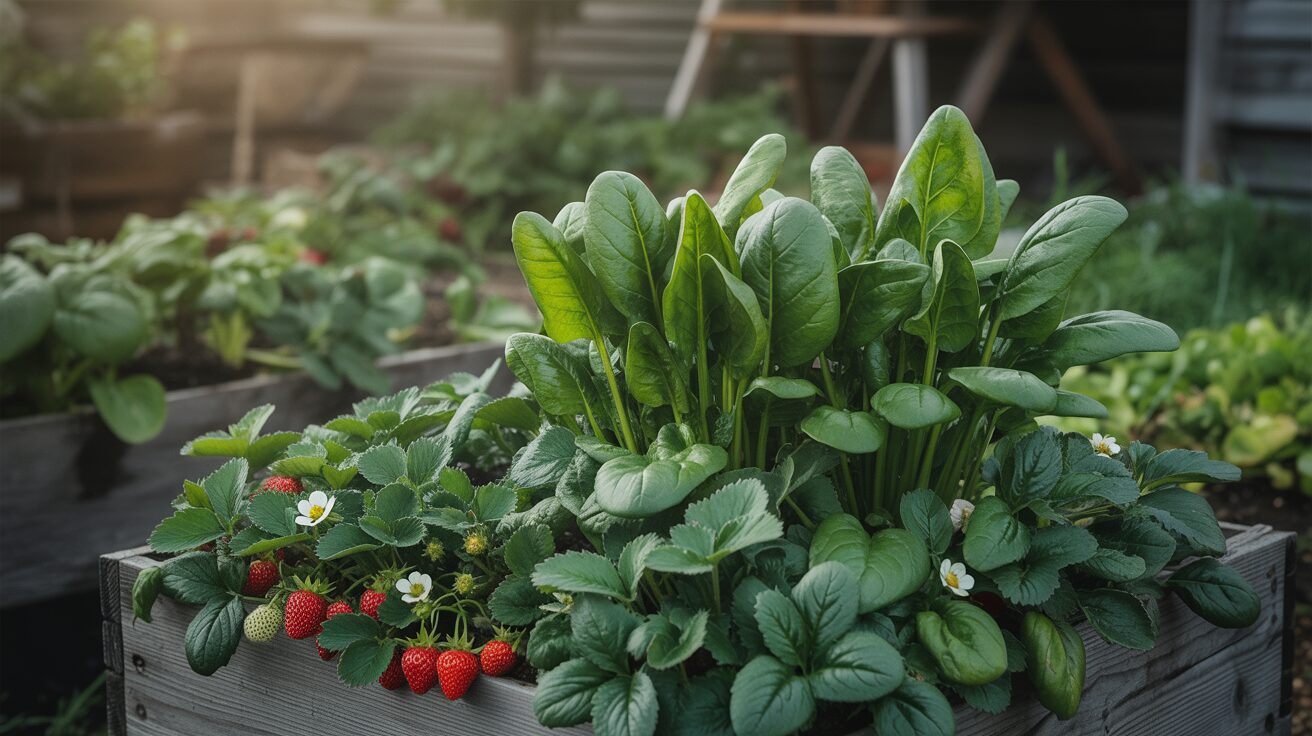
Strawberries and spinach are a match made in heaven. Here is why.
Strawberry plants spread out. They send out runners that create new baby plants. The leaves are broad and low to the ground. They act as living mulch. They cover the soil, keeping it cool and damp. Weeds cannot grow through them.
Spinach grows upright. Its roots are shallow. It does not compete with strawberry roots. The two plants fill different niches in the soil. One goes sideways. The other goes up.
I plant spinach in between my strawberry rows. The spinach is ready to harvest in early spring. The strawberries start producing in late spring. By the time the strawberries are in full production, the spinach is finishing up. It is a perfect rotation.
Using Tall Brassicas as Companion Plants for Spinach
Brassicas are plants like broccoli, cauliflower, and kale. They grow tall and bushy. Their large leaves create shade below. But here is the warning. Spinach and brassicas are both heavy feeders. They both want nitrogen. If you plant them too close together, they will compete.
The solution is spacing. Plant your brassicas 18 inches apart. Sow spinach seeds 6 inches away from the brassica stems. This gives both plants enough room. The brassica leaves will shade the spinach without stealing all the nutrients. For more brassica tips, see cauliflower companion plants.
Growing Spinach Under Tomato Plants for Shade
This is the same trick I shared in the arugula post. Tomato plants grow tall and bushy by midsummer. The lower parts of the tomato plant are shaded. That shaded spot is perfect for late summer spinach.
In late summer, sow spinach seeds at the base of your tomato plants. The tomatoes are already large. They protect the young spinach from the hot afternoon sun. The spinach thinks it is growing in cooler weather. It does not bolt. By the time the tomatoes finish producing in early fall, the spinach is ready to harvest. Sweet, tender, and not bitter at all. For more on growing tomatoes with companions, see my full guide on companion plants for tomatoes.
Coming Up Next
Now you know the best friends for your spinach. Radishes, garlic, marigolds, corn, strawberries, and tomatoes will protect, shade, and feed your greens. You also learned which plants to avoid, especially potatoes.
In the next section, I will talk about specific garden setups. That includes container gardening, raised beds, and proper spacing. I will also answer common questions like "Can you plant spinach and kale together?" Keep reading to learn how to set up your spinach bed for success.
Specific Garden Setups
Spinach grows well almost anywhere. You can grow it in the ground, in raised beds, or in containers. The key is matching the right companions to your setup.
Best Companion Plants for Spinach in Containers
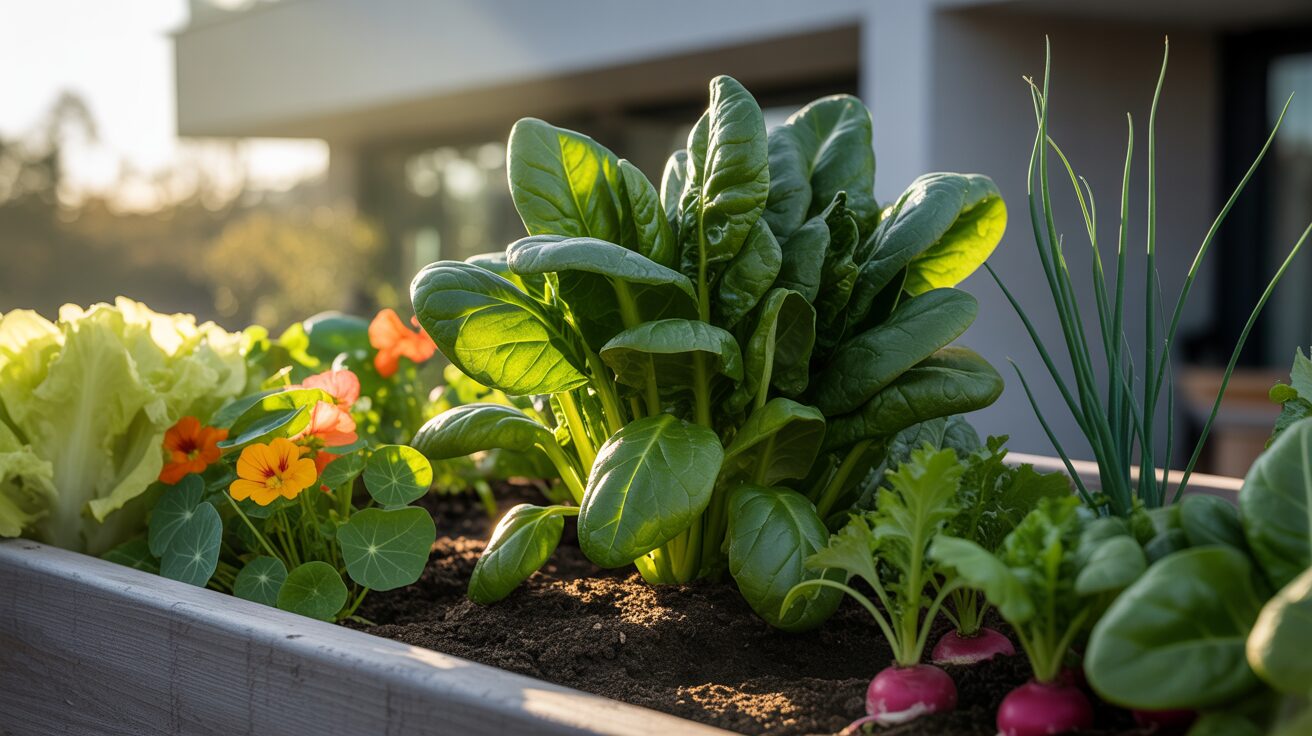
Container spinach needs companions that stay small. You cannot plant sprawling corn or tall tomatoes in a small pot. This is what works.
- Radishes: These fit perfectly around the edge of a spinach container. Tuck radish seeds into any empty space. They will be ready to harvest in 3 to 4 weeks. Then you can plant another batch.
- Lettuce: This shallow-rooted green grows well in the same pot as spinach. They like the same conditions. For more, see grow lettuce indoors.
- Chives: A small pot of chives next to your spinach container repels pests without taking up root space. See how to grow chives for more.
- Nasturtiums:These flowers stay small if grown in containers. They act as a trap crop for aphids. See nasturtium care for more.
Make sure your container has drainage holes. Spinach hates wet feet. Use a good quality potting mix or make your own. Do not use garden soil in containers. If you have a busy schedule, you might want to build a self-watering herb garden. It works for spinach too.
Companion Plants for Spinach in Raised Beds
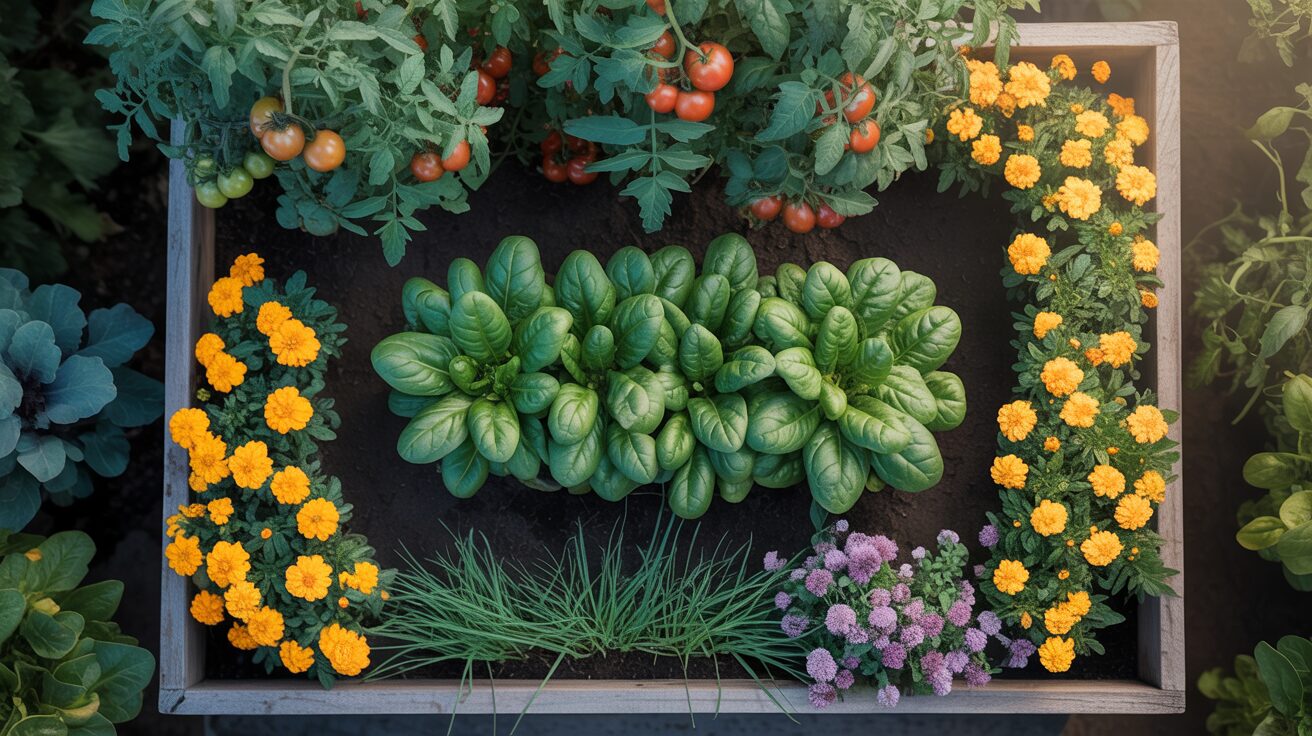
Raised beds give you more room. You can plant taller companions and spread things out. Here is my raised bed layout.
- I plant spinach down the center of the bed.
- On the north side, I put corn or tomatoes. They grow tall and provide afternoon shade.
- On the south side, I put low herbs like garlic and chives.
- Around the edges, I tuck radishes and marigolds.
This layout gives every plant sun. Nothing gets shaded out. The low herbs act as living mulch. They keep the soil cool and moist. If you use raised beds, keep the soil fertile. Spinach needs nitrogen. Add compost each spring. For more on soil, see indoor plant potting mix (the same principles apply outdoors).
How Far Apart to Space Spinach Companion Plants
Spacing is critical. Too close together, and your plants fight for light and water. Too far apart, and the companion cannot do its job. My simple spacing rules:
Companion Plant | Distance from Spinach |
|---|---|
Radishes | 1 to 2 inches |
Garlic | 4 inches |
Onions | 4 inches |
Marigolds | 6 inches |
Nasturtiums | 6 inches |
Lettuce | 4 inches |
Strawberries | 8 inches |
Corn | 10 inches (on north side) |
Tomatoes | 12 inches (on north side) |
Broccoli or Cauliflower | 12 inches |
Spinach itself needs space. Sow seeds 1 inch apart. Once seedlings are 2 inches tall, thin them to 4 inches apart. You can eat the thinnings in salads.
For continuous harvest, sow new spinach seeds every 2 weeks. This is called succession planting. By the time one batch bolts, the next batch is ready.
Printable Spinach Companion Chart (Save This)
My simple chart you can screenshot or print for your garden shed.
Companion Plant | Distance from Spinach | Benefit | Best Season |
|---|---|---|---|
Radishes | 1 to 2 inches | Trap crop for leaf miners | Spring, fall |
Garlic | 4 inches | Repels leaf miners, aphids | All seasons |
Onions | 4 inches | Repels leaf miners | Spring, fall |
Marigolds | 6 inches | Repels nematodes, aphids | Spring to fall |
Nasturtiums | 6 inches | Trap crop for aphids | Spring to fall |
Peas | 4 inches | Adds nitrogen, provides shade | Spring |
Beans | 6 inches | Adds nitrogen | Summer |
Lettuce | 4 inches | No competition | Spring, fall |
Strawberries | 8 inches | Ground cover, living mulch | Spring |
Corn | 10 inches (on north side) | Provides shade | Summer |
Tomatoes | 12 inches (on north side) | Provides shade (late summer) | Late summer |
Kale | 12 inches | Compatible green | Spring, fall |
Plants to always avoid near spinach: Potatoes, corn (if planted too close), and other heavy feeders.
Compatible Greens: Building the Salad Bowl
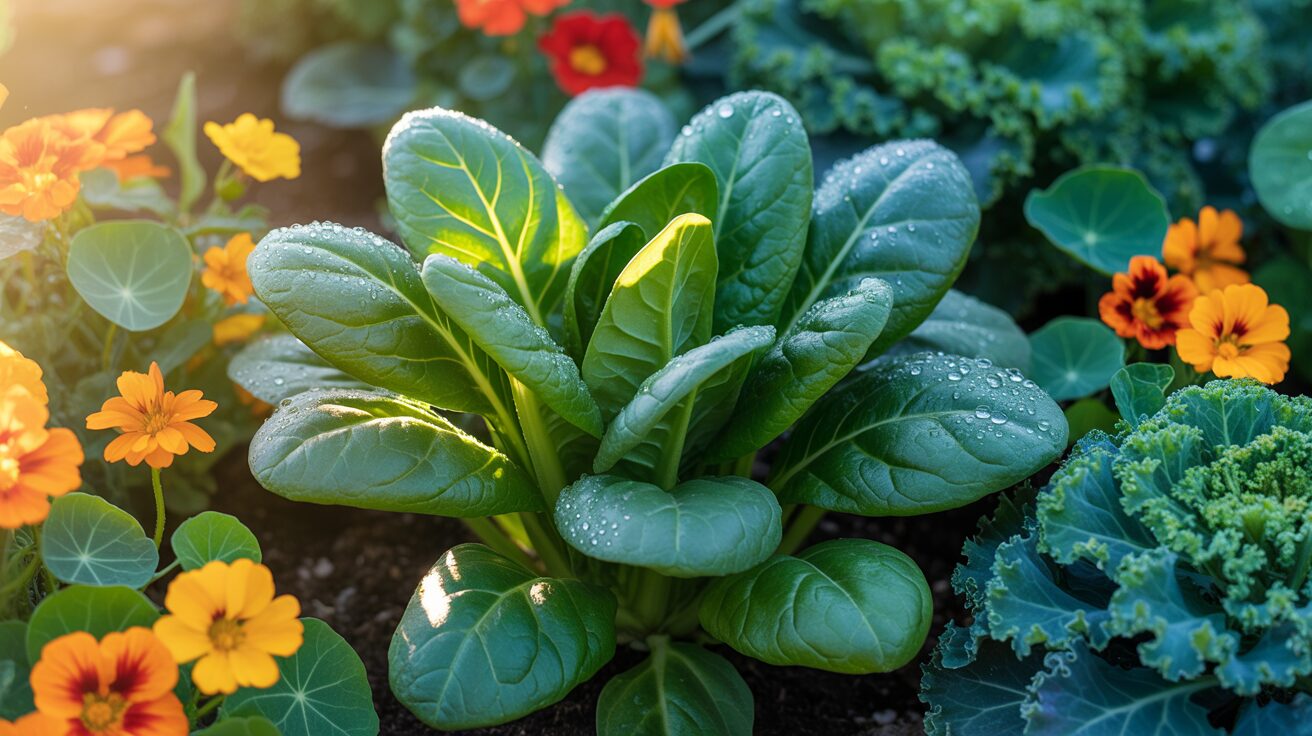
Spinach is not a loner. It grows well with other leafy greens. Together, they form a beautiful salad bowl in your garden.
Can You Plant Spinach and Kale Together?
Yes, absolutely. Spinach and kale are both cool-season greens. They both love spring and fall. They both have shallow roots that do not compete. I plant kale seeds 6 inches apart.
Then I sow spinach seeds in between. The kale grows taller and provides a little shade for the spinach. The spinach matures faster. By the time the kale is fully grown, I have already harvested most of the spinach. For more on kale, see growing cauliflower (kale grows similarly).
Nasturtium Companion Planting for Spinach Aphids
Aphids are tiny green, black, or white bugs. They suck sap from spinach leaves. The leaves curl and turn yellow. Bad infestations can kill the plant.
Nasturtiums are the decoys.
Aphids love nasturtiums even more than spinach. So when aphids show up, they go to the nasturtiums first. I plant nasturtium seeds around the edge of my spinach bed. The bright flowers look beautiful. The aphids gather on the nasturtium leaves.
I check the nasturtiums every few days. If I see a lot of aphids, I cut off those leaves and throw them away. This removes the aphids without any chemicals. For more on nasturtiums, see nasturtium care.
Planting Marigolds with Spinach for Organic Pest Control
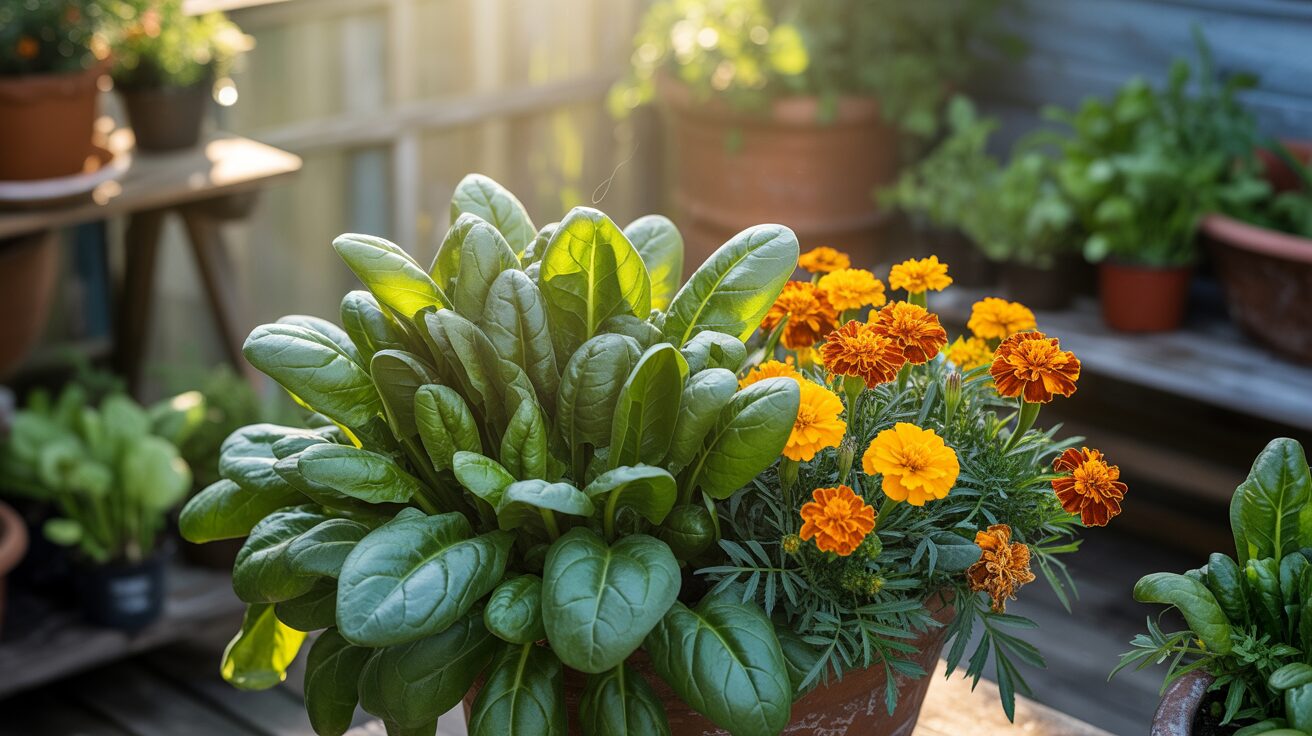
I already mentioned marigolds in the pest section. But they deserve another mention here. Marigolds are the most versatile companion plant I know. French marigolds (Tagetes patula) are the best variety for spinach.
They stay small, about 6 to 12 inches tall. They do not shade the spinach. Their roots release a chemical that kills nematodes in the soil. Nematodes attack spinach roots underground.
Plant marigold seeds directly in your spinach bed. One seed every 6 inches is plenty. They will sprout in 5 to 7 days. They will start flowering in about 8 weeks. By then, your spinach will be ready to harvest. For more details on keeping marigolds happy, check out my full guide on caring for marigolds.
You now know how to set up your spinach bed, whether in containers, raised beds, or the ground. You also learned which greens grow well with spinach.
In the final section, I will answer the most frequently asked questions about spinach companion planting. I will share tips for winter gardening and growing spinach indoors.
Keep reading for the answers you have been looking for.
Frequently Asked Questions About Spinach Companions
What grows well with spinach?
Spinach grows well with radishes (trap crop), garlic and onions (pest repellent), peas and beans (nitrogen fixers), strawberries (ground cover), and other leafy greens like lettuce and kale.
What should not be planted next to spinach?
Avoid planting spinach near potatoes. Potatoes are heavy feeders. They compete for nitrogen. Also avoid corn, melons, pumpkins, and squash if space is tight. These all take more than their share of nutrients.
How do you keep leaf miners off spinach?
Plant radishes next to your spinach. The leaf miners will go to the radish leaves first. Also plant garlic and marigolds around the bed. Their strong scents confuse the adult flies. Check your plants daily. Remove any leaves that have tunnels.
Does spinach like full sun or shade?
Spinach prefers full sun in cool weather (spring and fall). In warm weather, it needs afternoon shade. Plant it on the east side of tall companions like corn, tomatoes, or peas. The companions will shade the spinach during the hottest part of the day.
Can you plant spinach and tomatoes together?
Yes, but only in late summer. Plant spinach seeds at the base of mature tomato plants. The tomatoes provide shade. The spinach will grow in the cooler microclimate. Harvest the spinach in early fall.
How do you grow spinach in containers?
Use a pot that is at least 6 inches deep. Fill it with good quality potting mix. Sow seeds 1 inch apart. Thin to 4 inches apart. Water when the top inch of soil feels dry. Place the container where it gets morning sun and afternoon shade. For more, see best plants for pots all year round.
Can you plant arugula and spinach together?
Arugula and spinach are both cool-season greens. They grow well together. In fact, I plant them side by side in every spring and fall garden. They have the same needs: cool soil, consistent water, and protection from leaf miners. For more on arugula, see my full guide on arugula companion plants. Now back to your spinach bed – let us keep going.
Can you grow spinach in winter?
Yes, spinach is cold-hardy. It can survive light frosts. In fact, frost sweetens the flavor. The cold converts starches into sugars. Winter spinach is actually sweeter than spring spinach. Plant garlic and onions alongside your winter spinach. Cover the bed with a row cover on very cold nights. For more winter tips, see winter vegetables to grow in pots
How do you start spinach from seed?
Spinach is easy to grow from seed. Fill your seed starting mix into a tray or small pots. Moisten the mix. Sow seeds 1 inch apart. Cover with a thin layer of mix, about 1/4 inch deep. Water gently. Place the tray in a cool spot, around 60°F to 65°F (15°C to 18°C). Seeds will sprout in 5 to 10 days. For more on starting seeds, see house plants from seeds
How often should you water spinach?
Spinach needs consistent moisture. Water when the top inch of soil feels dry. In cool weather, this might be once or twice a week. In warm weather, you may need to water every other day. Do not let the soil dry out completely. Dry soil stresses spinach and causes bolting. Water at the base of the plant, not from above.
Final Tips from an Urban Gardener
You made it to the end. That means you really care about growing better spinach. Thank you for reading. These are my three final tips:
Start with radishes. They are the easiest and most effective companion for spinach. Plant them together. Watch the leaf miners go to the radishes. Harvest both. You will be hooked.
Do not fear the heat. Even with perfect companions, spinach will eventually bolt when summer arrives. That is okay. Let it flower. The flowers attract bees. Then save the seeds for next season.
Keep planting. Spinach grows fast. Sow new seeds every 2 weeks from early spring through fall. With succession planting and good companions, you can have fresh spinach for 8 months of the year.
If you are just starting your urban gardening journey, read my full guide on how to start urban gardening . It covers soil, containers, watering, and everything else a beginner needs.
And if you ever struggle with pests, remember that my guides on white fuzzy bugs on plants and squash bugs are there to help.
One more thing before you go...
You made it to the end. That means you really care about growing better spinach. Thank you for reading. Now I have two small asks for you.
First, drop a comment below. What is your biggest spinach struggle right now? Leaf miners? Bolting? Yellow leaves? Or do you have a companion planting tip that I missed? I personally reply to every comment within 48 hours.
Second, save this post for later. Pin the printable chart to your Pinterest board. Share this guide with a friend who grows spinach. The more people who grow their own food, the better. Now go plant those spinach seeds. And give them some good friends.
Happy gardening!
Read Next:
Last Updated on May 2, 2026 by Austine