
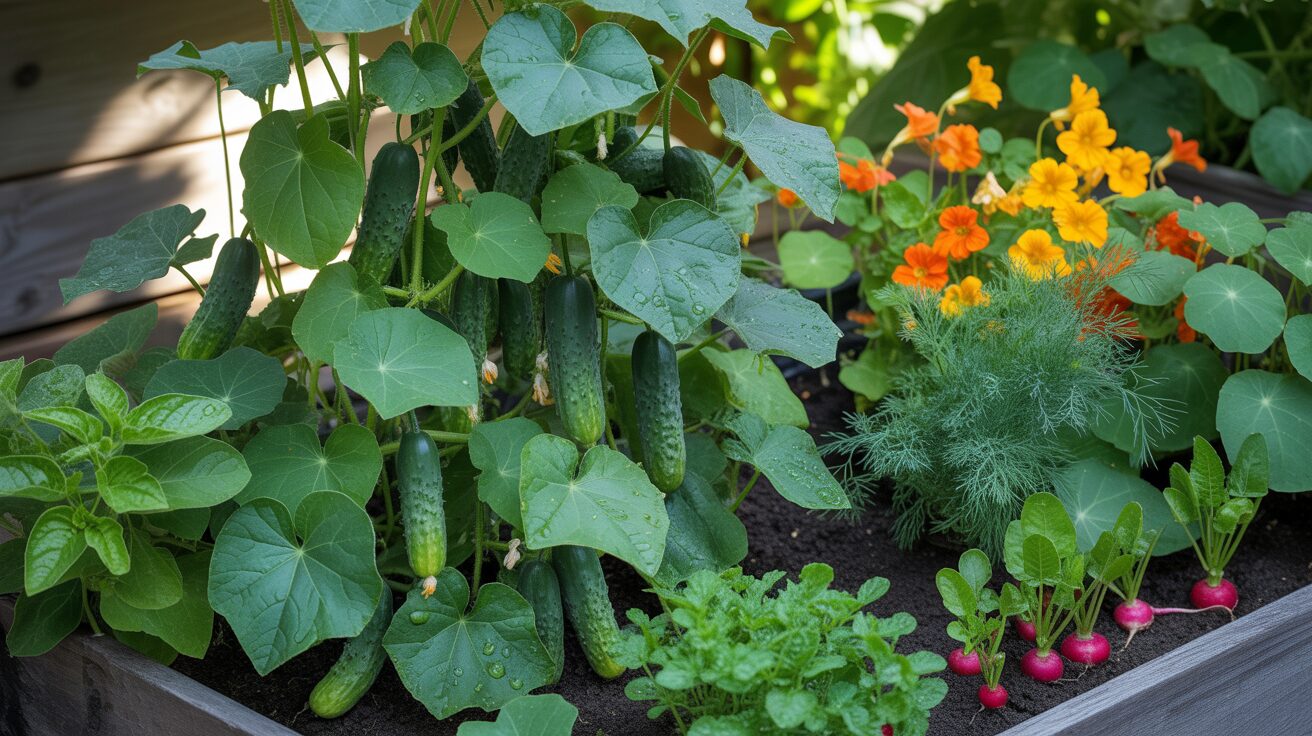
The best companion plants for cucumbers are corn (for shade and support), marigolds (for pest control), nasturtiums (as a trap crop for aphids), and radishes (to deter cucumber beetles). Keep cucumbers away from potatoes, sage, and fennel. Keep reading for the full list of 12 companions and a printable chart.
The Science of Cucumber Companion Planting
Have you ever bitten into a cucumber that tasted super bitter? I have. It ruins your whole salad. That bitterness usually comes from stress. Too much heat. Not enough water. Pests attacking the roots.
The good news is that companion planting can fix most of these problems. Cucumbers are like the friendly neighbor of the garden. They want to get along with everyone. But they do have specific needs. They need consistent moisture. They need protection from the hot afternoon sun.
And they really need help fighting off cucumber beetles.
Companion planting works in three main ways:
First, root exudates. Plants release chemicals from their roots. Some of these chemicals repel pests. Others attract helpful soil bacteria. Cucumbers release certain compounds that their neighbors can sense.
Second, scent masking. Pests find their favorite plants by smell. When you plant strongly scented herbs near your cucumbers, the pests get confused. They cannot find the cucumbers. They give up and leave.
Third, physical support. Tall plants like corn and sunflowers act as living trellises. Cucumber vines climb up them. This keeps the fruit off the ground, where it can rot. It also improves air flow, which prevents powdery mildew.
Now let me show you the 12 best companions I have tested in my own small garden.
Top Flowers for Pest Protection
Flowers are not just pretty. They work as bodyguards for your cucumbers. These are my three best flower companions.
Planting Marigolds with Cucumbers for Pest Control
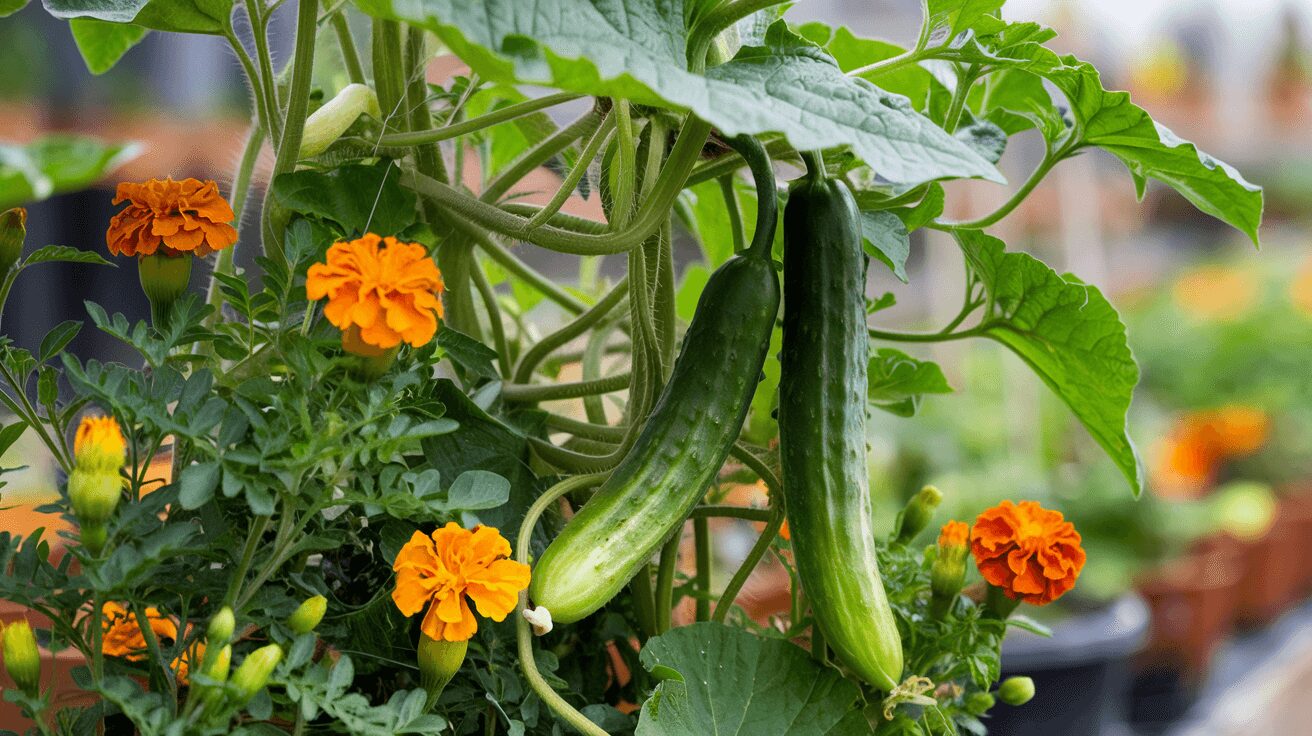
Marigolds are the superheroes of the garden. I plant them near everything, especially cucumbers. Their roots release a chemical that kills tiny worms called nematodes. Nematodes attack cucumber roots underground. You never see them, but your plants will look sad and stunted.
They also repel cucumber beetles. Those are the striped or spotted bugs that eat cucumber leaves and spread bacterial wilt. One year, cucumber beetles destroyed half my crop before I started planting marigolds. Now I put French marigolds around every cucumber hill.
For more details on keeping marigolds happy, check out my full guide on caring for marigolds.
Nasturtiums as a Trap Crop for Cucumber Aphids
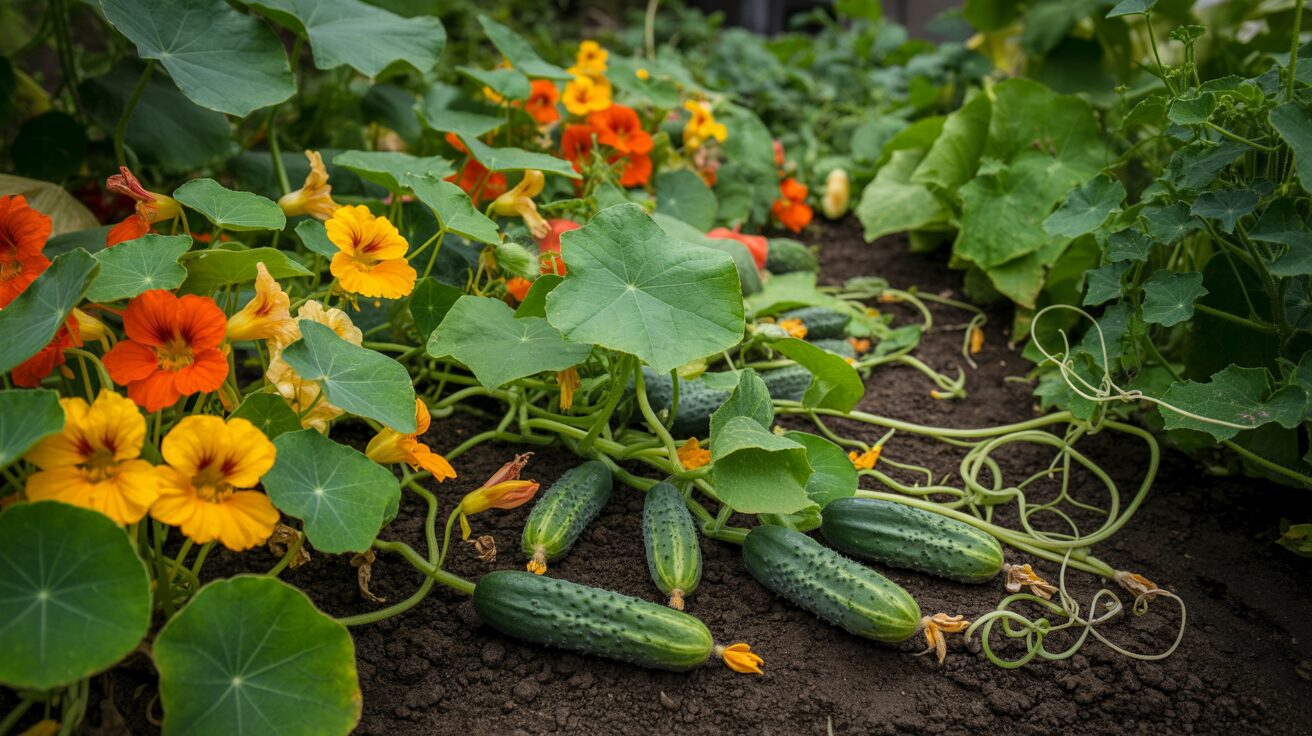
Nasturtiums are the decoys. Aphids love them even more than cucumbers. So when aphids show up, they go to the nasturtiums first. This gives your cucumbers a fighting chance. I plant nasturtiums about a foot away from my cucumber stems. The bright orange and red flowers look beautiful against the green cucumber leaves.
And here is a bonus. Both the leaves and flowers of nasturtiums are edible. They taste peppery, like arugula. I toss them into summer salads.
What to Plant with Cucumbers to Deter Cucumber Beetles
Cucumber beetles are your number one enemy. They are small, striped or spotted, and they love to eat cucumber leaves. Worse, they carry bacterial wilt. Once a cucumber plant gets wilt, it dies within a week. There is no cure.
Radishes are your best weapon against cucumber beetles. Plant radish seeds right next to your cucumber seeds. The radishes grow quickly. They act as a trap crop. The beetles prefer radish leaves over cucumber leaves. They eat the radishes instead.
Tansy is another powerful repellent. It is a perennial herb with yellow button-like flowers. Tansy contains chemicals that cucumber beetles hate. Plant tansy on the edge of your cucumber bed. But be careful. Tansy spreads aggressively. Keep it in a container or a confined area.
The "Three Sisters" Variation: Corn and Sunflowers
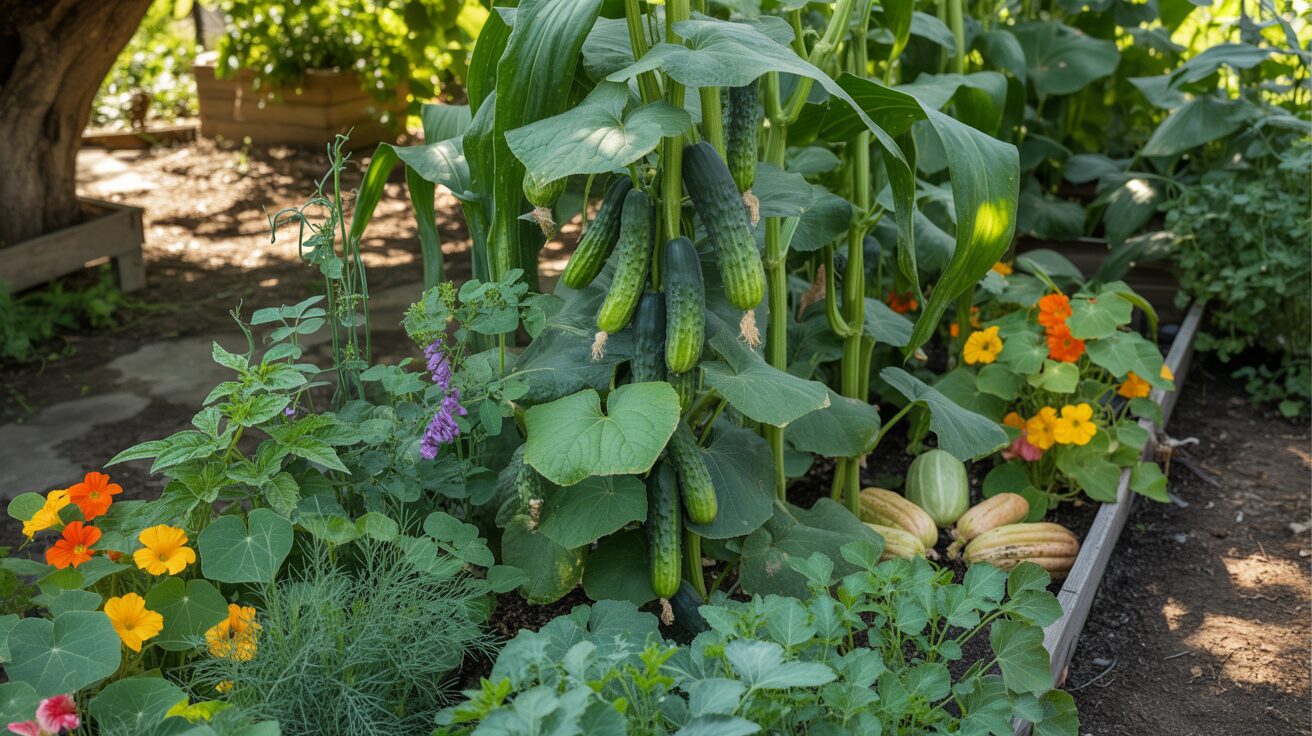
Native Americans planted the "Three Sisters" together: corn, beans, and squash. Cucumbers are not squash, but they grow the same way. They love to climb. They need afternoon shade. They thrive with companions.
Companion Planting Cucumbers and Corn for Shade
Corn is the perfect cucumber neighbor. It grows tall and straight. Its stalks act as natural poles. Cucumber vines will climb right up them. No trellis needed. But the best part is the shade. Cucumbers love sun in the morning. But hot afternoon sun stresses them out.
Stressed cucumbers produce bitter fruit. Corn provides dappled shade during the hottest part of the day. This keeps the soil cool and the cucumbers sweet.
Sunflowers as a Natural Trellis for Cucumbers
Sunflowers are even taller than corn. They grow 8 to 10 feet high. Their thick stems can support heavy cucumber vines. And their large leaves provide excellent shade. Sunflowers also attract bees. Lots of bees.
Cucumbers need bees to pollinate their flowers. Without pollination, the flowers drop off and no fruit forms. Sunflowers bring the bees right to your cucumber patch.
Small Space Solutions
Not everyone has a big backyard. I certainly do not. Most of my cucumbers grow on a small patio or balcony. Small space gardening just requires a few adjustments.
Best Companion Plants for Cucumbers in Containers
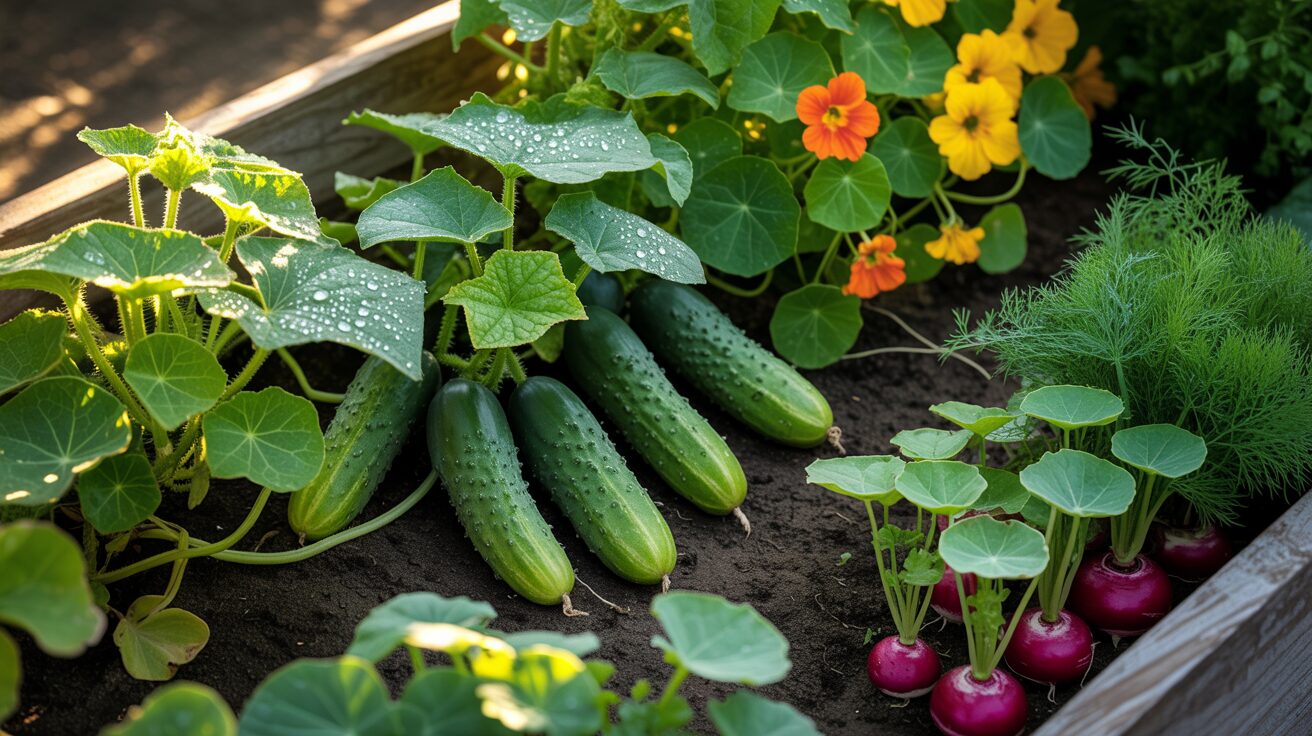
Container cucumbers need companions that stay small. You cannot plant sprawling sunflowers or tall corn in a five gallon pot. Here is what works.
- Nasturtiums in a separate pot. Place a small pot of nasturtiums next to your cucumber container. Do not plant them in the same pot. They spread too wide.
- Radishes. These fit perfectly around the edge of a cucumber pot. Tuck radish seeds into any empty space. They will be ready to harvest in 3-4 weeks. Then you can plant another batch.
- Dill. This herb grows tall and thin. It fits in a small pot next to your cucumber. Dill attracts beneficial wasps that kill cucumber pests. For more on growing dill, see how to cilantro from seed as a substitute.
- Basil. Another small herb that repels pests. One basil seedling fits perfectly around the edge of a cucumber pot. For tips, see how to grow basil from cuttings.
Make sure your containers have drainage holes. Cucumbers hate wet feet. Water when the top inch of soil feels dry. For more container tips, see the best plants for pots all year round.
Companion Plants for Cucumbers in Raised Beds
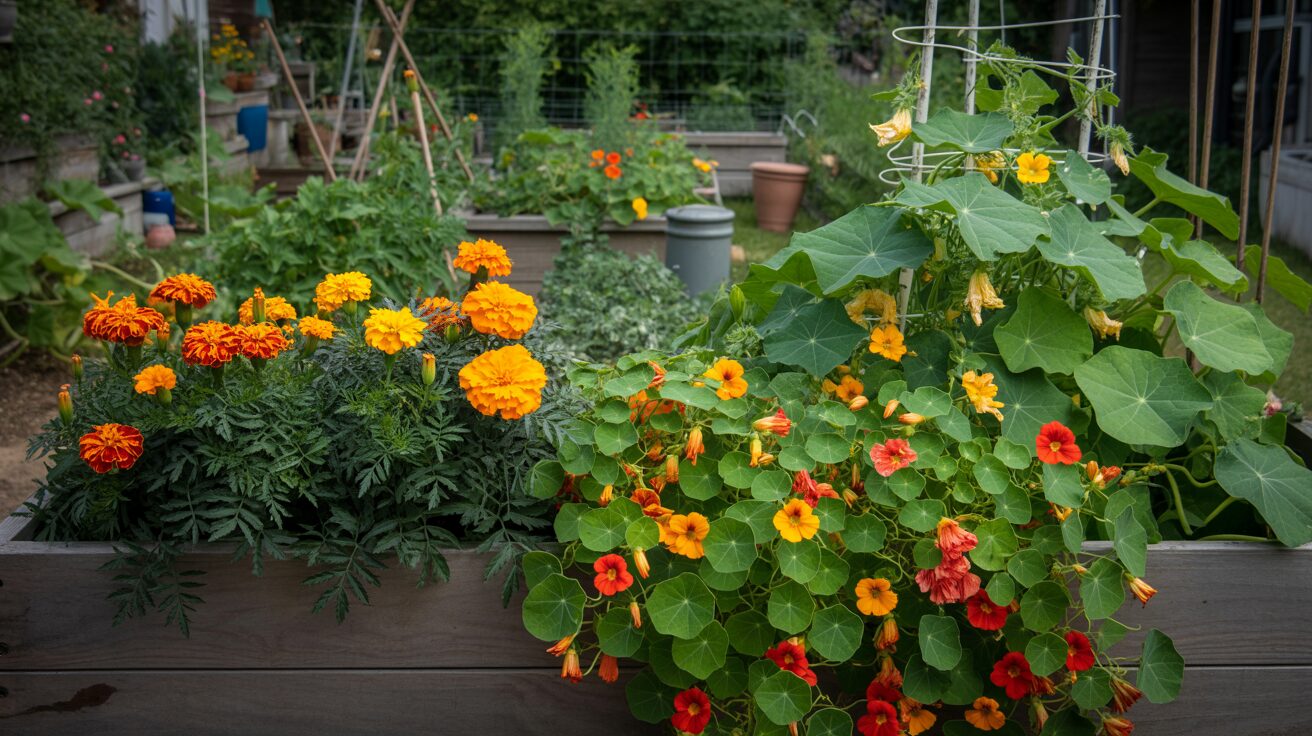
Raised beds give you more room. You can plant taller companions and spread things out. Here is my raised bed layout. I plant cucumbers down the center of the bed. On the north side, I put corn or sunflowers (they provide shade without blocking the sun). On the south side, I put low herbs like dill and basil.
Around the edges, I tuck nasturtiums and marigolds. Between the cucumber plants, I sow radishes. This layout gives every plant sun. Nothing gets shaded out. The low herbs act as living mulch. They keep the soil cool and moist. The flowers attract bees from across the yard.
If you use raised beds, keep the soil fertile. Cucumbers are heavy feeders. Add compost each spring. Water deeply twice a week.
Next up: What to avoid. Some plants are terrible neighbors for cucumbers. Let me save you from my past mistakes. That includes potatoes, sage, fennel, and a few surprises.
I will also answer common questions like "Can you plant cucumbers and tomatoes together?" and "Can you plant cucumbers and zucchini together?"
Keep reading to avoid the mistakes that cost me entire harvests.
The Danger Zone: What to Avoid
Not every plant plays nice with cucumbers. I learned this the hard way. One year I planted potatoes right next to my cucumbers. Both crops failed. The cucumber beetles spread from the potatoes to the cucumbers. It was heartbreaking. Let me save you from the same mistake. Here are the plants you should keep far away from your cucumbers.
What Not to Plant Next to Cucumbers
- Potatoes: This is the biggest don't. Potatoes and cucumbers share the same pests, especially cucumber beetles. The beetles breed on potato leaves. Then they move to your cucumbers. Keep potatoes on the opposite side of your garden.
- Sage: Sage is a wonderful herb. But it is not a good cucumber neighbor. The strong aromatic oils in sage can stunt cucumber growth. Your cucumbers may stay small and produce very little fruit. Keep sage in a separate herb garden.
- Fennel: Fennel is the bully of the garden. It releases chemicals from its roots that stop other plants from growing. Fennel can actually kill young cucumber plants. Do not plant fennel anywhere near your cucumber bed.
- Melons and pumpkins: These are in the same family as cucumbers (Cucurbitaceae). They compete for the same nutrients. They also attract the same pests. Plant them on the other side of your garden.
- Aromatic herbs like rosemary and thyme: These herbs have very strong scents. Their oils can interfere with cucumber growth. They may also confuse pollinators. Keep them in a separate herb garden.
Can You Plant Cucumbers and Zucchini Together?
This is a very common question. The short answer is yes, but give them plenty of space. Zucchini and cucumbers are both heavy feeders. They need a lot of nitrogen, phosphorus, and potassium. If you plant them too close together, they will compete. Both plants will produce less fruit.
There is also a myth that cucumbers and zucchini will cross-pollinate and create weird hybrid fruits. This is false. Cucumbers and zucchini are different species. They cannot cross-pollinate. You are safe.
Can You Plant Cucumbers and Tomatoes Together?
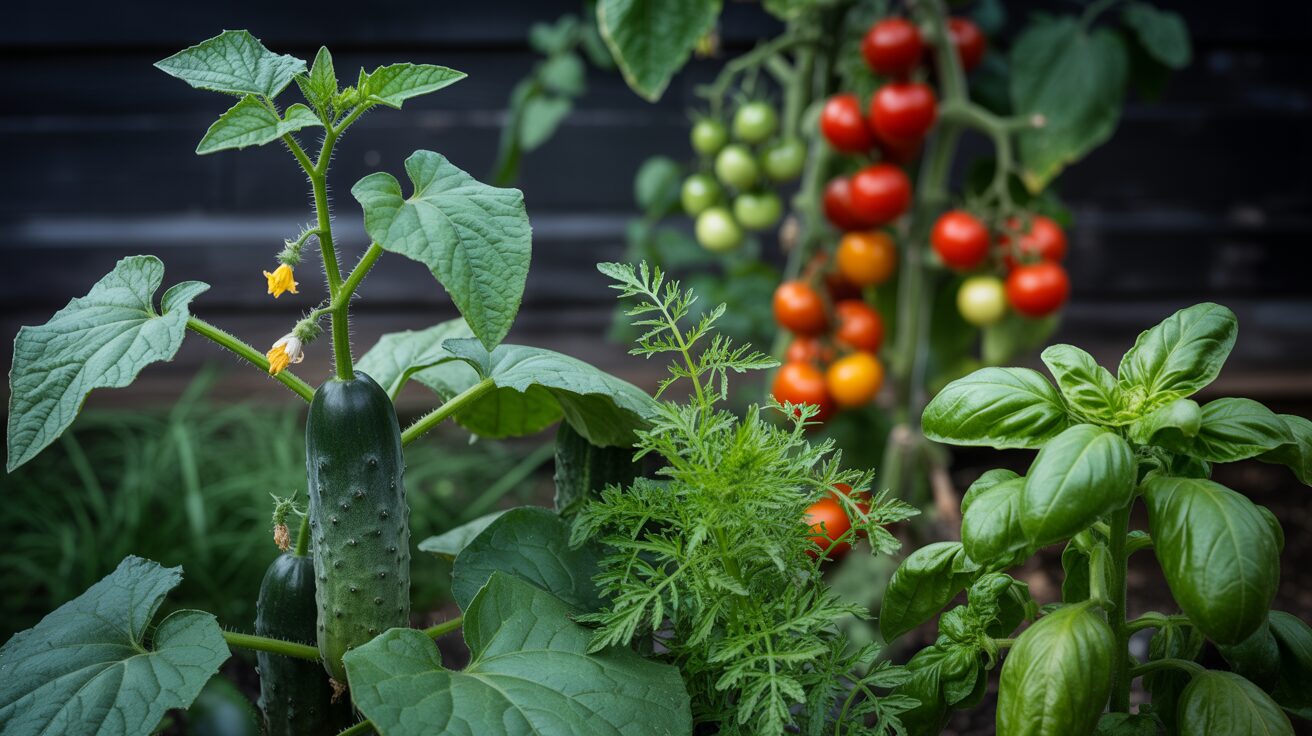
This question comes up all the time. The short answer is yes, but with caution. Cucumbers and tomatoes like the same conditions. They both love full sun and warm weather. They both need regular watering. In theory, they are good companions.
The problem is disease. Both cucumbers and tomatoes are susceptible to downy mildew and bacterial wilt. If one plant gets sick, the disease can spread to the other. I have lost both crops in the same season because I planted them too close together.
For more tomato tips, see my guide on companion plants for tomatoes.
Managing Pests Naturally
Even with perfect companion planting, pests can still show up. Do not panic. That is normal.
Radishes and Tansy: The Best Plants to Deter Cucumber Beetles
I mentioned radishes earlier as a trap crop. Here is how to use them most effectively:
- Plant radish seeds directly in your cucumber hill. Ensure you plant them about 2 inches away from the cucumber seeds. The radishes will sprout first. They grow quickly. Cucumber beetles will find the radishes and eat their leaves instead of your cucumbers. Harvest the radishes when they are young (about 3-4 weeks). Then plant new radish seeds in the same spot. Keep rotating radishes all season long.
- Tansy is a perennial herb that repels cucumber beetles. Plant tansy on the edge of your cucumber bed. The beetles hate the smell. They will stay away.
Warning: Tansy spreads aggressively. Plant it in a container or a confined area. Do not let it take over your garden.
Companion Plants for Cucumbers to Prevent Powdery Mildew
Powdery mildew looks like white powder on cucumber leaves. It spreads quickly in humid weather with poor air flow.
Companion planting can help in two ways:
- First, tall companions improve air flow. Corn and sunflowers create space between cucumber vines. The wind can move through more easily. This dries the leaves and prevents mildew.
- Second, some plants have natural antifungal properties. Garlic and chives release sulfur compounds into the soil. These compounds can suppress mildew spores. Plant garlic cloves or chive seedlings around the edge of your cucumber bed.
For more on identifying plant problems, see white fuzzy bugs on plants and squash bugs (cucumber beetles are related).
Stay tuned for the printable chart. You will want to screenshot this one for your garden shed for easy reference. I will also answer the most frequently asked questions about cucumber companion planting.
Planting Logistics
Getting the spacing right is just as important as choosing the right companions. Too close together, and your plants fight for light and water. Too far apart, and the companion cannot do its job.
How Far Apart to Space Cucumber Companion Plants
Here are my simple spacing rules:
Companion Plants | Distance from Cucumber Stem |
|---|---|
Corn | 12 inches |
Sunflower | 18 inches |
Marigolds | 8 to 10 inches |
Nasturtiums | 12 inches |
Radishes | 2 inches (then harvest) |
Dill | 6 to 8 inches |
Basil | 6 inches |
Borage | 12 inches |
Beans | 6 inches |
Cucumbers themselves need space. Vining cucumbers need 12 inches between plants. Bush cucumbers need 18 inches. If you are trellising your cucumbers, you can plant them closer (8 inches apart). Give your companions room to breathe.
Crowded plants get mildew and pests. For more edible fruits and veggies to add to your small space, check my top vine growing fruits and vegetables.
Printable Cucumber Companion Chart (Save This)
This is a simple chart you can screenshot or print for your garden shed.
Companion Plants | Spacing | Benefits | Avoid Planting With |
|---|---|---|---|
Corn | 12 inches | Shade, trellis | Potatoes |
Sunflower | 18 inches | Shade, trellis, attract bees | None |
Marigolds | 8 -10 inches | Repels nematodes, beetles | None |
Nasturtiums | 12 inches | Trap crop for aphids | None |
Radishes | 2 inches | Trap crop for beetles | None |
Dill | 6 - 8 inches | Attracts beneficial wasps | Fennel |
Basil | 6 inches | Repels pests | Sage |
Borage | 12 inches | Attracts bees, deters hornworms | None |
Beans | 6 inches | Adds nitrogen to soil | Onions, garlic |
Lettuce | 6 inches | Ground cover, shades soil | None |
Carrots | 4 inches | Aerates soil | Dill |
Peas | 6 inches | Adds nitrogen to soil | Onions, garlic |
Plants to always avoid near cucumbers: Potatoes, sage, fennel, melons, pumpkins, rosemary, thyme.
FAQs
Here are the questions I get asked most often by readers.
What should you not plant next to cucumbers?
Avoid planting potatoes (shared pests), sage (stunts growth), fennel (toxic to cucumbers), melons and pumpkins (compete for nutrients), and strong aromatic herbs like rosemary and thyme.
Can I plant cucumbers and tomatoes together?
Yes, but keep them at least 3 feet apart. They share disease risks like downy mildew and bacterial wilt. Good air circulation is critical.
Can you plant cucumbers and peppers together?
Yes. Peppers and cucumbers have similar growing needs. They do not compete for nutrients. Peppers also benefit from the humidity that cucumber vines create.
Can lettuce and cucumbers be planted together?
Absolutely! Lettuce grows quickly and prefers cooler temperatures. The shade from cucumber vines keeps the lettuce from bolting (going to seed). Lettuce also acts as living mulch, keeping the soil cool and moist.
What is the best companion plant for cucumbers?
Corn is the best all-around companion. It provides shade, acts as a living trellis, and does not compete for nutrients. Marigolds are the best for pest control. Radishes are the best for cucumber beetles.
How do I keep my cucumbers from being bitter?
Bitter cucumbers are usually caused by stress. Too much heat, not enough water, or pest damage. Plant corn or sunflowers to provide afternoon shade. Water deeply twice a week. Mulch around the base to keep the soil cool. And use companion plants to deter pests.
How do I attract bees to my cucumber plants?
Cucumbers need bees to pollinate their flowers. Plant borage, sunflowers, marigolds, or lavender nearby. These flowers attract bees from all over your neighborhood. For more on pollination, see [LINK to how to attract bees (if you have a post) or skip] .
Final Tips
One more thing before you go. You made it to the end. That means you really care about growing better cucumbers. Thank you for reading.
Now I have two small asks for you. First, drop a comment below. What is your biggest cucumber struggle right now? Cucumber beetles? Powdery mildew? Bitter fruit? Or do you have a companion planting tip that I missed? I personally reply to every comment within 48 hours.
Second, save this post for later. Pin the printable chart to your Pinterest board. Share this guide with a friend who grows cucumbers. The more people who grow their own food, the better. Now go plant those cucumbers. And give them some good friends.
Happy gardening!
Related:
Last Updated on April 29, 2026 by Austine