
Quick soil fix: If your indoor plant is dying, check the soil first. Does water pool on top? The soil is too dense – add perlite. Are there tiny flies (fungus gnats)? The soil is staying too wet – let it dry out and add sand. Does water run straight through?
The soil is hydrophobic – soak the pot in water for 30 minutes. White mold on top? Too much moisture – improve air circulation.
Creating the best indoor plant potting soil for drainage doesn't require a degree in botany—it just takes a few structural adjustments.
Whether you are searching for an organic indoor plant potting soil for beginners or trying to master how to make a chunky indoor plant potting mix for your prized Monsteras, tweaking your ingredients is a total game-changer.
In this comprehensive guide, we will unpack a fool-proof diy indoor plant potting soil recipe, reveal the best soil mix for indoor tropical plants, and troubleshoot frustrating issues like preventing fungus gnats in indoor plant potting soil so your indoor jungle stays vibrant all year long.
The Difference Between Bagged Soil and Custom Mixes
Have you ever bought a beautiful houseplant, brought it home, and watched it slowly decline? I have been there too. You water it correctly. You give it sunlight. But the leaves keep turning yellow. The plant looks sad.
The problem is often the soil. Most bagged potting soils are terrible for indoor plants. They are too dense. They hold too much water. They suffocate the roots. For more on starting your indoor garden the right way, check out my beginner guide on how to start urban gardening.
Commercial vs DIY Indoor Plant Potting Mix
Commercial Bagged Soil.
Commercial bagged soil is convenient. You buy it at the store. You open the bag. You use it. However, most brands are designed for outdoor containers, not indoor houseplants.
The problem is. Commercial mixes often use cheap ingredients. They rely on peat moss, which breaks down quickly. They add little or no perlite. The soil becomes dense and waterlogged.
Cheap bagged soil suffocates roots. When soil stays wet for too long, the roots cannot breathe. Root rot develops. Fungus gnats appear. Your plant declines.
DIY custom mix
DIY custom mix is different. You control every ingredient. You can adjust the recipe for each plant. Aroids (Monsteras, Philodendrons) need chunky, airy soil. Succulents need sandy, fast-draining soil. Trailing plants need moisture retention without compaction.
DIY is also cheaper in the long run. A bag of perlite costs 5andlastsforyears.Abagoforchidbarkis6. Coco coir is inexpensive. You can make 10 gallons of custom mix for the price of 2 gallons of bagged soil.
The Anatomy of a Perfect Houseplant Blend
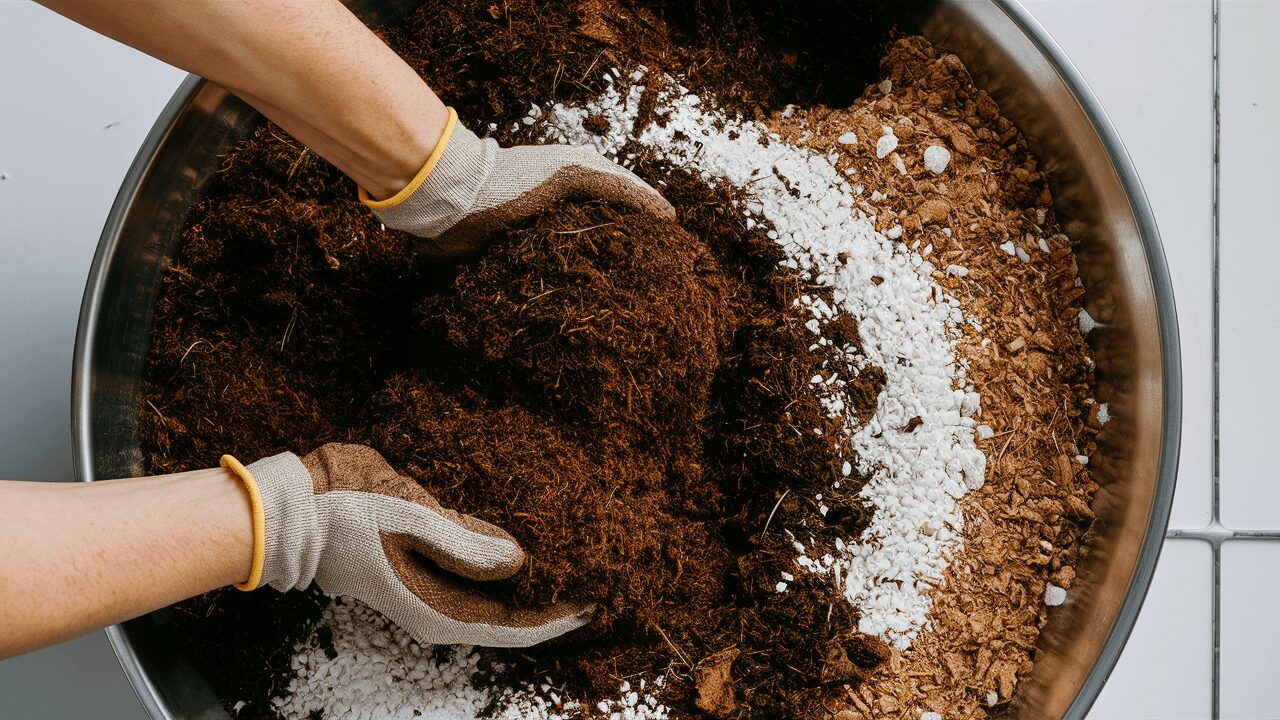
A great indoor plant potting mix has three jobs. It must drain well. It must hold some moisture. It must provide air to the roots. The secret is a chunky, loose texture. When you squeeze a handful of good soil, it should crumble apart. It should not form a tight ball.
For more on container gardening in general, see best plants for pots all year round.
Best Indoor Plant Potting Soil for Drainage
Drainage is the most important factor for indoor plants. Most houseplants die from overwatering, not underwatering. Good drainage prevents root rot.
- Perlite is your best friend. These small white rocks are volcanic glass. They do not absorb water. They create air pockets in the soil. Water flows through them. Roots can breathe.
- Orchid bark is another excellent addition. It is chunky and irregular. It creates large air gaps. It also breaks down slowly, adding organic matter over time.
- Coarse sand works well for succulents and cacti. Use horticultural sand, not beach sand. Beach sand contains salt. It also compacts instead of aerating.
- Avoid vermiculite for most houseplants. Vermiculite holds water. It is good for moisture-loving plants like ferns. For Monsteras, Pothos, and succulents, stick with perlite and bark.
Low Cost Indoor Plant Potting Soil Ingredients
You do not need expensive ingredients. A basic custom mix uses three components.
- Coco coir is the base. It comes from coconut husks. It holds moisture without becoming soggy. It is renewable and sustainable. A brick of compressed coco coir costs $5 and expands to 2 gallons.
- Perlite is the drainage component. It is cheap and widely available. A 4-quart bag costs 5to7. It lasts for many mixes.
- Orchid bark adds chunkiness. Look for medium or fine grade bark. A 4-quart bag costs 6to8. It is essential for aroid mixes.
Optional additions include charcoal and worm castings. Charcoal absorbs impurities. It is great for terrariums. Worm castings add gentle, slow-release nutrients.
Organic Indoor Plant Potting Soil for Beginners
Organic potting mix is free from synthetic chemicals. It uses natural ingredients. It is safer for your home and the environment.
- Coco coir is organic. Perlite is a mineral, not a chemical. Orchid bark is natural. Worm castings are organic fertilizer.
- Avoid commercial mixes labeled "organic" if they feel heavy. Many organic bagged soils still have poor drainage. Read the ingredient list. Look for perlite or bark.
- You can also buy pre-made organic mixes. FoxFarm Ocean Forest is popular. It drains well. However, it costs $20 per bag. DIY is much cheaper.
For more on organic gardening, see indoor container garden .
Printable Soil Recipe Chart (Save This)
INGREDIENT | PURPOSE | BEST FOR |
Coco Coir | Moisture retention, base | Most indoor plants |
Perlite | Drainage, aeration | All plants |
Orchid Bark | Chunky texture, air gaps | Aroids (Monsteras, Philodendrons) |
Coarse Sand | Drainage, weight | Succulents, cacti |
Worm Castings | Slow-release nutrients | All plants |
Charcoal | Absorbs impurities | Terrariums, closed planters |
Keep this chart near your potting area. It will help you mix the right blend for each plant.
Now you understand why cheap bagged soil fails and what ingredients make a perfect custom mix. You know the difference between perlite, bark, and sand.
However, knowing the ingredients is only half the battle. You also need specific recipes for different plants. A Monstera needs chunkier soil than a Pothos. A succulent needs sandier soil than a fern.
In the next section, I will share my exact DIY recipes for aroid mixes, tropical plants, and trailing plants. I will also give you a simple 3:2:1 ratio that works for most houseplants. Keep reading for step-by-step mixing instructions.
Step-by-Step DIY Recipes
Mixing your own soil is simple. You do not need special equipment. A large bucket or tub works fine.
DIY Indoor Plant Potting Soil Recipe
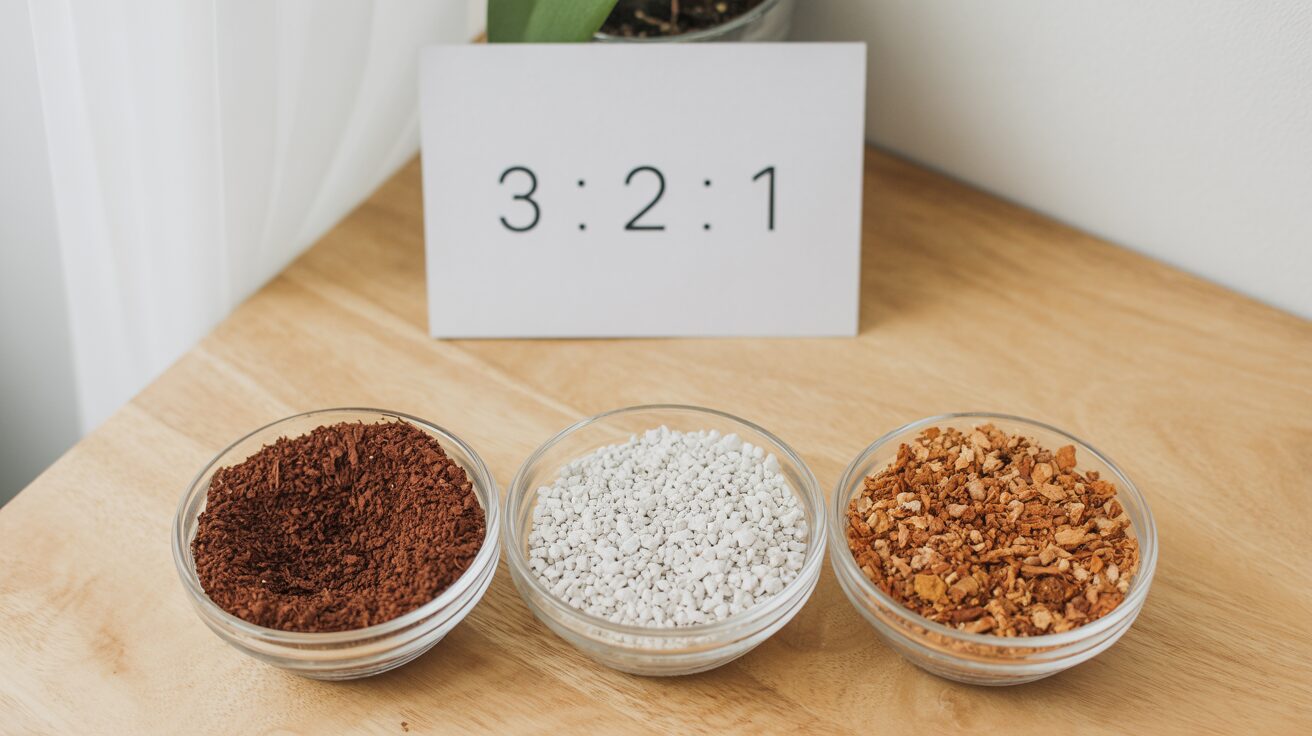
This is my go-to recipe for most houseplants. It works for Pothos, Philodendrons, Snake Plants, and many others. The 3:2:1 ratio. Use 3 parts coco coir, 2 parts perlite, and 1 part orchid bark. Mix them in a large container.
Here is how to measure parts. Use any container as your "part." A solo cup works for small batches. A quart container works for larger batches. Keep the same container for all ingredients. For a small batch (1 gallon):
Mix thoroughly. Use your hands or a trowel. Break up any clumps. The mix should look even.
Add worm castings (optional). For extra nutrients, mix in 1 cup of worm castings per gallon of soil. This is especially good for fast-growing plants.
Moisten the mix before using. Dry soil is dusty. Add a little water and stir. The mix should feel damp, not soaking wet.
How to Make a Chunky Indoor Plant Potting Mix
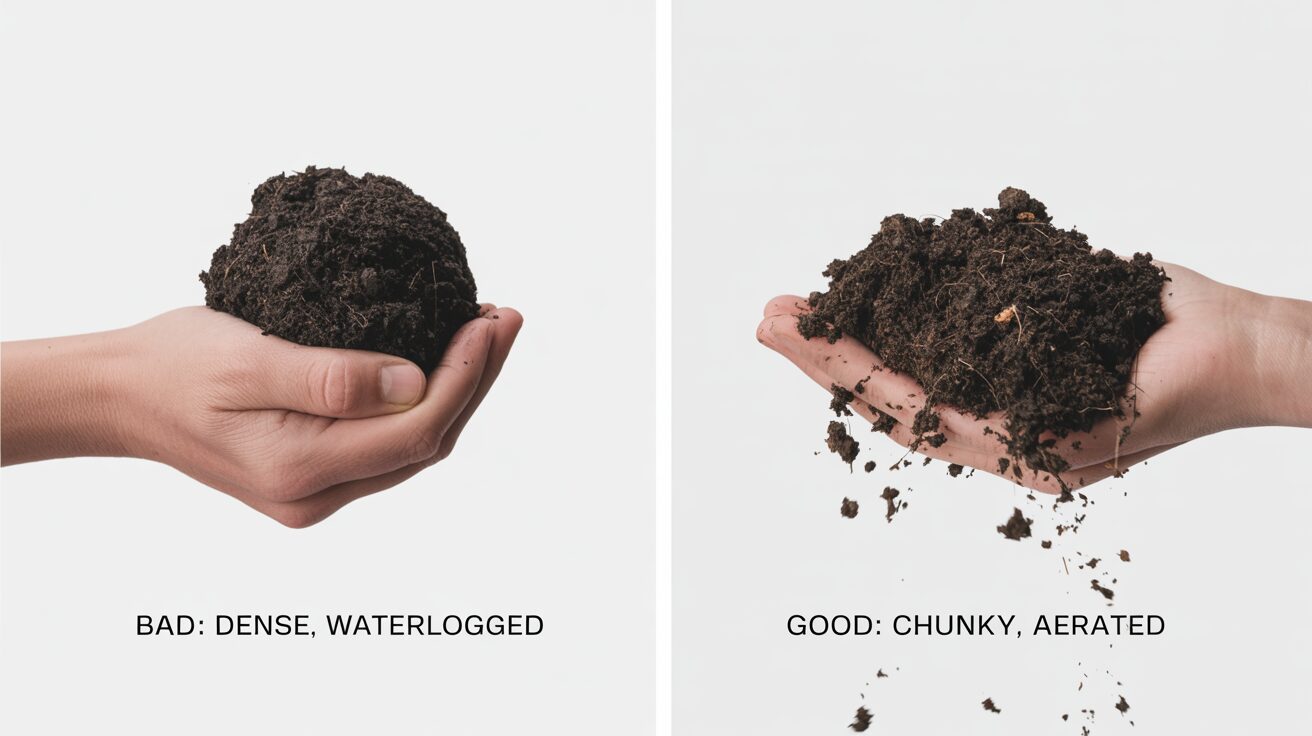
Aroids like Monsteras, Philodendrons, and Anthuriums need chunky soil. Their roots grow in tree bark and leaf litter in nature. They need large air pockets.
The chunky aroid recipe. Use 1 part coco coir, 1 part perlite, and 2 parts orchid bark. This is the opposite of the standard mix. Bark is the main ingredient. For a small batch (1 gallon):
Add charcoal (optional). Charcoal absorbs impurities. It also adds chunkiness. Use 1/2 cup per gallon.
This mix drains very quickly. You will need to water more often than with standard soil. However, your aroid roots will stay healthy and rot-free.
Test the mix. Squeeze a handful. It should fall apart easily. If it forms a tight ball, add more bark or perlite.
Best Soil Mix for Indoor Tropical Plants
Tropical plants like Monstera deliciosa, Philodendron gloriosum, and Alocasia need moisture retention plus drainage. They do not want to dry out completely, but they also hate wet feet.
The tropical blend. Use 2 parts coco coir, 2 parts perlite, and 1 part orchid bark. This is a balanced mix. For a small batch (1 gallon):
Add worm castings. Tropical plants are heavy feeders. Mix in 1 cup of worm castings per gallon. They provide gentle, slow-release nutrients. This mix holds moisture longer than aroid mix. However, it still drains well. It is perfect for plants that like consistent moisture but not sogginess.
Best Soil Mix for Indoor Trailing Plants
Trailing plants like Pothos, String of Pearls, and Philodendron Brasil are adaptable. They tolerate a range of soils. However, they prefer a mix that drains well.
The trailing plant blend. Use 2 parts coco coir, 2 parts perlite, and 1 part bark. This is similar to the tropical blend. For a small batch (1 gallon):
For String of Pearls and other succulents, use the succulent mix from the printable chart. They need more sand and less moisture retention.
Pothos is forgiving. It grows in almost any soil. However, it thrives in a mix with good drainage. The trailing plant blend works perfectly.
For more on specific plants, see spiky houseplants and indoor container garden.
Soil Care, Safety, and Maintenance
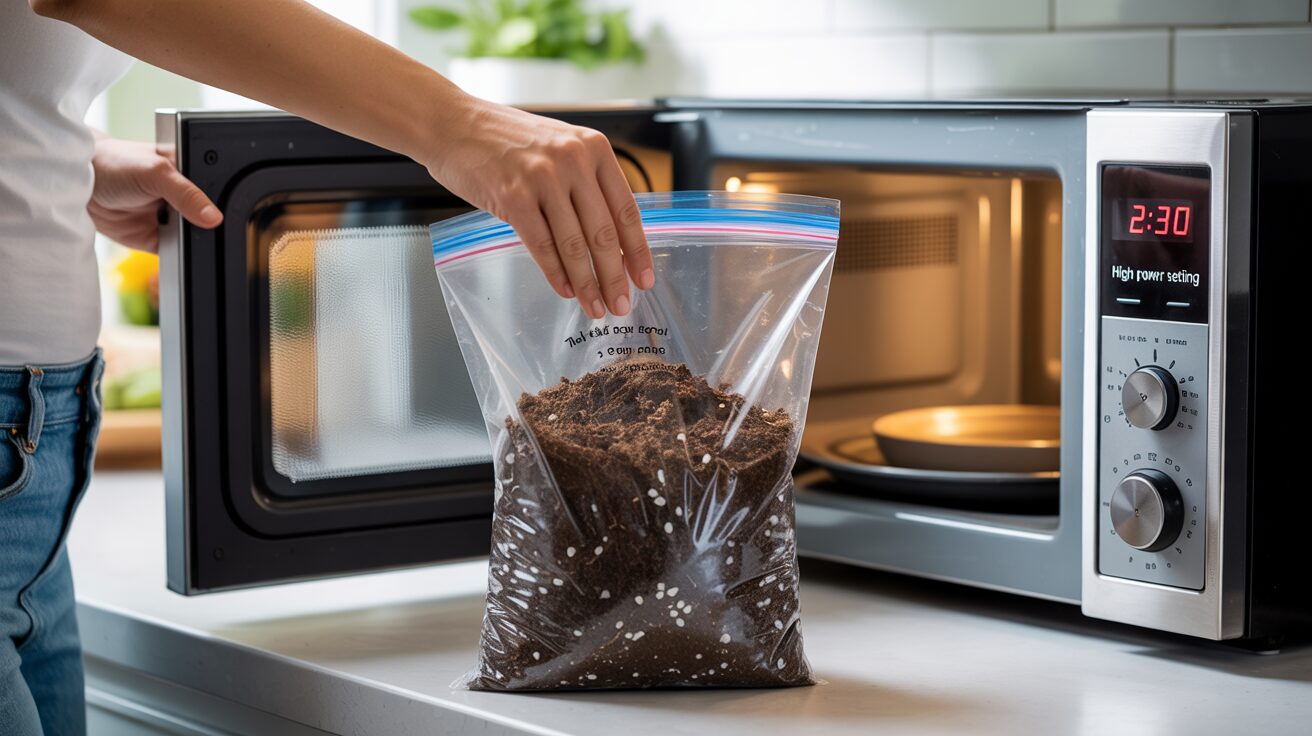
Good soil needs maintenance. Over time, it breaks down. It can also harbor pests.
How to Sterilize Indoor Plant Potting Soil
Sterilizing soil kills pests, fungus gnats, and diseases. It is especially important if you are reusing old soil.
- The oven method. Preheat your oven to 180°F (82°C). Spread soil in a baking pan. Make it no more than 4 inches deep. Cover with foil. Bake for 30 minutes. The soil should reach 180°F internally. Do not go hotter. Higher temperatures create toxic compounds.
- The microwave method. Place 2 pounds of moist soil in a microwave-safe bag. Leave the top open for steam. Microwave on high for 2 to 3 minutes. Let it cool before using.
Why sterilize? Fresh bagged soil can contain fungus gnat eggs. Garden soil often has pests. Sterilizing kills them before they infest your home. Do not sterilize soil with fertilizer. Heat can change the chemical structure. Sterilize plain soil only. Add fertilizer afterward.
Aerating Indoor Plant Potting Soil for Root Health
Soil compacts over time. Watering pushes particles together. Roots struggle to grow through dense soil.
- Aerate with a chopstick or skewer. Gently poke holes into the soil. Do not stab the roots. Wiggle the stick to create air channels.
- Aerate every 3 to 6 months. This is especially important for plants that have been in the same pot for over a year.
- Add perlite to the top layer. Sprinkle perlite on the soil surface. Water it in. The perlite will work its way down over time.
- Repotting is the best aeration. If the soil is very compact, repot the plant. Use fresh mix. Discard the old, compacted soil.
How Long Does Indoor Plant Potting Soil Last?
Potting soil does not last forever. It breaks down over time. Fresh, unused soil lasts 6 to 12 months in a sealed bag. After that, the ingredients degrade. Perlite breaks into dust. Coco coir compacts. The soil loses its structure.
Used soil can be reused for 1 to 2 years. However, it loses nutrients. It may also compact. Refresh it by adding fresh perlite and worm castings.
Signs that soil needs replacing. Water pools on top. The soil smells sour. Fungus gnats are persistent. The plant is declining despite good care. Do not reuse soil from a diseased plant. Throw it away. Diseases can survive in the soil and infect your next plant.
Best Potting Soil for Indoor Plants in Low Light
Low light plants like Snake Plants, ZZ Plants, and some Philodendrons need soil that does not stay wet. Low light means slower growth. Slower growth means slower water use. The soil stays damp longer.
Use a faster-draining mix. Increase the perlite ratio. Try 2 parts coco coir, 3 parts perlite, and 1 part bark. Avoid moisture-control mixes. These are designed for outdoor containers. They hold too much water for indoor low-light plants.
Add sand for extra drainage. Coarse sand helps water flow through. It also adds weight, which helps tall plants stay stable. Water less frequently. In low light, the soil dries slowly. Check the soil before watering. Wait until the top 2 inches are dry. For more on low-light plants, see spiky houseplants.
Can You Reuse Old Potting Soil? (And How to Refresh It)
Yes, you can reuse potting soil. However, you must refresh it first.
- Remove old roots and debris. Dump the soil into a bucket. Pick out any dead roots, leaves, or sticks.
- Sterilize the soil. Use the oven or microwave method above. This kills any pests or diseases.
- Add fresh perlite. Old soil has less perlite because it breaks down. Add 20% fresh perlite by volume.
- Add worm castings. Reused soil has few nutrients. Mix in 1 cup of worm castings per gallon of soil.
Test the drainage. Put the refreshed soil in a pot. Water it. If water pools on top, add more perlite. If water runs straight through, add more coco coir.
Do not reuse soil more than twice. After two cycles, the coco coir breaks down completely. The soil becomes too dense. Start fresh.
Even with the best mix, problems can occur. Soil can grow mold. Fungus gnats can appear. The soil can become dense and compacted.
In the final section, I will show you how to troubleshoot these common soil disasters. You will learn why soil molds, how to prevent fungus gnats, and how to fix dense soil.
Troubleshooting Common Soil Disasters
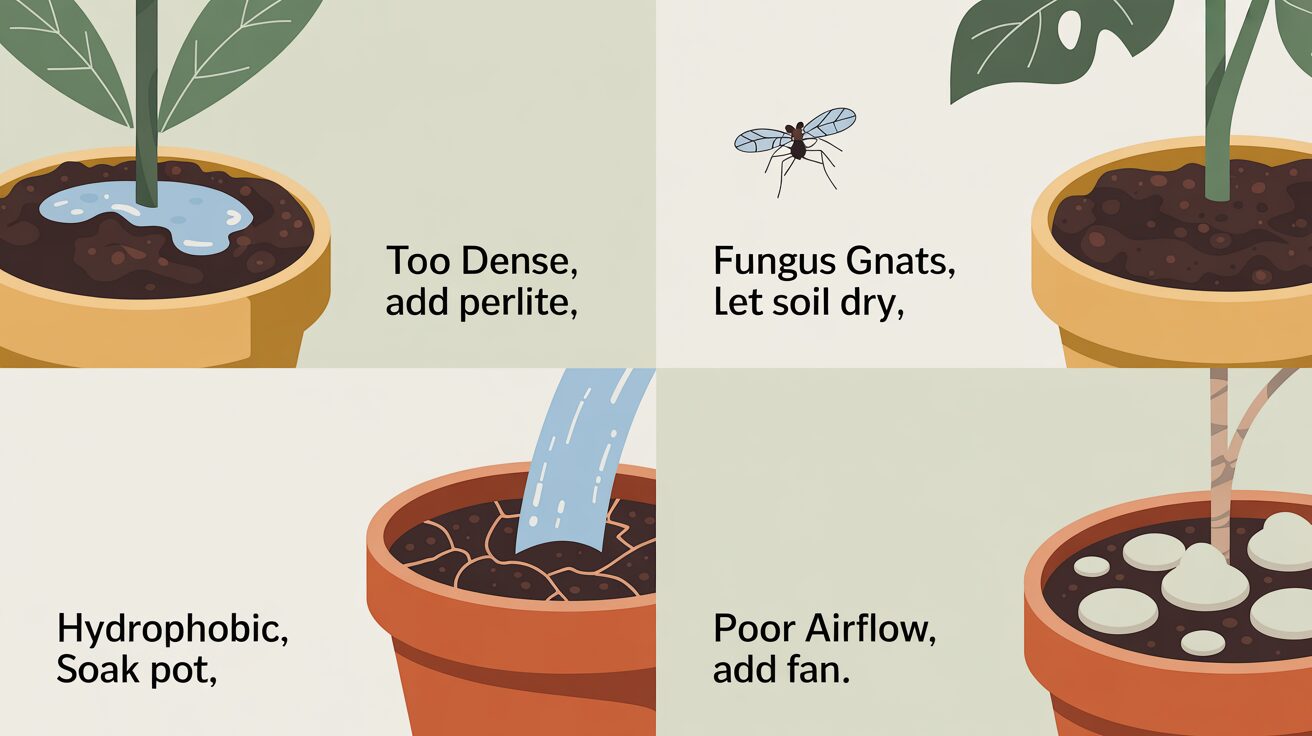
Even with perfect soil, things can go wrong. Here is how to fix them.
Why is My Indoor Plant Potting Soil Molding?
White mold on the soil surface looks alarming. However, it is usually harmless. It is a saprophytic fungus. It feeds on dead organic matter. What causes mold. High humidity, poor air circulation, and overwatering. The soil stays too wet. The mold has time to grow.
Preventing Fungus Gnats in Indoor Plant Potting Soil
Fungus gnats are tiny black flies. They live in damp soil. Their larvae eat roots. Prevention is easier than cure. Let the soil dry out between waterings. Fungus gnats need moisture to breed.
- Use a top dressing. Cover the soil with a layer of sand, perlite, or small gravel. This blocks adult gnats from laying eggs.
- Water from below. Place the pot in a tray of water. Let the soil absorb water from the bottom. The soil surface stays dry.
- Yellow sticky traps catch adults. Place them near your plants. They will not solve the problem alone, but they help reduce the population.
If you have an infestation, let the soil dry completely. Then water with a mixture of 1 part hydrogen peroxide and 4 parts water. The peroxide kills larvae on contact. It also adds oxygen to the soil.
For more on pest control, see white fuzzy bugs on plants.
How to Fix Dense Indoor Plant Potting Soil
Dense soil is compacted. Water pools on top. Roots cannot breathe. The plant declines. Aerate immediately. Use a chopstick or skewer. Poke holes deep into the soil. Wiggle to create channels. Do this gently to avoid damaging roots.
Add perlite to the surface. Sprinkle perlite on top. Water it in. Over time, the perlite will work its way down. It will loosen the soil.
Repot the plant. This is the best solution. Remove the plant from its pot. Shake off the old, dense soil. Repot with fresh, chunky mix. Prevent future compaction. Do not press the soil down when you repot. Tap the pot on the table to settle the soil. Use the ingredients in the recipes above. They stay loose for years.
FAQs About Indoor Plant Potting Soil
What is the best soil for indoor plants?
The best soil is a well-draining, chunky mix. It should hold some moisture but not stay soggy. A blend of coco coir, perlite, and orchid bark works for most plants.
Is it OK to use potting soil for indoor plants?
Yes, but choose the right potting soil. Use a mix designed for containers. Avoid garden soil. It is too heavy and may contain pests.
What soil to use when repotting indoor plants?
Use fresh, well-draining mix. Match the mix to the plant. Aroids need chunky soil. Succulents need sandy soil. Most other plants do well with the 3:2:1 recipe.
What is the difference between potting soil and indoor potting soil?
Potting soil is a general term. It can mean many things. Indoor potting soil is specifically designed for houseplants. It is lighter and drains better. It is also sterilized to prevent pests.
Can I use outdoor soil for indoor plants?
No. Outdoor soil is too heavy. It compacts in pots. It may also contain pests, diseases, and weed seeds. Always use a sterile, well-draining potting mix for indoor plants.
Summary Tips for Indoor Potting Soil
You made it to the end. That means you are serious about giving your indoor plants the best foundation. Thank you for reading.
- Start with the 3:2:1 recipe. It works for most houseplants. One part coco coir, one part perlite, one part bark? No. Wait. That is not the recipe. Let me be clear. The standard mix is 3 parts coco coir, 2 parts perlite, 1 part bark. Save the printable chart. Use it every time you repot.
- Do not be afraid to experiment. Every home is different. Your humidity, light, and watering habits are unique. Adjust the recipe as needed. If the soil stays wet too long, add more perlite. If it dries too fast, add more coco coir.
- Sterilize reused soil. It saves money. However, always sterilize it first. The oven method takes 30 minutes. It kills fungus gnat eggs and diseases.
If you are just starting your indoor gardening journey, read my full guide on how to start urban gardening . It covers light, water, and everything else a beginner needs.
And if you love propagating plants, try propagating basil or house plants from seeds next.
Share Your Houseplant Soil Recipes Below!
I have two small asks for you before you start mixing up your next batch of substrate:
- First, drop a comment below. What are your houseplants growing in right now? Are you battling a dense, waterlogged soil mix, or are you looking for a custom recipe for a specific plant? Let me know what species you are growing—I personally reply to every single comment within 48 hours to help you troubleshoot your setup!
- Second, save this guide for later. Pin our master chunky soil ratio chart to your favorite houseplant or indoor gardening Pinterest board, or text this link to a fellow plant parent who is tired of dealing with yellow leaves and root rot.
Now, grab your mixing bucket, combine those aeration ingredients, and give your plants the foundation they deserve. Your indoor jungle will thank you with massive new growth!
Happy gardening, friend!
External Link: For further reading, check out these resources on making your own potting soil and choosing the right soil for your plants.
Last Updated on May 25, 2026 by Austine