
To grow lettuce indoors, you need three things: a container with drainage holes (4-6 inches deep), potting mix (not garden soil), and a sunny window or grow lights.
Sow seeds on the surface, cover with 1/8 inch of soil, keep moist. Lettuce germinates in 7-14 days. Harvest baby leaves in 3-4 weeks. No greenhouse required.
Whether you are growing lettuce in 4 inch pots on a windowsill or setting up a diy indoor vertical lettuce garden for small spaces, the key to success lies in mimicking the perfect spring environment.
In this guide, we’ll cover everything from how long does lettuce take to grow indoors from seed to the best grow lights for an indoor lettuce garden.
We’ll also troubleshoot common issues, like how to prevent indoor lettuce from getting leggy, and even show you how to grow romaine lettuce from scraps indoors. Get ready to turn your home into a thriving, edible oasis.
Why Grow Lettuce Indoors?
Have you ever paid three dollars for a bag of wilted lettuce at the grocery store? I have. It is frustrating. You want a fresh salad, but the leaves are sad and brown. The good news is that you can grow lettuce indoors all year round. You do not need a greenhouse. You do not need a backyard. You just need a small space, some basic supplies, and a little patience.
- 1Year-round harvest. Outdoor gardening stops in winter for most of us. Indoor lettuce keeps going. You can harvest fresh greens in January while snow falls outside your window.
- 2Pest-free growing. No slugs, no rabbits, no deer. Indoor lettuce is protected from the pests that ruin outdoor crops. You will not need pesticides.
- 3Better flavor. Store-bought lettuce is often days or weeks old. Homegrown lettuce goes from pot to plate in minutes. The flavor is brighter, crisper, and sweeter.
- 4Convenience. Imagine walking to your windowsill instead of driving to the store. Fresh salad is always a few steps away.
For more on starting your garden the right way, check out my beginner guide on how to start urban gardening.
Choosing Your Method: Soil vs. Hydroponics
Lettuce is forgiving. It grows well in soil. It also grows well in water. The method you choose depends on your budget, space, and how much time you want to spend.
Growing Lettuce Indoors in Water vs Soil
Choose the method that fits your needs:
Factor | Soil | Hydroponics |
|---|---|---|
Cost | Low (pot, soil, seeds) | Medium to high (system, nutrients, pH tester) |
Difficulty | Easy | Medium |
Growth speed | Normal | Faster |
Maintenance | Water every few days | Check water and nutrients weekly |
Best For | Beginners | Experienced gardeners |
For most people, I recommend starting with soil. It is cheap and forgiving. Once you have success, try hydroponics if you want to experiment.
Best Lettuce Varieties for Indoor Hydroponic Systems
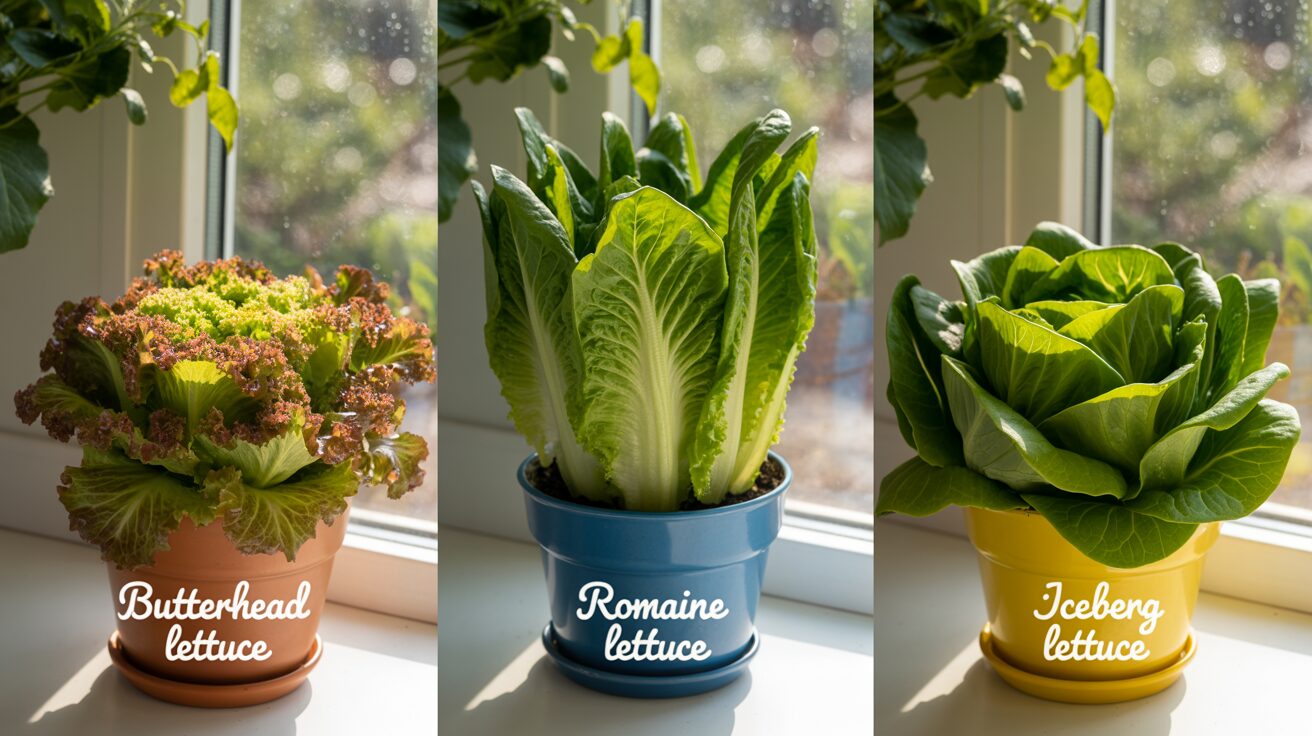
If you choose hydroponics, pick the right lettuce varieties. Some grow better in water than others.
Avoid heading lettuces like iceberg. They need more space and longer growing times. They are not ideal for indoor hydroponics. For a deeper dive into soilless growing, see my guide on growing spinach in hydroponics.
Printable Lettuce Growing Chart (Save This)
Factor | Lettuce's Preference |
|---|---|
Container depth | 4-6 inches |
Soil type | Well-draining potting mix |
Seed depth | 1/8 inch (barely cover) |
Germination time | 7-14 days |
Light needed | 12-16 hours daily (grow lights recommended) |
Temperature | 60°F to 70°F (15°C to 21°C) |
Water | Keep soil consistently moist, not soggy |
Days to harvest | 3-4 weeks (baby leaves), 6-8 weeks (full heads) |
Keep this chart near your indoor garden. It will help you remember the basics.
Essential Equipment for Indoor Success
You do not need fancy equipment to grow lettuce indoors. However, a few key items will make a big difference.
Best Grow Lights for Indoor Lettuce Garden
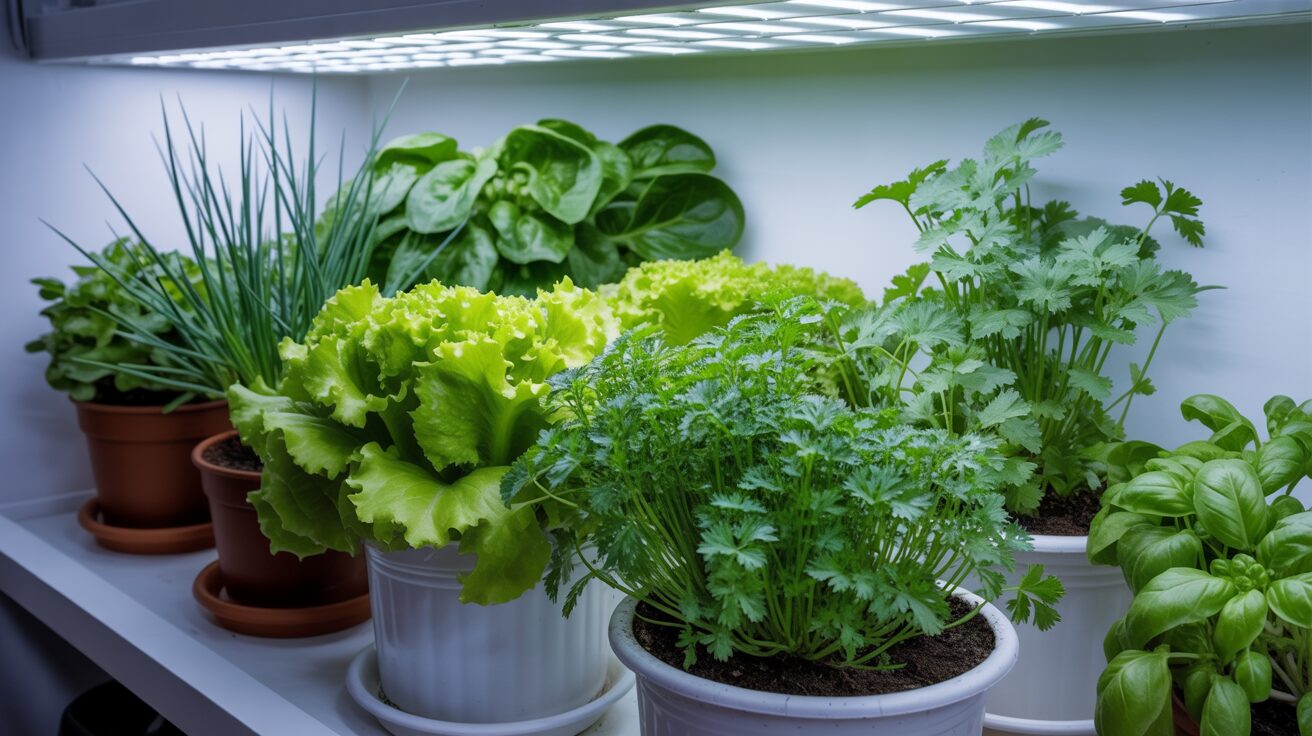
Here is the truth. A sunny window is often not enough. Especially in winter. Winter sunlight is weaker. Days are shorter. Your lettuce will grow slowly. It may get leggy (tall and spindly). Grow lights fix this problem. They provide consistent, strong light. Your lettuce will grow faster and produce more leaves.
LED grow lights are the best choice. They are energy-efficient. They do not get hot. They last for years. Look for full-spectrum LEDs. These mimic natural sunlight.
- Place the lights 4 to 6 inches above your lettuce.
- Keep them on for 12 to 16 hours per day.
- Use a cheap outlet timer to automate this.
Fluorescent tubes are another option. They are cheaper upfront. However, they use more electricity. They also need replacement more often. For more indoor growing tips, see my guide on indoor container garden.
Growing Lettuce in 4 Inch Pots on Windowsill
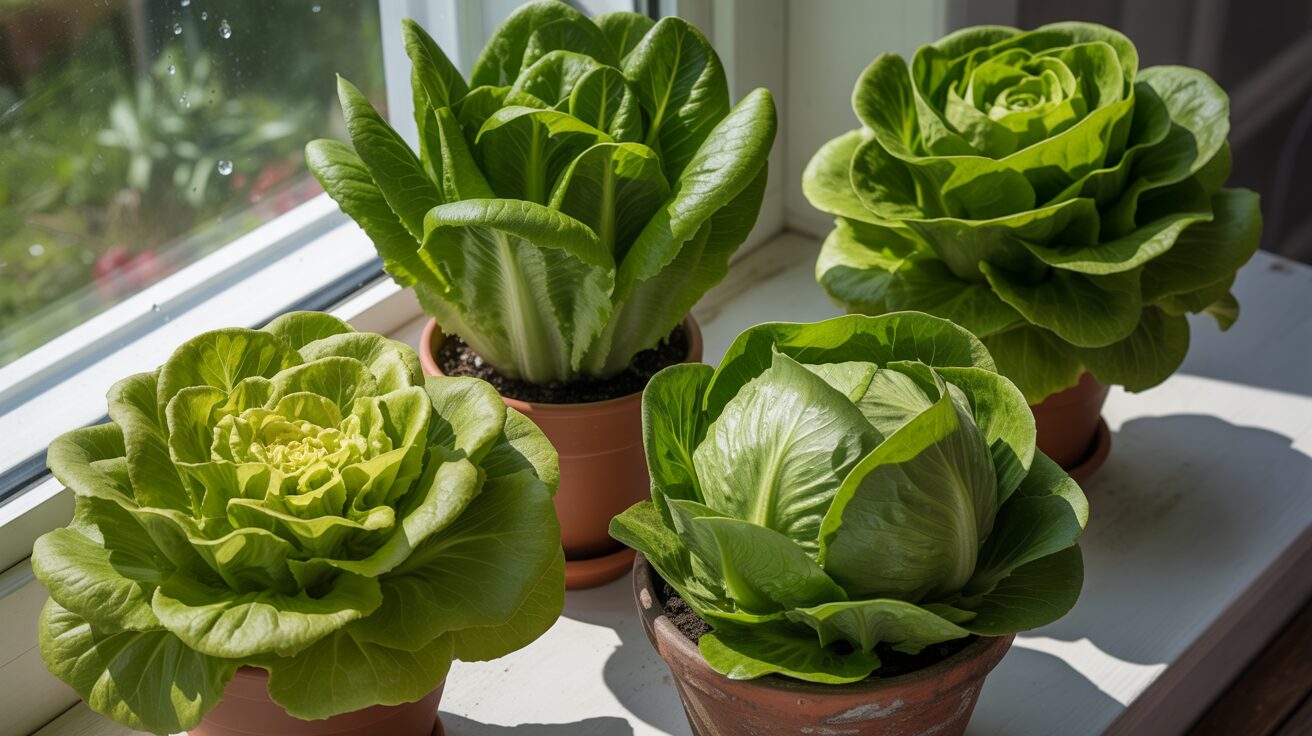
Small pots work well for lettuce. A 4-inch pot can grow one lettuce plant. This is perfect for a sunny windowsill.
- Choose a pot with drainage holes. Lettuce does not like soggy roots.
- Fill the pot with indoor potting mix. Do not use garden soil. It is too heavy.
- Sow 2 to 3 seeds per pot.
- Cover with 1/8 inch of soil. Water gently.
- Once seedlings appear, thin to one plant per pot. Keep the strongest one. Snip the others at the soil line.
- Rotate your pots every few days. This prevents the plants from leaning toward the light.
For more on container gardening, see best plants for pots all year round.
Step-by-Step: From Seed to Salad
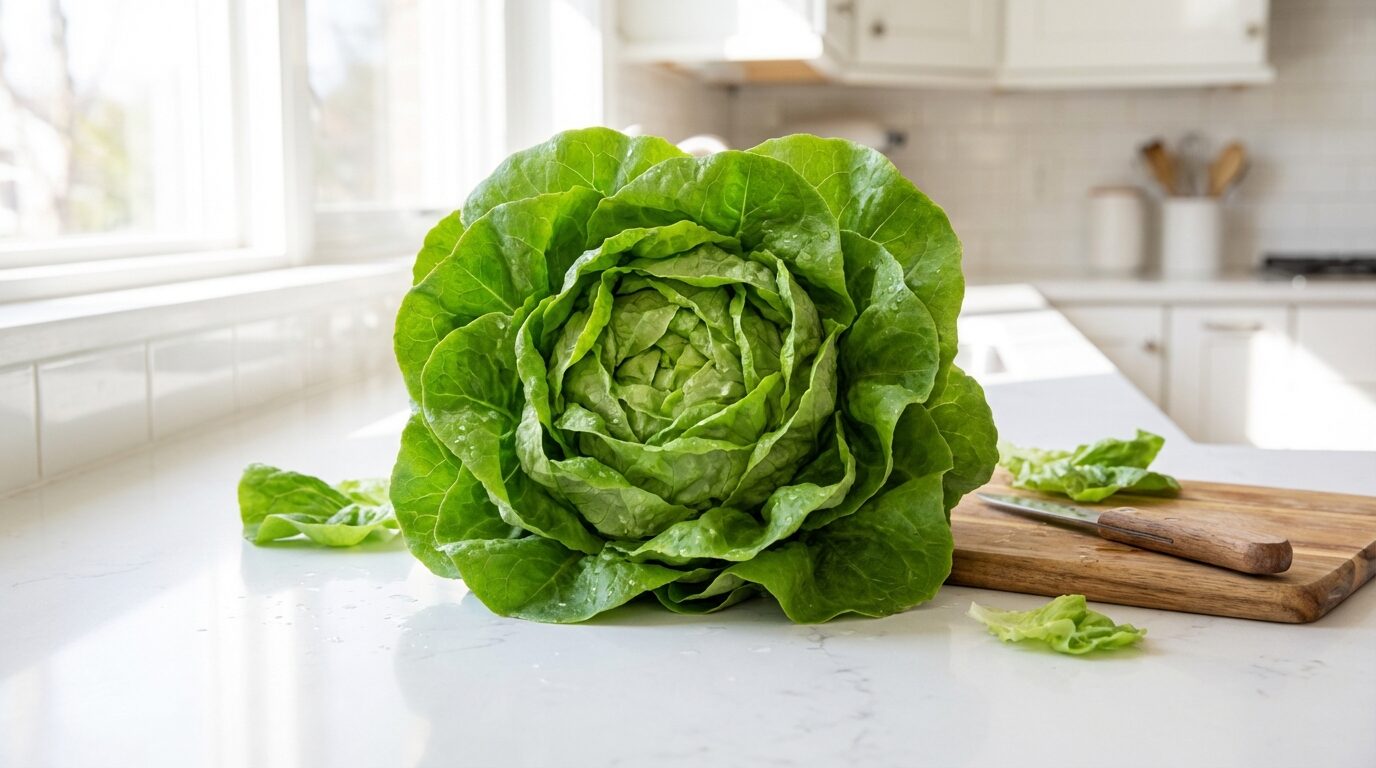
Now let me walk you through the entire process from planting to harvesting.
How Long Does Lettuce Take to Grow Indoors from Seed?
Lettuce grows fast. That is one reason it is so satisfying. Germination takes 7 to 14 days. Seeds sprout quickly when soil temperature is 65°F to 75°F (18°C to 24°C). Baby leaves are ready in 3 to 4 weeks. You can start harvesting small leaves at this stage. They are tender and mild.
Full heads take 6 to 8 weeks. The plant reaches its mature size. You can harvest the whole head at once.
For a continuous supply, practice succession planting. Start new seeds every 2 weeks. When one batch finishes, the next batch is ready. For more on starting seeds, see house plants from seeds.
How to Prevent Indoor Lettuce from Getting Leggy
Leggy lettuce is tall and thin. The stems stretch out. The leaves are small and pale. This happens when the plant does not get enough light. The fix is simple. Move your grow lights closer. They should be 4 to 6 inches above the leaves. If using a sunny window, supplement with a small LED grow light.
Another cause is overcrowding. Lettuce seeds are tiny. It is easy to plant too many. Thin your seedlings to one plant per 4-inch pot. Crowded plants compete for light. Temperature also matters. Lettuce grows best in cool conditions. If your indoor temperature is above 75°F (24°C), the plant may stretch. Move it to a cooler spot.
How to Grow Romaine Lettuce from Scraps Indoors
This is my favorite trick. It is almost free. And it feels like magic. Buy a head of romaine lettuce from the grocery store. Cut the leaves about 1 inch above the base. Use the leaves for your salad. Keep the base.
Place the base in a shallow dish with about 1/2 inch of water. Put the dish on a sunny windowsill. Change the water every 2 days.
Within a few days, you will see new leaves growing from the center. Within a week, you will have small but harvestable leaves.
For longer growth, transplant the base into soil after roots appear.
- Fill a small pot with potting mix.
- Plant the base so the roots are covered.
- Water gently.
The plant will continue growing. This method works best for romaine and other upright lettuces. Loose-leaf varieties are harder to regrow this way.
DIY: Growing Lettuce Indoors from Recycled Plastic Bottles
If you're interested in some DIY projects with recycled plastic bottles, watch this quick video to learn how to create and grow self watering Lettuce plant that's eco-friendly and budget-friendly.
Recycling plastic bottles to grow lettuce is an excellent way to repurpose materials while creating a sustainable indoor garden. Here's how to do it:
- Prepare the Bottle: Start by cutting the top off a plastic bottle, leaving about 6-8 inches of height. Poke a few drainage holes in the bottom.
- Fill with Soil: Fill the bottle with a well-draining potting mix, leaving about an inch of space at the top.
- Plant the Seeds: Sow your lettuce seeds as described in the seed-starting section. Alternatively, you can transplant seedlings into the bottle.
- Water and Care: Water the soil until it's evenly moist. Place the bottle in a well-lit area, such as a windowsill or under grow lights. Monitor the moisture level and water as needed.
For more DIY creative ideas, you can explore our guide on Indoor Vertical Garden.
In the next section, I will share my best tips for ongoing care. I will also show you how to harvest lettuce so it keeps growing back. Keep reading to learn how to get multiple harvests from a single planting.
Ongoing Care and Maintenance
Once your lettuce seeds sprout, the real fun begins. Lettuce is low-maintenance. However, a few simple habits will keep your plants healthy.
How Often to Water Indoor Potted Lettuce
Lettuce likes consistent moisture. The soil should be damp but not soaking wet. Check the soil every day. Stick your finger into the top inch. If it feels dry, water. If it feels damp, wait another day. Water gently. Use a watering can with a narrow spout. Pour water onto the soil, not the leaves. Wet leaves can lead to mold.
Drainage is critical. Your pots must have holes in the bottom. Empty the saucer after watering. Do not let the pot sit in standing water. If you are forgetful, consider building a self-watering herb garden . It works for lettuce too.
Best Organic Fertilizer for Indoor Leafy Greens
Lettuce is a light feeder. It does not need much fertilizer. In fact, too much fertilizer can make the leaves taste bitter. If you use fresh indoor potting mix, you may not need fertilizer at all.
Potting mix often contains slow-release nutrients.
If your lettuce looks pale or grows slowly, give it a light feeding. Use a balanced organic fertilizer with equal amounts of nitrogen, phosphorus, and potassium. Look for numbers like 5-5-5 or 10-10-10. Mix the fertilizer at half strength. Apply once every 2 to 4 weeks.
Compost tea is another excellent option. It is gentle and adds beneficial microbes. You can buy compost tea or make your own.
Common Pests on Indoor Lettuce and How to Treat Them
Indoor gardens have fewer pests than outdoor gardens. However, a few bugs can still find their way inside.
Prevention is the best cure. Inspect your plants every few days. Quarantine any new plants before adding them to your indoor garden. For more on identifying pests, see white fuzzy bugs on plants and scales bugs on plants.
Why Is My Indoor Lettuce Bitter? (And How to Fix It)
Bitterness is the most common complaint about homegrown lettuce. Here is why it happens and how to stop it.
If your lettuce is already bitter, try soaking the leaves in cold water for 10 minutes. This can remove some of the bitter compounds.
Harvesting for Continuous Growth
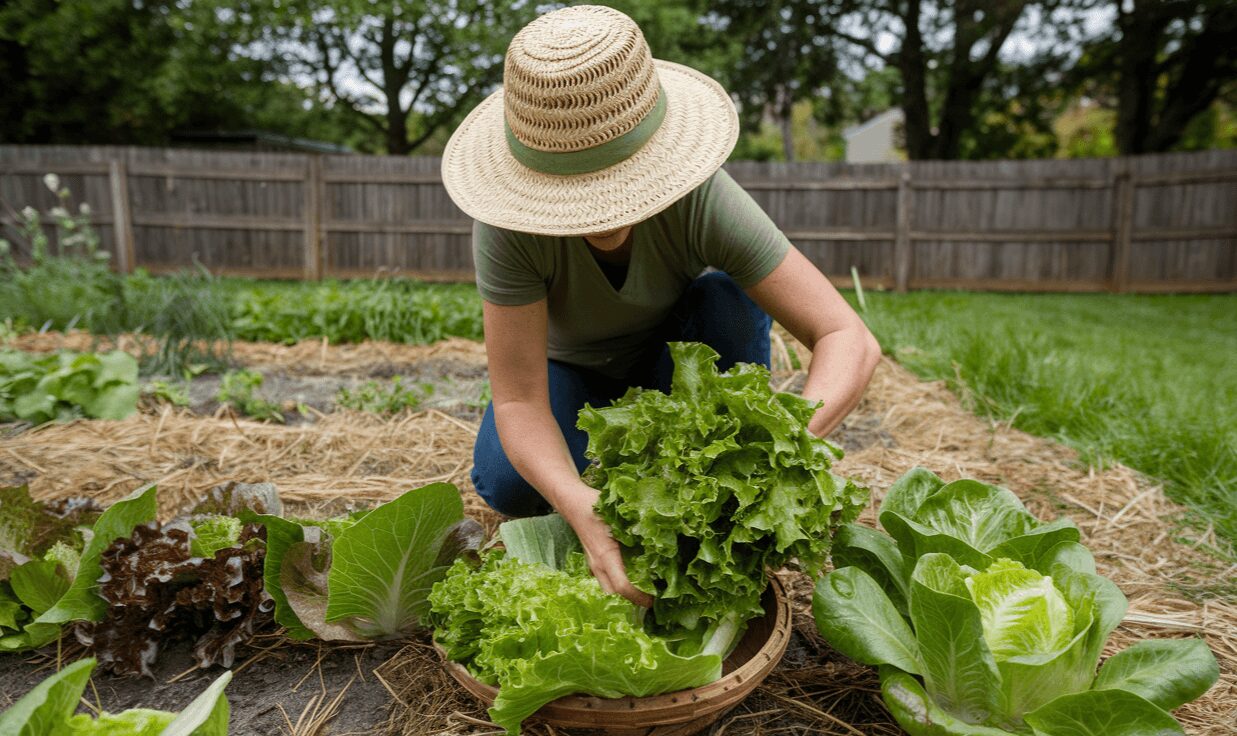
Harvesting correctly is the secret to getting more lettuce from each plant.
How to Harvest Indoor Lettuce So It Keeps Growing
Lettuce is not a one-time harvest. You can pick leaves for weeks or months. The key is the "cut and come again" method.
- For loose-leaf lettuce, harvest the outer leaves first. Leave the inner leaves and the crown. Snip leaves with scissors about 1 inch above the soil. The plant will grow new leaves from the center.
- For romaine and butterhead, you have two options. Harvest the whole head at once. Or remove the outer leaves gradually. Gradually harvesting works well for these varieties too.
Harvest in the morning for the best flavor. Lettuce is crispest and sweetest after a cool night. - Do not harvest more than one-third of the plant at once. Taking too many leaves stresses the plant. It may stop growing.
- Succession planting ensures a continuous supply. Start new seeds every 2 weeks. As one pot finishes, another pot becomes ready. For more harvesting tips, see growing cilantro from seed.
In the final section, I will answer frequently asked questions about growing lettuce indoors. I will also share advanced tips for winter growing and troubleshooting common problems. Keep reading for the answers you have been looking for.
Frequently Asked Questions About Growing Lettuce Indoors
Is it worth growing lettuce indoors?
Yes, absolutely. Indoor lettuce saves you money. It tastes better than store-bought. And it is incredibly satisfying to harvest your own greens in winter. A 3packetofseedscanproduce30 worth of lettuce over several months.
Can I grow lettuce all year round indoors?
Yes, you can. Lettuce does not care what season it is outdoors. It only cares about light, temperature, and water. With grow lights, you can harvest fresh lettuce in July or January. The process is the same.
Can you grow lettuce indoors in pots?
Yes, pots work perfectly. Choose a pot that is at least 4 inches deep. Make sure it has drainage holes. Use a high-quality potting mix. Place the pot in a sunny window or under grow lights.
Can iceberg lettuce be grown indoors?
Iceberg is more challenging. It forms dense heads that take up space. It also needs cooler temperatures than other lettuces. Try a compact variety like 'Iceberg A' or 'Crisphead'. For beginners, stick with loose-leaf or butterhead.
How much light does lettuce need to grow indoors?
Lettuce needs 12 to 16 hours of light daily. A sunny window may provide 4 to 6 hours. That is not enough for strong growth. Grow lights are recommended for best results. Place lights 4 to 6 inches above the leaves.
How do you grow lettuce indoors from scraps?
Save the base of a romaine head. Place it in a shallow dish with 1/2 inch of water. Put it on a sunny windowsill. Change the water every 2 days. New leaves will appear in 5 to 7 days. For longer growth, transplant into soil.
Why is my indoor lettuce wilting?
Wilting is usually a watering issue. Either the soil is too dry or too wet. Check the soil moisture. If it is dry, water deeply. If it is wet, let it dry out before watering again. Also, check for root rot if the plant is very sad.
Can I use regular potting soil for indoor lettuce?
Yes, but choose a potting mix, not garden soil. Garden soil is too heavy. It compacts in pots. It may also contain weed seeds or pests. Potting mix is light, sterile, and designed for containers.
Growing Lettuce Indoors in Winter
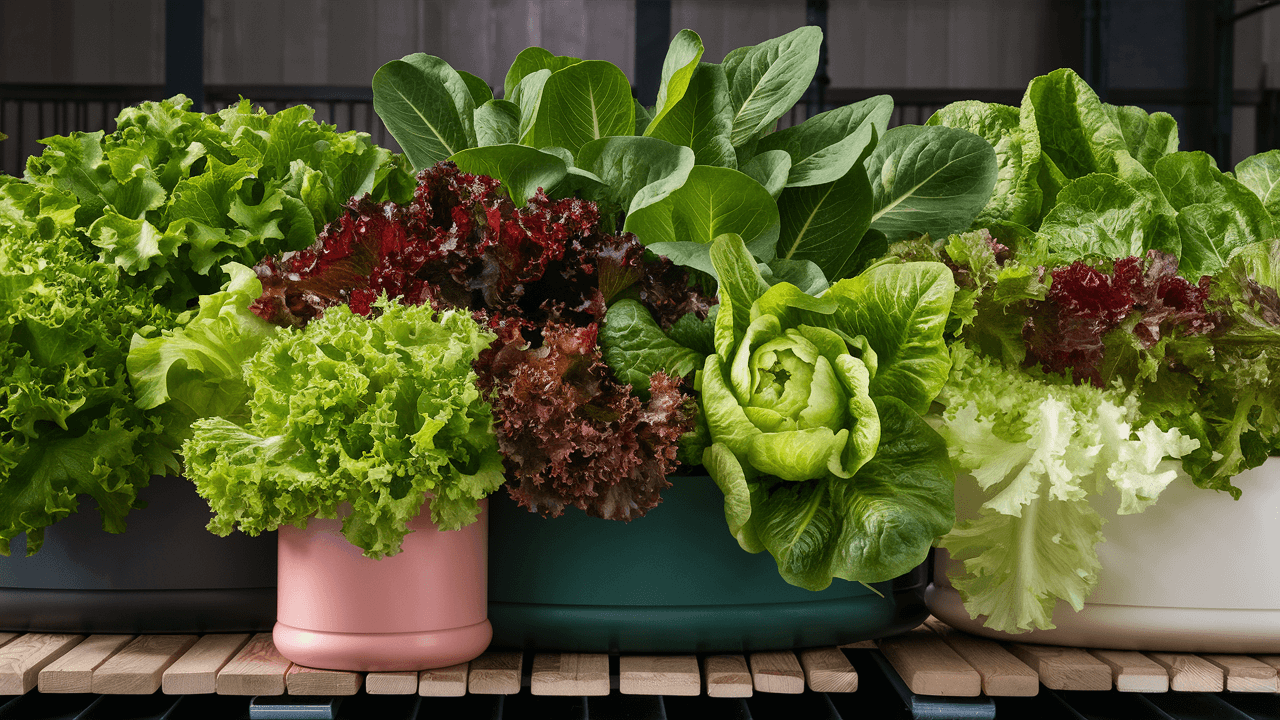
Winter is the best time to grow lettuce indoors. Outdoor gardens are empty. Fresh greens are expensive at the store. Indoor lettuce solves both problems.
Winter-friendly varieties include 'Winter Density', 'Arctic King', and 'Merlot'. These are bred to tolerate cooler temperatures and lower light. For more cold-weather tips, see winter vegetables to grow in pots.
Troubleshooting Common Problems
Even with good care, issues can arise. Here is how to fix them.
Problem | Likely Cause | Solution |
|---|---|---|
Leggy, pale plants | Not enough light | Move grow lights closer; increase to 14-16 hours daily |
Yellow leaves | Overwatering | Let soil dry out; ensure pots have drainage holes |
Brown leaf edges | Underwatering or dry air | Water more consistently; use a humidifier |
Bitter taste | Heat or too much light | Move to cooler spot; reduce light to 12 hours |
Mold on soil surface | Poor air circulation | Increase airflow with a small fan |
Leaves have holes | Pests (caterpillars, slugs) | Inspect thoroughly; remove pests by hand |
Slow growth | Cool temperatures or low nutrients | Move to warmer spot; apply half-strength fertilizer |
Plants falling over | Leggy growth (not enough light) | See leggy solution above |
Final Tips from Me
You made it to the end. That means you are serious about growing your own lettuce. Thank you for reading. Here are my three final tips.
Start small. Do not buy a complicated hydroponic system right away. Begin with one pot on a windowsill. Use a simple potting mix. Plant a few seeds. See what happens. Once you have success, expand. Use a timer. Lettuce needs consistent light. It is easy to forget to turn grow lights on and off. A cheap outlet timer automates this. Set it for 14 hours on, 10 hours off. Your lettuce will thrive.
Harvest often. Do not wait for a perfect head of lettuce. Harvest baby leaves early. The more you harvest, the more the plant produces. Regular harvesting also prevents bitterness.
If you are just starting your indoor gardening journey, read my full guide on how to start urban gardening . It covers soil, containers, watering, and everything else a beginner needs.
And if you love growing your own greens, try growing spinach indoors or growing cilantro from seed next.
One more thing before you go...
If you find this helpful. First, drop a comment below. What is your biggest lettuce growing struggle right now? Leggy plants? Bitter leaves? Pests? Or do you have a tip that I missed? I personally reply to every comment within 48 hours.
Second, save this post for later. Pin the printable chart to your Pinterest board. Share this guide with a friend who loves fresh salads. The more people who grow their own food, the better. Now go plant those lettuce seeds. Fresh salads are closer than you think.
Happy gardening!
Last Updated on May 9, 2026 by Austine