
Rosemary seeds take 2 to 4 weeks to germinate (sometimes longer). They need light to germinate – do not bury them. For best results, use a heat mat to keep soil at 70°F to 75°F. Be honest with yourself: if you want a fast, easy herb, buy a small rosemary plant from a nursery. Growing from seed is a labor of love.
Growing rosemary from seed is often considered a test of patience. Unlike many fast-growing annuals, rosemary is slow to wake up, leading many gardeners to wonder: how long do rosemary seeds take to sprout? While the process takes time, growing rosemary from seed indoors for beginners is entirely possible with the right setup.
But if you are patient, it is deeply rewarding. Keep reading for the full step-by-step guide.
In this guide, we will weigh the pros of growing rosemary from seed vs cuttings, explore the best potting mix for starting rosemary seeds, and provide tips for transplanting rosemary seedlings to the garden so they thrive for years to come.
Watch This: A Beginner's Guide to Rosemary Seeds (Start in January!)
This video tells you the most important thing about rosemary seeds right at the beginning. You have to be patient. If you want a summer harvest, start your seeds in January. Watch the video below. Pay attention to how she fills her seedling tray with compost. Notice how she plants the seeds on the surface (not buried deep). Then she keeps the tray indoors.
What you just saw: Seeds planted on the surface. Tray kept indoors. And a firm reminder to start in January. Now let me explain why starting early matters and how to improve your chances of success.
The Reality Check: Seed vs. Cuttings
Let me be honest with you right from the start. Rosemary is not like growing basil or cilantro. Those herbs sprout quickly and grow like weeds. Rosemary is different. It is slow. It is picky. And it will test your patience. However, here is the good news. Once you get it right, you will feel like a gardening wizard.
There is deep satisfaction in nurturing a rosemary plant from a tiny seed. Before you start, you need to make a choice. Do you grow from seed or from cuttings? Let me explain the difference.
Growing Rosemary from Seed vs Cuttings
Growing from seed takes longer. Much longer. Seeds can take 2 to 4 weeks just to sprout. Then the seedlings grow slowly. You may wait 3 to 4 months before you have a plant big enough to harvest.
Why would anyone choose seeds? Because seeds offer more variety. You can find unusual rosemary varieties that are not sold as plants in nurseries. Plus, starting from seed is cheaper. A packet of seeds costs the same as one small plant.
Growing from cuttings is faster and easier. You take a 4 to 6 inch piece from an existing rosemary plant. Place it in water or soil. Roots will form in 3 to 4 weeks. The new plant is an exact clone of the parent.
If you want a fast, reliable harvest, buy a small rosemary plant from a nursery or take a cutting from a friend's plant. Save seeds for when you want to experiment or feel adventurous. For more on propagation, check out my guide on propagating basil. The same principles apply to rosemary.
Quick Planting Chart: Growing Rosemary from Seed and Cuttings
Here is a quick reference chart you can screenshot or print.
ASPECT | GROWING FROM SEED | GROWING FROM CUTTINGS |
Seed depth Surface | sow (1/8 inch max) | N/A |
Stratification | 2-4 weeks refrigeration (optional) | N/A |
Germination Time | 2-4 weeks (sometimes longer) | N/A |
Rooting Time | N/A | 3-4 weeks |
Soil Type | Well-draining, sandy, or loamy | Well-draining potting mix |
Sun Exposure | Full sun (6-8 hours) | Bright, indirect light (initially) |
Watering | Moderate; allow soil to dry between waterings | Keep soil moist but not waterlogged |
Temperature for Success | 70°F to 75°F for germination | 60°F to 75°F for rooting |
Best Season | Spring for starting indoors, Summer for outdoors | Spring and Summer for cuttings |
Growth Rate | Slow | Faster than seeds |
Days to harvest | 3-4 months from seed | 2-3 months |
Keep this chart near your seed starting area. It will help you remember the key steps. For more on choosing the right soil, see indoor plant potting soil.
Preparing for Planting
If you have decided to grow from seed, good for you. Let me walk you through the preparation steps. They are different from most other herbs.
Best Time of Year to Plant Rosemary Seeds
Rosemary wants to grow when it is warm. Start your seeds 10 to 12 weeks before the last spring frost. In most areas, that means starting seeds indoors in January or February. This early start is important. Rosemary grows slowly. If you wait until spring to start, your plants will be tiny when summer arrives. They may not survive the heat.
For fall planting, start seeds in midsummer (July or August). Again, give yourself plenty of time. The seedlings need to be strong before cold weather hits.
Do Rosemary Seeds Need Light to Germinate?
Here is the most important thing to know. Rosemary seeds need light to germinate. Do not bury them deep in the soil. Most seeds are planted at a depth of two to three times their diameter. Not rosemary. Rosemary seeds should be surface sown. That means you press them gently onto the top of the soil. Then you dust a very thin layer of soil or vermiculite over them. No more than 1/8 inch deep.
If you bury rosemary seeds too deep, they will not sprout. The tiny seed does not have enough energy to push through thick soil. I learned this the hard way my first year. I planted them like basil seeds. Nothing grew. For more on seed starting basics, see house plants from seeds.
How to Stratify Rosemary Seeds for Better Success
Stratification sounds fancy. But it just means giving the seeds a cold treatment. Some seeds need this to break dormancy. Rosemary seeds benefit from stratification. Here is the simple method.
- Place your rosemary seeds on a damp paper towel.
- Fold the towel.
- Put it in a sealed plastic bag.
- Place the bag in the refrigerator for 2 to 4 weeks.
- Check the seeds every few days.
- Make sure the paper towel stays damp.
- After the cold treatment, plant the seeds as described above.
The Germination Phase
Now comes the waiting game. This is where many gardeners give up. Do not be one of them.
How to Speed Up Rosemary Seed Germination
Rosemary seeds are naturally slow. However, you can speed them up with a few tricks.
Fill your seed starting mix into a tray. Moisten the mix before planting. Press the seeds onto the surface. Cover with a thin layer of vermiculite. Then mist gently.
Using a Heat Mat for Growing Rosemary from Seed
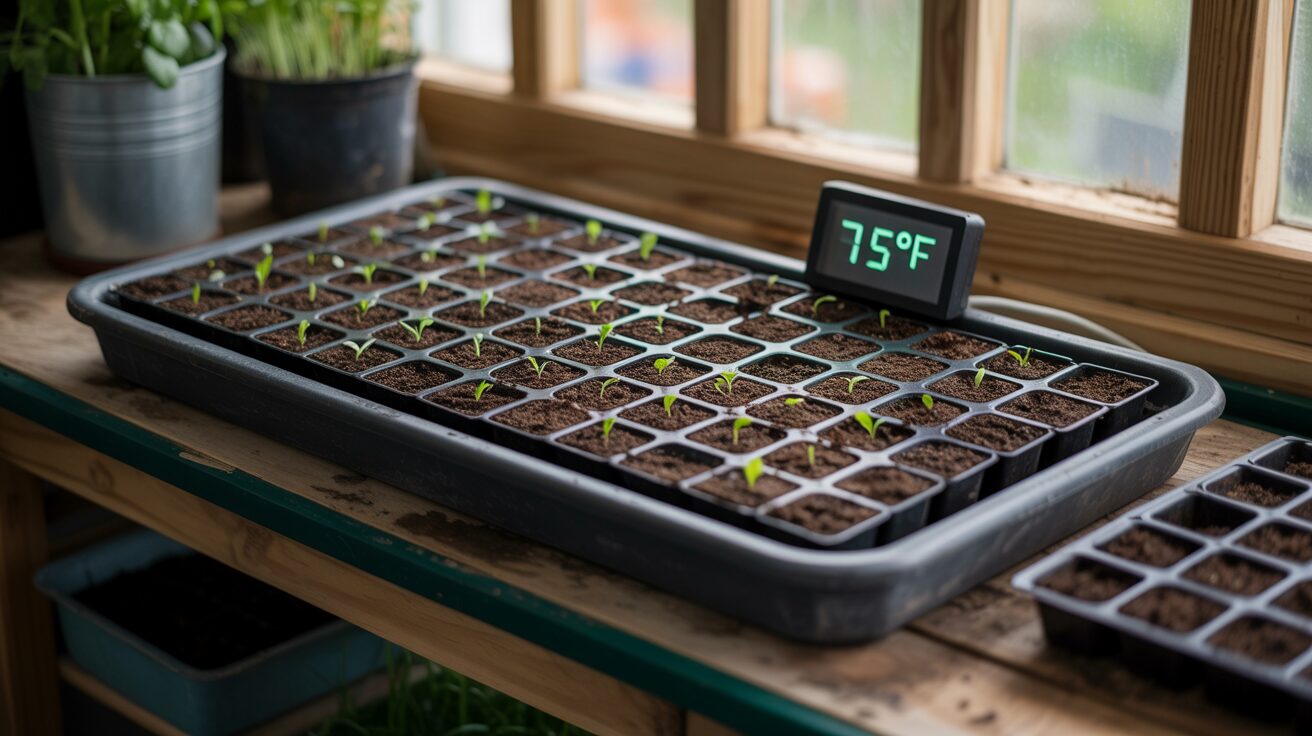
A heat mat is worth the investment. It is a waterproof mat that plugs into an outlet. It warms the soil from below. Without a heat mat, your soil temperature may fluctuate. Your house might be 70°F during the day but 60°F at night. Those cold nights slow down germination dramatically.
With a heat mat, the soil stays warm all the time. Your seeds will germinate faster and more uniformly.
Place the heat mat on a flat, heat-safe surface. Put your seedling tray on top. Set the temperature to 70°F to 75°F if your mat has a thermostat. If not, just plug it in. Most mats are designed to warm to the ideal range. For more indoor growing tips, see how to grow spinach indoors.
How Long Do Rosemary Seeds Take to Sprout?
Be patient. This is the hardest part. Rosemary seeds typically take 2 to 4 weeks to germinate. Sometimes longer. I have had seeds take 6 weeks to show any sign of life. Do not throw away your tray after 2 weeks. Keep watering. Keep the heat mat on. Keep waiting.
Once the seeds sprout, the seedlings will look tiny and delicate. Their first leaves are called cotyledons. They are small and round. Wait for the second set of leaves (true leaves) before you celebrate.
Why Are My Rosemary Seeds Not Germinating? (Troubleshooting)
If your seeds have not sprouted after 4 weeks, here are the most likely causes.
- Old seeds. This is the most common problem. Rosemary seeds lose viability quickly. If your seeds are more than one year old, they may not germinate. Buy fresh seeds next time.
- Soil too cold. Without a heat mat, the soil may be too cold. Rosemary seeds need warmth. Get a heat mat.
- Seeds buried too deep. Remember, rosemary seeds need light. They must be surface sown. If you buried them, they may never reach the surface.
- Soil too dry or too wet. Inconsistent moisture kills seeds. Keep the soil evenly moist. Use a spray bottle. Cover the tray with a plastic dome.
For more troubleshooting help, see white fuzzy bugs on plants and scales bugs on plants – though pests are rare at the seed stage.
Indoor Starting & Potting
Once your seeds sprout, the real work begins. Rosemary seedlings need careful attention.
Growing Rosemary from Seed Indoors for Beginners
Indoor growing gives you control. You can manage the temperature, light, and water. This is especially important in cold climates. Place your seedlings in the sunniest window you have. A south-facing window is best. If your windows are not sunny, use grow lights. Rosemary needs 6 to 8 hours of strong light daily.
Rotate your pots every few days. This prevents the seedlings from leaning toward the light. Leaning seedlings become weak and leggy.
Keep the room temperature around 65°F to 70°F (18°C to 21°C) after germination. Rosemary is a Mediterranean plant. It likes warmth but not extreme heat. For more on indoor growing, see indoor container garden.
Best Potting Mix for Starting Rosemary Seeds
- Use a seed starting mix, not garden soil. Seed starting mix is light and sterile. It drains well. It does not contain weed seeds or diseases.
- Do not use heavy potting soil or compost. These can be too dense for tiny rosemary roots. The roots need air as much as water.
- Once the seedlings have several sets of true leaves, you can transplant them into a regular potting mix.
- Choose a mix that drains well. Adding perlite or sand improves drainage.
If you have a busy schedule, consider building a self-watering herb garden. Rosemary prefers to dry out between waterings, so self-watering is not ideal for mature plants. However, for seedlings, consistent moisture is key.
How Many Rosemary Seeds to Plant Per Pot?
Now you know how to prepare, plant, and germinate rosemary seeds. You understand why rosemary is different from other herbs. You have learned about stratification, heat mats, and surface sowing.
However, germination is just the beginning. Young rosemary seedlings are delicate. They need careful watering, the right fertilizer, and protection from disease.
In the next section, I will share my best tips for caring for tender rosemary seedlings. I will also show you how to transplant them to the garden and how to grow rosemary in cold climates. Keep reading to avoid the mistakes that kill young rosemary plants.
Caring for Tender Seedlings
Young rosemary seedlings are fragile. They can die quickly if conditions are not right. Let me help you avoid the most common mistakes.
Watering Rosemary Seedlings Without Causing Dampening Off
Dampening off is a fungus that kills young seedlings. The stem gets thin and dark near the soil line. Then the seedling falls over and dies. This fungus loves wet, humid conditions. Overwatering is the main cause. This is how to prevent it.
The Best Organic Fertilizer for Young Rosemary Plants
Rosemary is not a heavy feeder. In fact, too much fertilizer can harm it. The leaves may grow too fast and become weak. Or the plant may produce fewer aromatic oils. Wait until your seedlings are 2 to 3 inches tall before fertilizing. Then use a balanced organic fertilizer at half strength. Look for numbers like 5-5-5 or 10-10-10.
Feed once every 4 to 6 weeks. That is plenty. More frequent feeding can cause problems. For an even gentler option, top-dress with compost. Sprinkle a thin layer around the base of the plants. Water it in. The compost will release nutrients slowly. For more on organic gardening, see garden kits for beginners.
Moving to the Garden
After 8 to 10 weeks, your seedlings should be ready to move outdoors. But you cannot just throw them in the ground. They need to adjust.
Tips for Transplanting Rosemary Seedlings to the Garden
Hardening off is the process of acclimating indoor plants to outdoor conditions. It takes about 1 week.
Start by placing your seedlings outside in a shaded, protected spot for 2 to 3 hours. Bring them back inside. The next day, leave them out for 4 to 5 hours. Add a little more sun each day. By day 7, they should be able to stay outside all day. Choose a planting spot with full sun (6 to 8 hours daily). The soil must be well-draining. Rosemary hates wet feet. If your garden soil is heavy clay, mix in sand or gravel.
Space your plants 2 to 3 feet apart. Rosemary grows into a bush. It needs room to spread.
Dig a hole twice as wide as the root ball. Place the seedling in the hole at the same depth it was growing in the pot. Backfill with soil. Water gently. For more transplanting tips, see patio tomato plants. The same principles apply.
Growing Rosemary from Seed in Cold Climates
Rosemary is hardy only to USDA Zone 8. That means it survives winter in warm climates (like Texas or Georgia). In cold climates (like Minnesota or New York), rosemary will die outdoors in winter. Do not despair. You have two options.
For winter growing tips, see winter vegetables to grow in pots.
Growing Creeping Rosemary from Seed Indoors
Creeping rosemary is a low-growing variety. It spreads along the ground instead of growing upright. It is perfect for hanging baskets or trailing over the sides of pots. Creeping rosemary seeds are grown the same way as upright rosemary. The same germination rules apply. The same care rules apply.
The only difference is that creeping rosemary needs less staking. It will naturally trail downward. It also makes an excellent indoor plant because it stays compact.
Place your creeping rosemary in a hanging basket near a sunny window. Water when the soil is dry. Prune regularly to keep it bushy. For more on indoor herbs, see how to grow chives indoors and spearmint plant.
You now know how to care for rosemary seedlings and move them to the garden. You also know how to handle cold climates.
In the final section, I will answer frequently asked questions about growing rosemary from seed. I will share tips for pruning, harvesting, and storing your rosemary. I will also show you how to use rosemary as a companion plant in your garden. Keep reading for the answers you have been looking for.
FAQs About Growing Rosemary from Seed
How long does it take to grow rosemary from seed?
From seed to harvest, rosemary takes 3 to 4 months. Germination alone takes 2 to 4 weeks. Then the seedlings need another 8 to 10 weeks to become strong enough for transplanting. After transplanting, they need another 4 to 6 weeks to grow to harvest size.
Is it hard to grow rosemary from seed?
It is not hard, but it is slow. Rosemary requires patience. The seeds need consistent warmth and moisture. They need light to germinate. If you provide these conditions, you will succeed. However, many gardeners prefer to buy a small plant or take a cutting. That is much faster and easier.
What do rosemary seeds look like?
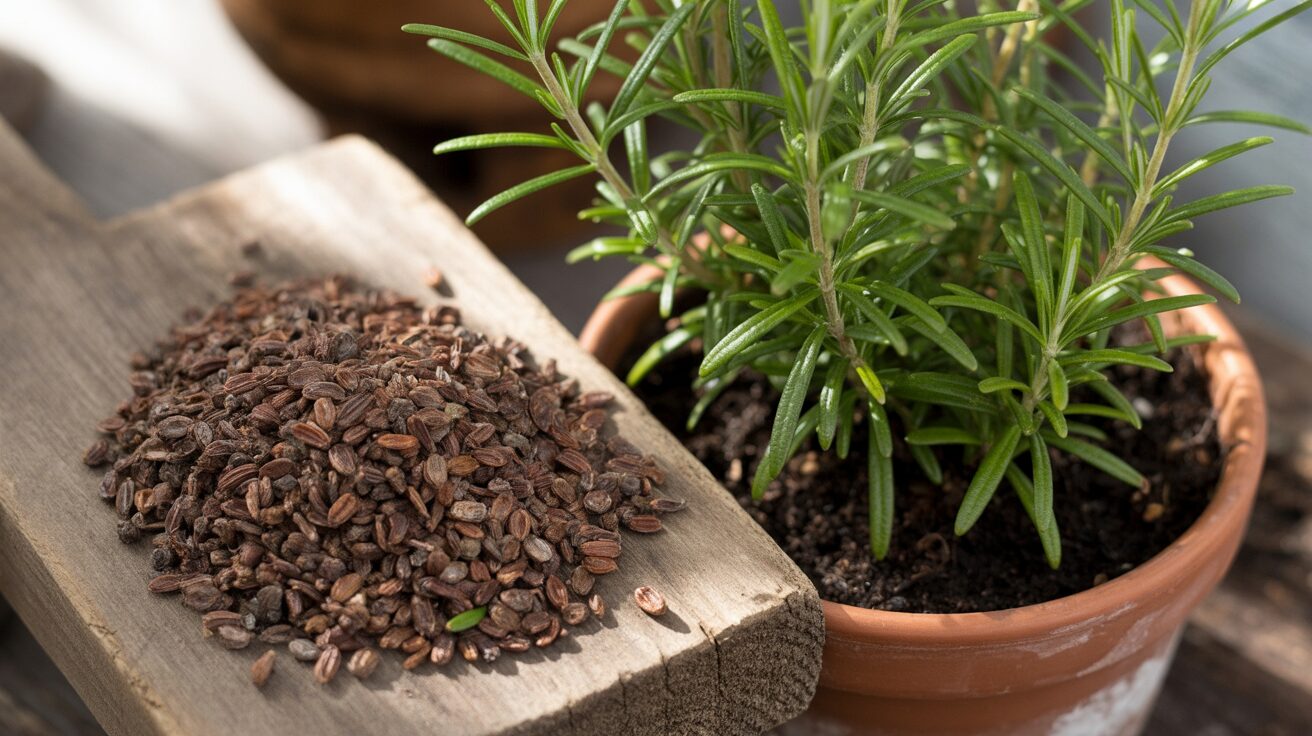
Rosemary seeds are tiny, dark brown, and shaped like small teardrops. They are about the size of a grain of rice. Because they are so small, handle them carefully. Use tweezers if your fingers are clumsy.
Can you grow rosemary from seed indoors year-round?
Yes, you can. However, rosemary needs strong light. In winter, natural sunlight may not be enough. Use grow lights for 12 to 14 hours daily. Keep the temperature warm. Rosemary will grow slowly in winter, but it will survive.
Why are my rosemary seedlings falling over?
This is usually dampening off, a fungal disease. It is caused by overwatering and poor air circulation. Let the soil surface dry out between waterings. Use a small fan to circulate air. Water from below instead of above.
How do you harvest rosemary without killing the plant?
Snip the top 2 to 3 inches of each stem. Do not cut back into old, woody growth. Rosemary will not regrow from bare wood. Always leave plenty of green leaves on the plant. Regular harvesting encourages bushier growth. For more herb harvesting tips, see growing cilantro from seed.
Rosemary as a Companion Plant
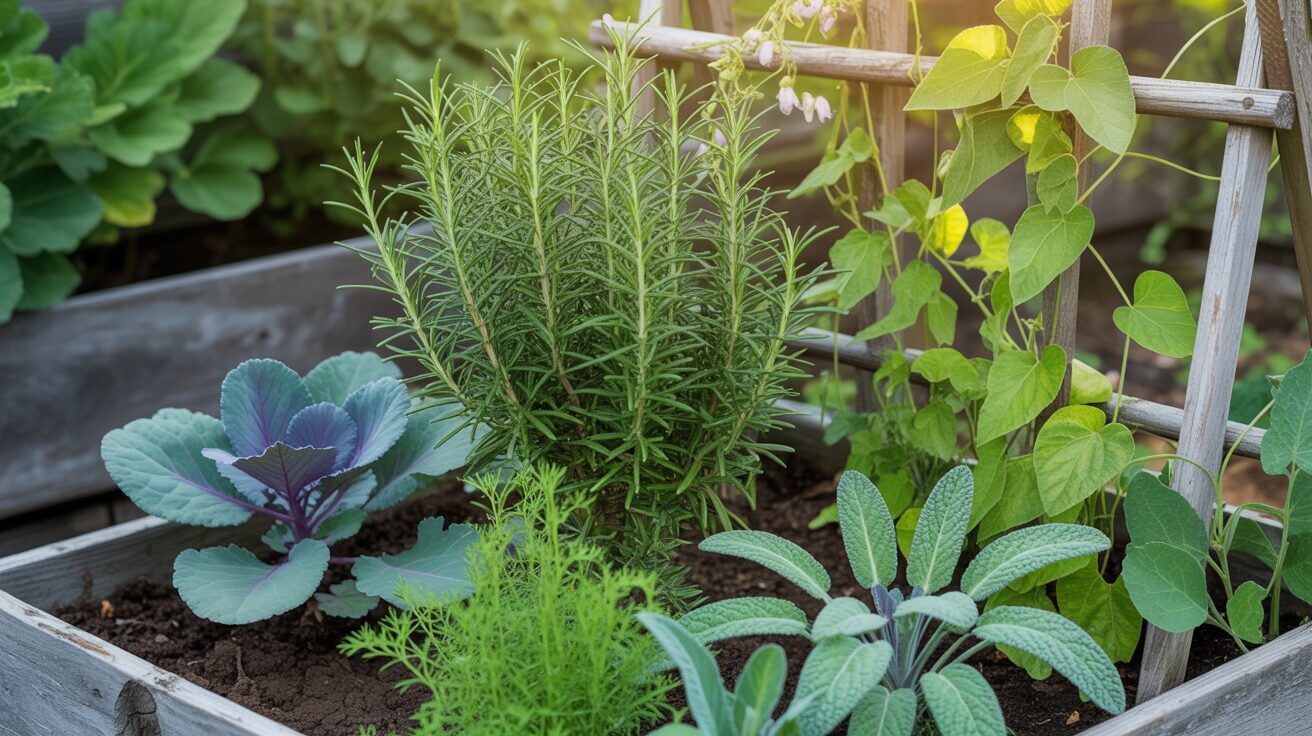
Rosemary is not just delicious. It also helps other plants in your garden. Rosemary repels cabbage moths, carrot flies, and bean beetles. It attracts bees and other pollinators. Plant it near cabbage, carrots, beans, and sage. Do not plant rosemary near basil, mint, or cucumbers. Basil prefers more moisture. Mint is invasive. Cucumbers need more water and shade. For more on companion planting, see companion plants for tomatoes, arugula companion plants, and companion planting spinach.
Pruning and Harvesting Rosemary
Regular pruning keeps rosemary healthy and productive. Here is how to do it.
- Use sharp scissors or pruning shears. Snip the top 2 to 3 inches of each stem. Make the cut just above a leaf node (where leaves attach to the stem). This encourages branching.
- Do not cut into old, brown wood. Rosemary will not regrow from bare wood. Always leave some green leaves on each stem.
- Harvest rosemary anytime. The flavor is strongest just before the plant flowers. In most climates, that is late spring or early summer.
Drying and Storing Rosemary
To dry rosemary, tie small bunches of stems together. Hang them upside down in a dry, dark, well-ventilated room. After 1 to 2 weeks, the leaves will be crisp. Strip them from the stems.
Store in an airtight jar. To freeze rosemary, strip the leaves from the stems. Place them in a freezer bag. Remove the air. Freeze. Frozen rosemary will last for months.
My Final Tips
You made it to the end. That means you are serious about growing rosemary from seed. Thank you for reading. Here are my three final tips.
If you are just starting your gardening journey, read my full guide on how to start urban gardening . It covers soil, containers, watering, and everything else a beginner needs.
And if you love growing herbs, try propagating mint or how to grow basil from cuttings next.
One more thing before you go...
I have two small asks for you. First, drop a comment below. What is your biggest rosemary struggle right now? Slow germination? Dampening off? Transplant shock? Or do you have a tip that I missed? I personally reply to every comment within 48 hours.
Second, save this post for later. Pin the printable chart to your Pinterest board. Share this guide with a friend who loves cooking with fresh herbs. The more people who grow their own food, the better. Now go start those rosemary seeds. And remember: patience pays off.
Happy gardening!
Last Updated on May 8, 2026 by Austine