
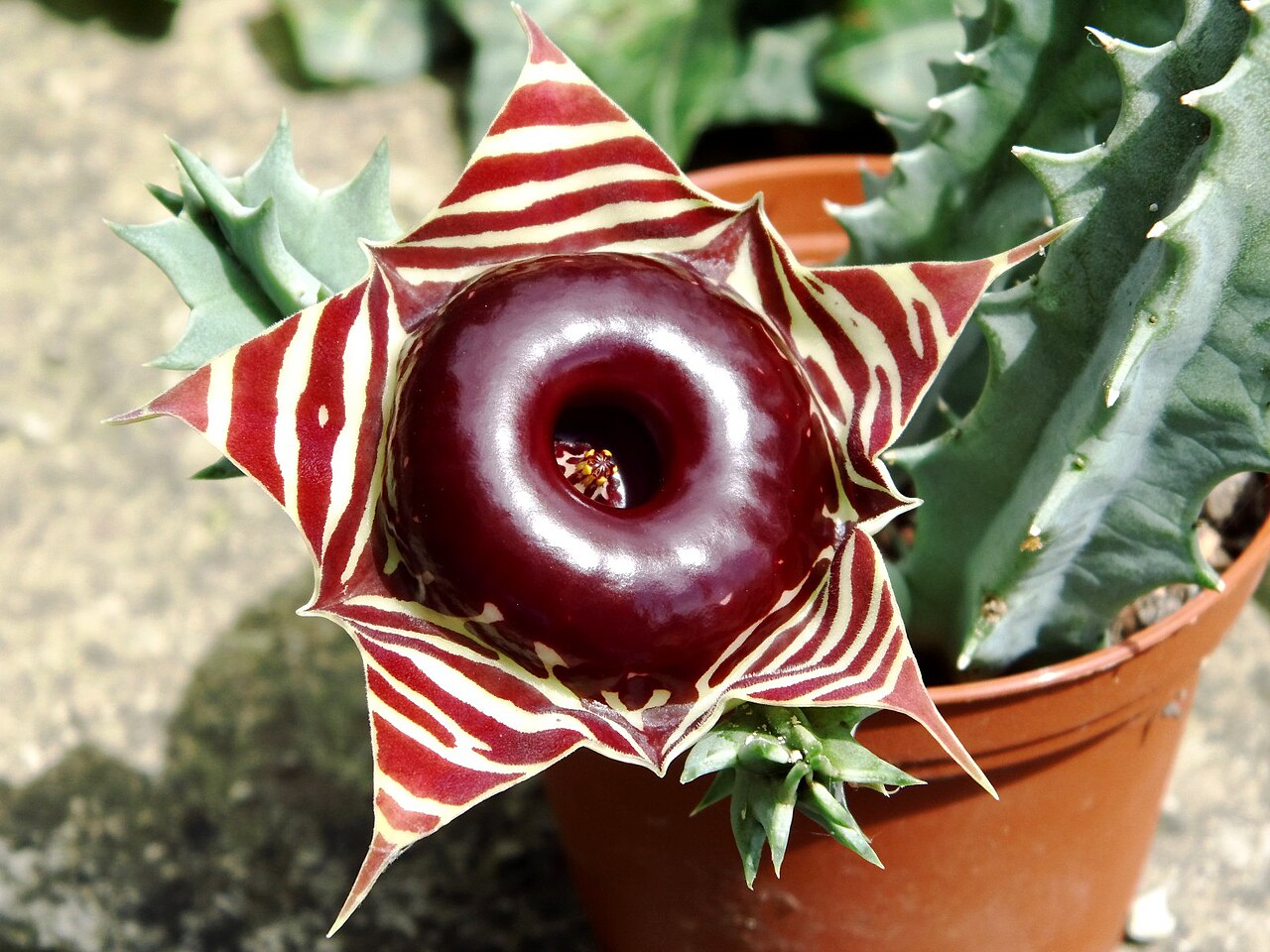
Foliage trends come and go, but the indoor plant community is currently undergoing a massive shift toward highly structural, bizarre greenery. If you want to add a prickly pop of personality to your shelves, huernia succulents are stealing the absolute spotlight.
These fascinating, low-growing plants belong to a unique family of cacti and succulents famous for their toothy, angular stems and jaw-dropping, star-shaped flowers that look like miniature works of art.
Huernia care at a glance:
Huernia succulents need bright, indirect light (morning sun, afternoon shade), very well-draining soil (cactus mix + extra perlite), and infrequent watering – let the soil dry completely between waterings. They are winter dormant – water once a month or less. The unique "lifesaver" flowers appear in summer and fall. Most Huernias are non-toxic to pets. Keep reading for propagation tips, fixing red/purple stress colors, and the best shallow terracotta pots.
What Are Huernia Succulents?
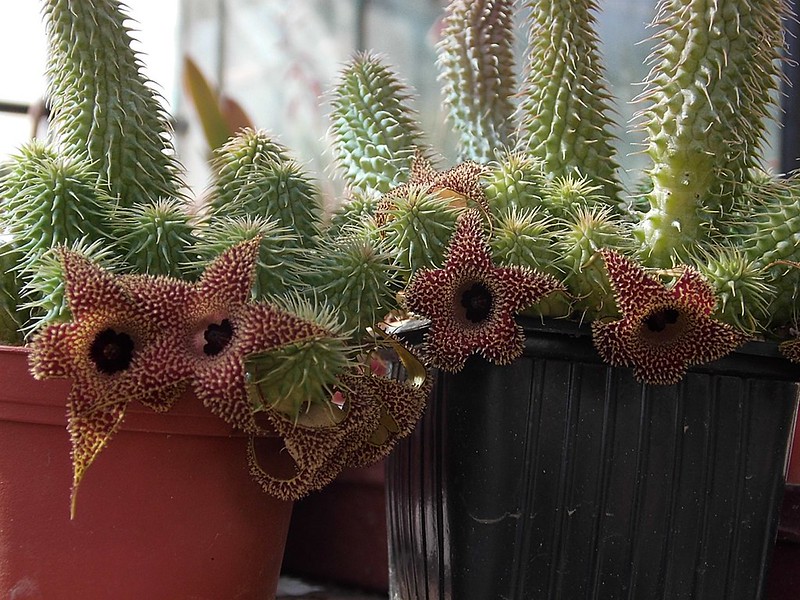
Have you ever seen a succulent that looks like something from another planet? That is Huernia. These quirky plants have toothy, spiky stems. Their flowers look like tiny lifesaver candies or starfish. They are unusual, wonderful, and highly collectible.
For more on unusual succulents, check out my guide on spiky houseplants.
Visual Traits: Toothy Stems and Star-Shaped Flowers
Huernia succulents grow in clumps. Their stems are upright or creeping. They have soft teeth along the ridges. The stems are green to purple-red, depending on light.
The flowers are the main attraction. They are star-shaped. They have a raised ring in the center – the "lifesaver." The colors range from maroon and yellow to pink and cream. Some flowers have stripes or spots.
The flowers smell interesting. They are pollinated by flies. The scent is not strong indoors, but some varieties have a faint carrion smell. Do not worry. You have to put your nose very close to notice.
Huernia blooms in summer and fall. Each flower lasts about a week. A mature plant can produce dozens of blooms in a season.
Why Huernia Is Trending Among Collectors
Huernia is having a moment. Collectors are hunting for rare varieties. Why the sudden popularity?
For more on trending succulents, see best plants for pots all year round.
How to Grow Huernia Zebrina Lifesaver Plant
Huernia zebrina is the most popular variety. It has pale green stems with purple stripes. The flowers are yellow with maroon rings and stripes.
- Light. Huernia zebrina needs bright, indirect light. Morning sun is ideal. Afternoon shade prevents sunburn. In low light, the stems stretch and the plant does not bloom.
- Water. Water when the soil is completely dry. In summer, this may be every 10 to 14 days. In winter, water once a month or less.
- Soil. Use a very well-draining soil mix. Cactus mix with extra perlite works well. For the perfect mix, see my guide on indoor plant potting soil – just add more perlite.
- Temperature. Huernia likes warmth. Keep it above 50°F (10°C) in winter. It can handle brief cooler temperatures if kept dry.
- Fertilizer. Feed once in spring with a low-nitrogen cactus fertilizer. Too much fertilizer causes leggy growth.
Huernia Succulent Care vs Stapelia Plants
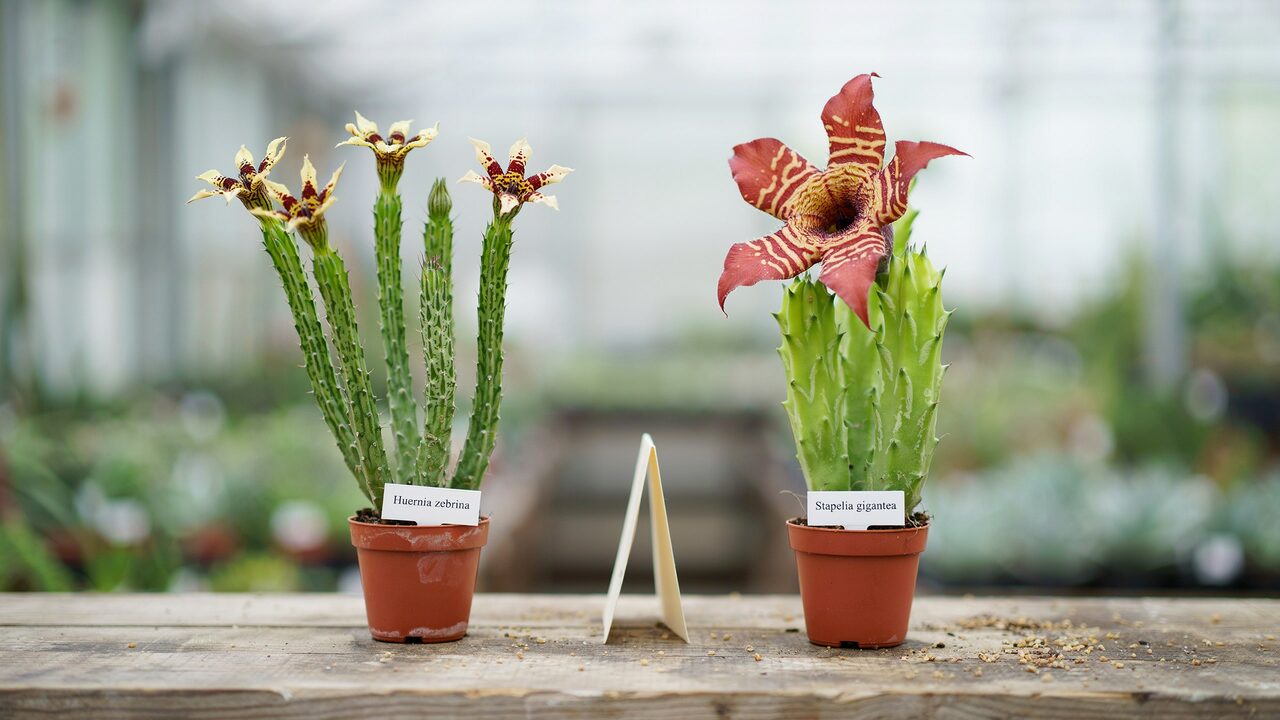
Huernia and Stapelia are often confused. Both are in the milkweed family. Both have star-shaped flowers. However, there are differences.
Feature | Huernia | Stapelia |
|---|---|---|
Stems | Shorter, more compact, soft teeth | Taller, longer, fuzzy or hairy stems |
Flower size | 1 to 2 inches across | 3 to 6 inches across (much larger) |
Flower scent | Mild (flies still like them) | Strong carrion smell (some varieties are very stinky) |
Growth habit | Clumping, stays smaller | Spreading, can get large |
Ease of care | Very easy | Easy |
For a collector, both are great. Stapelia flowers are more dramatic. Huernia flowers are more intricate. If you have limited space, start with Huernia.
Is Huernia Succulent Safe for Pets?
Yes, most Huernia succulents are non-toxic to cats and dogs. The ASPCA does not list Huernia as toxic. However, the stems have soft teeth. A curious pet might get poked.
If your pet eats a leaf, watch for mild stomach upset. The plant is not poisonous, but any unusual plant can cause temporary issues. For a list of pet-safe plants, see safe climbing house plants for cats and dogs – the same principles apply.
The Core Foundations: Light, Soil, and Pots
Huernia is easy to grow. However, it has specific needs.
How Much Sunlight Do Huernia Succulents Need Daily?
Huernia needs bright, indirect light. Think "morning sun, afternoon shade."
- In a south-facing window, provide a sheer curtain. The intense afternoon sun can scorch the stems. Red or purple stems are fine. Brown, crispy stems are sunburned.
- In an east-facing window, the morning sun is perfect. The plant will get 4 to 6 hours of gentle light. It will grow compact and bloom well.
- In a west-facing window, provide shade cloth or move the plant back from the window. The afternoon sun is too harsh.
- In low light, Huernia survives but does not thrive. The stems become leggy. The plant stretches toward the light. It will not bloom. If you do not have enough natural light, use grow lights. LED grow lights work well. Place them 6 to 12 inches above the plant. Keep them on for 12 to 14 hours per day.
Best Well Draining Soil Mix for Huernia Plants
Huernia is a succulent. It needs soil that drains very quickly. Heavy, wet soil causes root rot.
- Use a cactus or succulent potting mix as a base. These mixes have sand and perlite. They do not hold much water.
- Add extra perlite. Mix in 30% to 50% perlite by volume. This creates air pockets. Water flows through easily.
- Do not use garden soil. Garden soil is too heavy. It compacts in pots. It also may contain pests. A simple recipe: 2 parts cactus mix + 1 part perlite. For more drainage, add 1 part pumice or coarse sand.
For a well-draining mix that works perfectly, see my guide on indoor plant potting mix – just add extra perlite for Huernia.
Best Shallow Terra Cotta Pots for Huernia
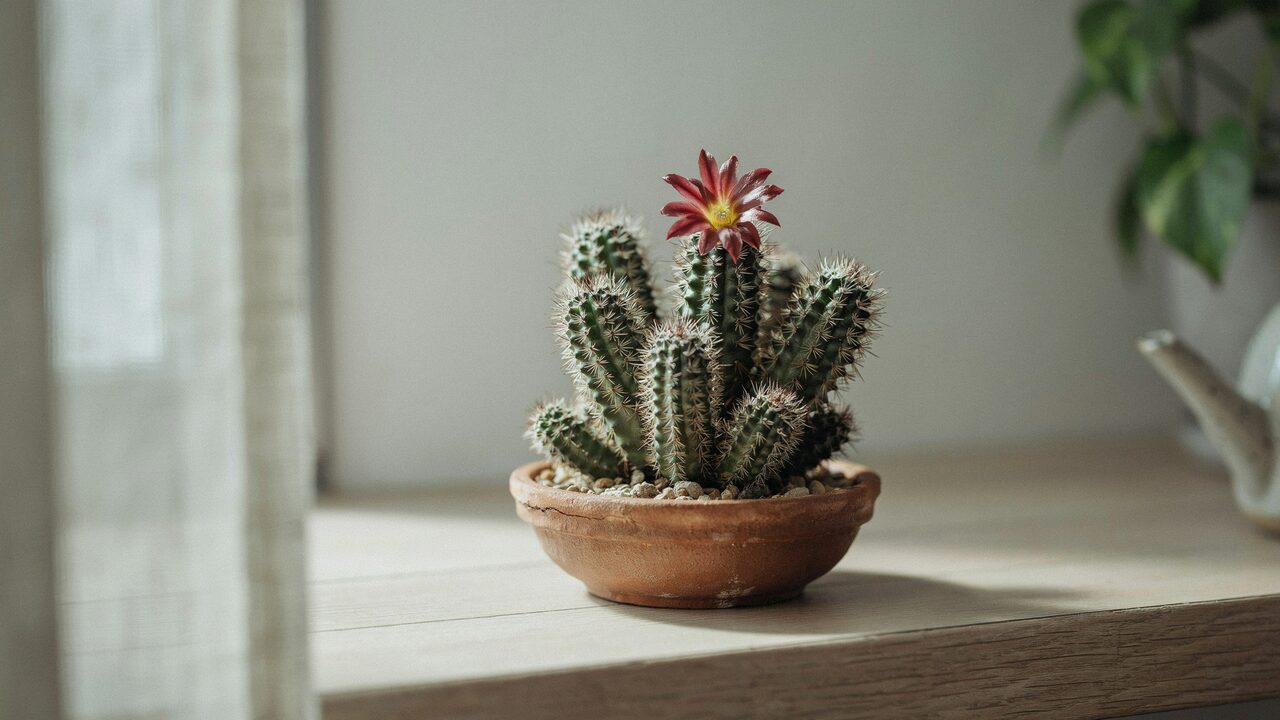
Huernia has shallow roots. It does not need a deep pot. A shallow, wide pot is ideal.
Terracotta pots are the best choice. They are porous. They wick moisture away from the soil. This helps the soil dry out faster. Huernia loves this.
- Choose a pot that is 4 to 6 inches wide. The depth should be 3 to 4 inches. A bulb pan or azalea pot works well.
- Make sure the pot has a drainage hole. This is not optional. Without a hole, water pools at the bottom. The roots rot.
- Do not use a pot that is too large. A large pot holds more soil. The soil stays wet longer. Wet soil kills Huernia.
For a decorative look, place the terracotta pot inside a larger cachepot. Remove the inner pot for watering. Let it drain completely before putting it back.
Can Any Huernia Succulents Grow in Low Light? (And Which to Avoid)
Most Huernia varieties need bright light. However, some tolerate lower light better than others.
- Huernia zebrina is the most adaptable. It can survive in moderate indirect light. It will not bloom as much, but it will live.
- Huernia schneideriana (red dragon flower) needs more light. In low light, it becomes leggy and pale.
- Huernia macrocarpa is another light-lover. It needs bright conditions to flower.
If your home has low light, choose Huernia zebrina. Place it in the brightest spot you have. Supplement with a small grow light if possible.
Avoid Huernia in deep shade. The plant will stretch. It will not bloom. It may rot if the soil stays wet.
Printable Huernia Care Chart (Save This)
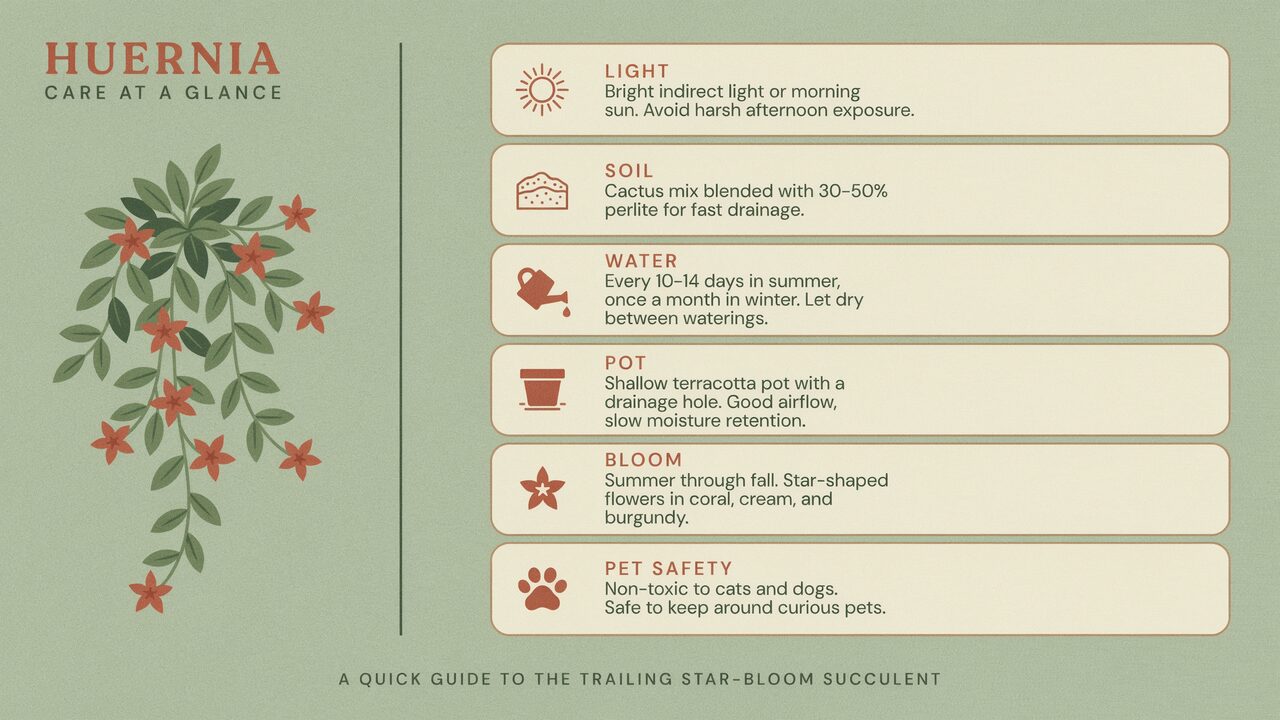
Feature | Huernia's Preference |
|---|---|
Light | Bright, indirect (morning sun, afternoon shade) |
Soil | Cactus mix + 30-50% perlite |
Pot | Shallow terracotta with drainage hole |
Pot size | 4 to 6 inches wide, 3 to 4 inches deep |
Water (summer) | When soil is completely dry (every 10-14 days) |
Water (winter) | Once a month or less (dormant) |
Temperature | Above 50°F (10°C) in winter |
Fertilizer | Low-nitrogen cactus fertilizer, once in spring |
Bloom time | Summer to fall |
Pet safety | Non-toxic to cats and dogs |
Keep this chart near your plants. It will help you remember the key steps.
Watering is where most people go wrong. Huernia is a succulent. It stores water in its stems. Overwatering is the fastest way to kill it.
In the next section, I will cover water management. You will learn how often to water in winter, how to treat root rot, and how to unlock those amazing blooms. Keep reading to master Huernia care.
Water Management and Seasonal Changes
Huernia is a succulent. It stores water in its stems. Overwatering is the #1 killer. Let me show you how to get it right.
How Often to Water Huernia Succulents in Winter
Winter is the dormant season for Huernia. The plant stops growing. It needs very little water.
- Water once a month or less. In some cases, you may not water at all for 2 months. The stems will shrivel slightly. That is normal. They plump up again in spring.
- Check the soil before watering. Stick your finger into the soil. If it feels completely dry 2 inches down, water lightly. If there is any moisture, wait another week.
- Water sparingly. Give just enough to moisten the soil. Do not soak the pot. The plant is not actively growing. It cannot use much water.
Signs of overwatering in winter include soft, mushy stems and yellow leaves. If you see these, stop watering immediately. Let the soil dry out completely.
For more winter care tips, see winter vegetables to grow in pots – the same principles apply to succulents.
How to Treat Root Rot in Huernia Cacti
Root rot is the most common problem. It happens when the soil stays wet for too long. The roots turn black and mushy. The stems soften.
Signs of root rot: The plant feels squishy. The lower stems turn dark. The soil smells bad. The plant may fall over. If you catch it early, remove the plant from its pot. Cut away any black, mushy roots. Use clean scissors. Repot in fresh, dry soil. Do not water for 1 to 2 weeks.
If the rot has spread to the stems, cut above the rot. Let the cutting dry for 3 to 5 days. Then plant it in dry soil. Do not water for 2 weeks. The cutting may root.
Prevention is the best cure. Use well-draining soil. Choose pots with drainage holes. Do not overwater. When in doubt, wait another week.
Unlocking the Blooms and Troubleshooting Plant Stress

Photo by Eric in SF
The flowers are the main reason to grow Huernia. Here is how to get them.
How to Get Huernia Succulents to Bloom
Huernia blooms in summer and fall. Here are the conditions for flowers.
- Bright light is essential. Without enough light, the plant will not bloom. Provide morning sun or bright indirect light all day. A south or east-facing window is best.
- A cool winter rest encourages blooms. In winter, keep the plant cool (50°F to 60°F / 10°C to 15°C). Water very sparingly. This rest period triggers flower buds for summer.
- Do not over-fertilize. Too much nitrogen causes leggy growth and no flowers. Use a low-nitrogen cactus fertilizer once in spring.
- Be patient. Young plants may not bloom for 2 to 3 years. Mature plants bloom reliably.
If your plant is not blooming, check the light. Increase light exposure. Give it a cooler winter rest. Reduce fertilizer.
Why Is My Huernia Succulent Turning Red or Purple?
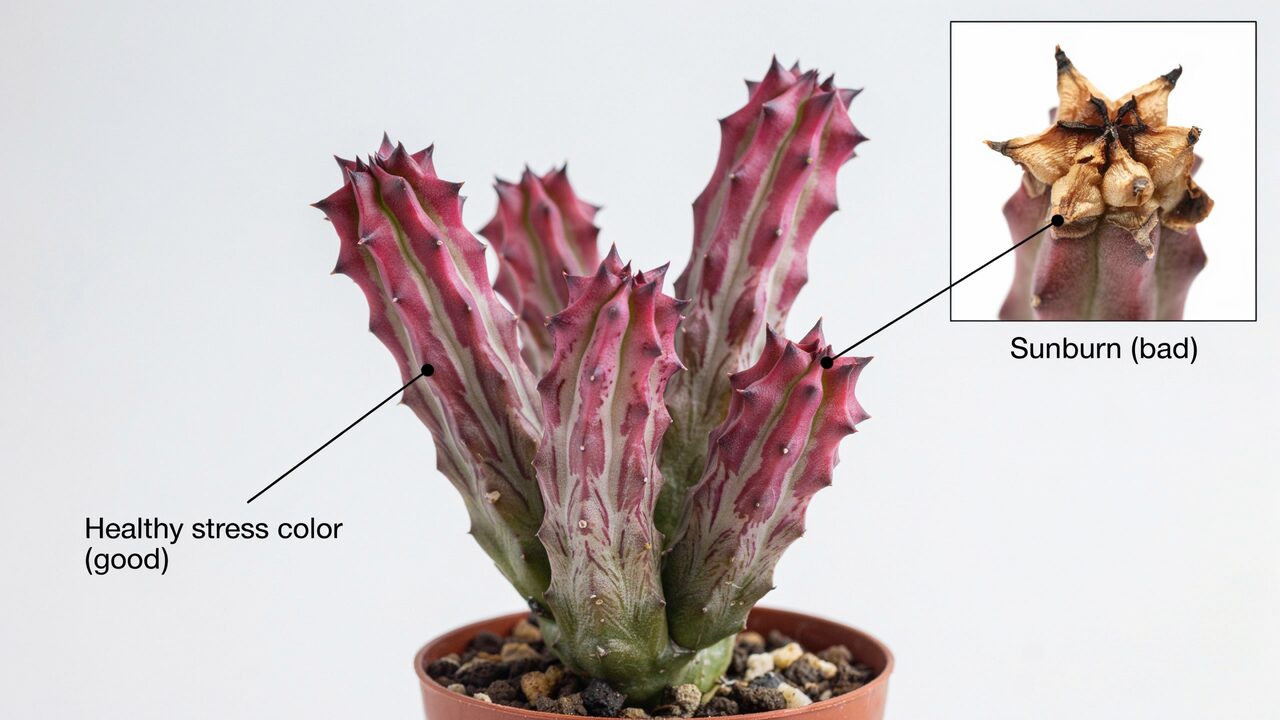
Red or purple stems are common. They are usually a sign of stress – but not bad stress.
- Sun stress is the most common cause. When Huernia gets bright light, it produces red or purple pigments. This is like a plant tan. It protects the stems from sunburn. It is not harmful. Many collectors actually like the color.
- Cold stress can also cause reddening. When temperatures drop below 50°F (10°C), the stems may turn purple. This is not harmful if the plant is dry.
What is the difference between stress colors and sunburn? Stress colors are even and uniform. Sunburn causes brown, crispy patches. Sunburn is bad. Stress colors are fine.
If you see brown patches, move the plant to a spot with less intense afternoon sun. Use a sheer curtain.
Preventing Mealybugs on Blooming Huernia Plants
Mealybugs are the most common pest on Huernia. They look like tiny white cotton balls. They hide in the stem crevices and flower buds.
- Check your plants regularly. Look under the stems and at the base. Mealybugs multiply quickly.
- Remove mealybugs with rubbing alcohol. Dip a cotton swab in 70% isopropyl alcohol. Dab the bugs. The alcohol dissolves their waxy coating and kills them.
- Spray with insecticidal soap for larger infestations. Follow the package instructions. Spray in the evening to avoid sunburn on wet leaves.
Prevent mealybugs with good air circulation. Do not crowd your plants. Keep them spaced apart.
For more on pest control, see white fuzzy bugs on plants.
Best Organic Fertilizer for Flowering Huernia Succulents
Huernia is not a heavy feeder. Too much fertilizer is worse than too little.
- Use a low-nitrogen cactus fertilizer. Look for numbers like 2-7-7 or 5-10-10. The middle number (phosphorus) supports blooms. The first number (nitrogen) should be low.
- Fertilize once in spring. Apply at half strength. Do not fertilize in summer or winter.
- Do not use high-nitrogen fertilizers. They cause soft, leggy growth. The plant will not bloom.
For an organic option, use worm castings. Mix 1 tablespoon per gallon of soil. They release nutrients slowly and safely.
The best part about Huernia is how easy they are to propagate. You can turn one plant into many for free.
In the next section, I will show you step by step how to propagate Huernia from cuttings in pumice. I will also recommend safe succulent starter sets for beginners. Keep reading to expand your collection.
Propagating and Expanding Your Collection
Huernia is very easy to propagate. You can turn one plant into dozens.
Step by Step Huernia Succulent Propagation Guide
Take cuttings in spring or early summer. The plant is actively growing. Roots form faster.
- Choose healthy stems. Look for firm, green stems. Avoid stems that are soft, shriveled, or damaged. Cut stems that are 3 to 4 inches long.
- Use clean, sharp scissors. Wipe the blades with rubbing alcohol. This prevents the spread of disease.
- Let the cutting dry. Place the cutting on a paper towel. Leave it in a dry, shaded spot for 3 to 5 days. The cut end will callus over. This prevents rot.
- Plant the cutting in dry soil. Use the same well-draining mix as for mature plants. Bury the cutting about 1 inch deep. Do not water.
- Wait 1 to 2 weeks to water. After planting, leave the cutting alone. After 2 weeks, water lightly. The cutting will start growing roots.
New growth appears in 4 to 6 weeks. When you see new stems or leaves, the cutting has rooted. You can then water normally. For more propagation techniques, see propagating basil – the same principles apply to succulents.
Growing Huernia Succulent Cuttings in Pumice
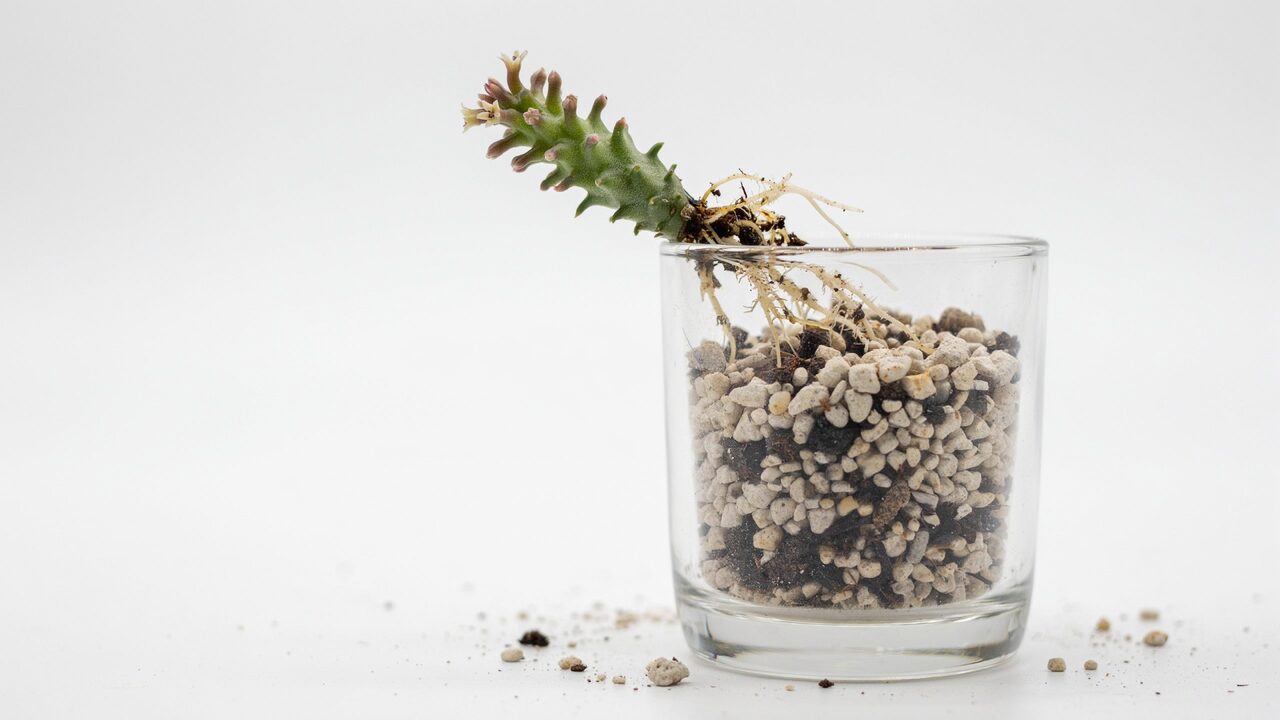
Pumice is a volcanic rock. It is an excellent rooting medium for succulents. It drains instantly. It does not hold water.
- Fill a small pot with pumice. Use a pot with drainage holes. Pumice alone works, or you can mix it 50/50 with perlite.
- Insert the callused cutting. Bury it about 1 inch deep. The pumice will hold the cutting upright.
- Do not water for 2 weeks. The cutting has no roots. It cannot take up water. Watering would cause rot.
- After 2 weeks, water lightly. The pumice will wick moisture to the cutting. Roots will form.
- Check for roots after 4 weeks. Gently tug the cutting. If you feel resistance, roots have formed. You can then move it to regular soil.
Pumice is also great for mature Huernia. It is very difficult to overwater in pumice. Many collectors grow Huernia in pure pumice or a pumice/perlite mix.
Choosing Safe Succulent Starter Sets for Beginners
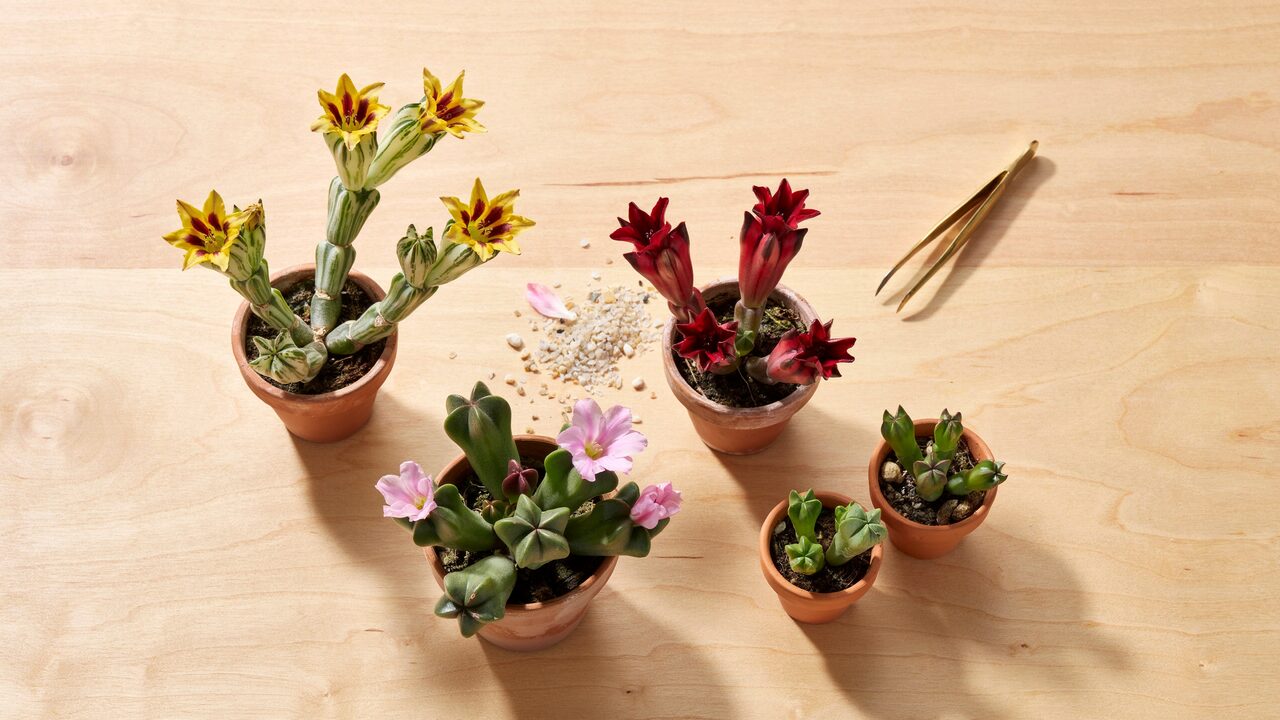
If you are new to succulents, a starter set is a great way to begin. Look for sets that include Huernia or similar easy succulents.
What to look for in a starter set:
- Well-draining soil (or instructions to repot)
- Pots with drainage holes
- Clear labeling of plant names
- Healthy, firm plants with no soft spots
Where to buy: Check local nurseries, Etsy, and online succulent shops. Look for sellers with good reviews.
FAQs About Huernia Succulents
How often should I water Huernia?
In summer, water when the soil is completely dry. This is about every 10 to 14 days. In winter, water once a month or less. When in doubt, wait another week.
Why is my Huernia not blooming?
The most common reasons are insufficient light, no cool winter rest, or too much fertilizer. Give the plant bright, indirect light. Keep it cool (50°F to 60°F / 10°C to 15°C) and dry in winter. Use a low-nitrogen fertilizer once in spring.
Is Huernia toxic to cats?
Most Huernia succulents are non-toxic to cats and dogs. The stems have soft teeth, but they are not poisonous. However, always monitor your pets. Any unusual plant can cause mild stomach upset if eaten.
How big do Huernia succulents get?
Huernia stays compact. Most varieties grow 4 to 8 inches tall. They spread slowly by producing new stems. A mature clump can be 12 to 18 inches wide.
Can Huernia grow indoors?
Yes, Huernia grows well indoors. Place it in a bright, sunny window. An east or south-facing window is ideal. Use grow lights if natural light is limited.
How do you propagate Huernia?
Take 3 to 4 inch stem cuttings. Let them dry for 3 to 5 days. Plant in dry, well-draining soil. Do not water for 1 to 2 weeks. Roots form in 4 to 6 weeks.
Final Tips for Huernia Succulents
You made it to the end. That means you are serious about growing these quirky, wonderful plants. Thank you for reading.
- Do not overwater. This is the most important tip. Huernia is a succulent. It stores water. It needs to dry out completely between waterings. When in doubt, wait another week.
- Give them bright light. Without light, Huernia becomes leggy. It will not bloom. Morning sun is best. Afternoon shade prevents sunburn.
- Propagate often. Huernia is very easy to propagate. Take cuttings in spring. Share them with friends. Trade for other varieties. Your collection will grow quickly.
If you are just starting your succulent journey, read my full guide on how to start urban gardening . It covers soil, containers, watering, and everything else a beginner needs.
And if you love unusual succulents, try spiky houseplants or plants for shallow pots next.
One more thing before you go... I have two small asks for you.
- First, drop a comment below. What is your biggest Huernia struggle right now? Root rot? No blooms? Mealybugs? Or do you have a tip that I missed? I personally reply to every comment within 48 hours.
- Second, save this post for later. Pin the printable chart to your Pinterest board. Share this guide with a friend who loves weird plants. The more people who grow their own succulents, the better.
Now go find a Huernia. Those lifesaver flowers are waiting.
Happy gardening, friend!
Last Updated on June 6, 2026 by Austine