
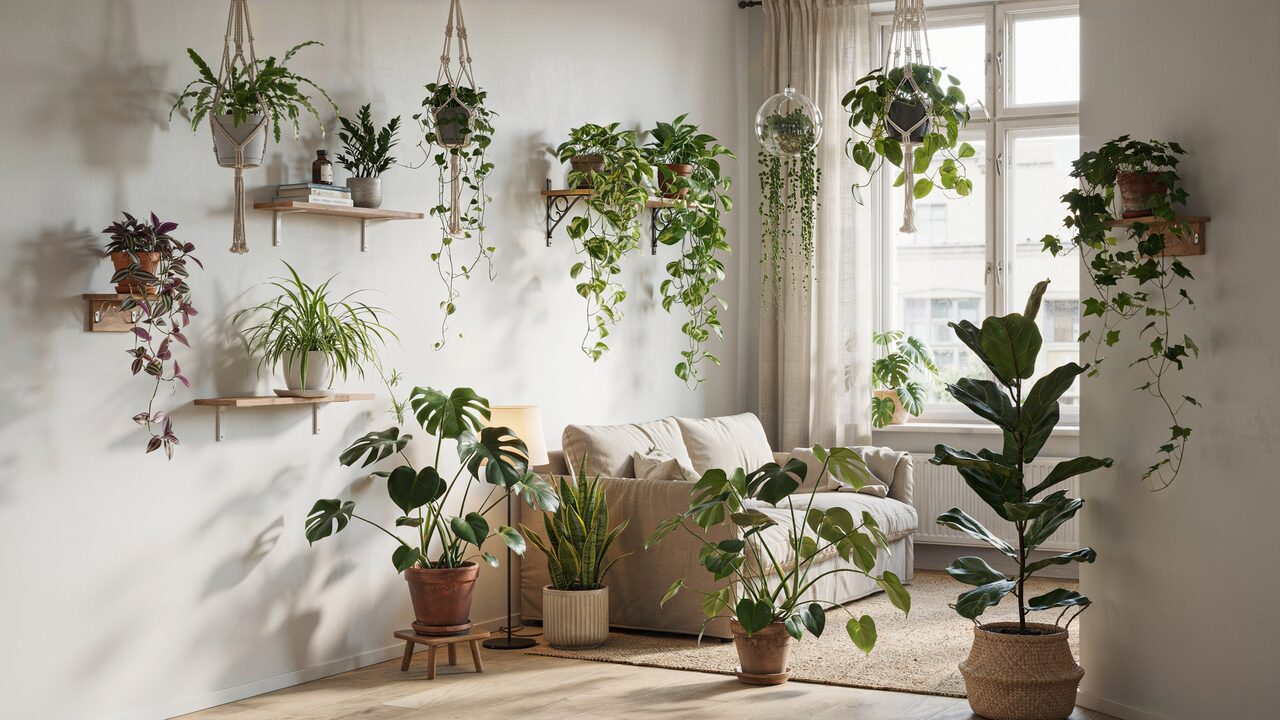
💡Climbing plant care at a glance:
Climbing house plants need bright, indirect light (except low-light varieties like Pothos), well-draining soil, and support to climb – moss poles, trellises, or wall clips. Water when the top inch of soil feels dry. Leaves get larger as the plant climbs – this is called "node maturity." Most climbing plants are toxic to pets (Pothos, Philodendron). Pet-safe options include Hoyas, Spider Plants, and Grape Ivy. Keep reading for training tips, propagation, and the best varieties for every light level.
Whether you are hunting for the best fast growing climbing house plants to quickly fill an empty corner or learning how to train climbing house plants on walls without damaging your paint, setting up the right foundational framework is essential.
In this comprehensive guide, we will unpack exactly how to support climbing house plants with a moss pole, look at the best low light climbing house plants for bedrooms, and solve common mysteries like why are my climbing house plant leaves small so your vertical garden grows lush and massive.
If you're interested in more trailing or vine growing plants, my post on Evergreen Trailing Plants for Pots and Vine Growing Fruits and Vegetables might interest you.

The Magic of Vertical Foliage
Have you ever looked at a bare wall and wished it had something more? Art is nice. But living art is breathtaking. Climbing house plants turn ordinary spaces into lush, green sanctuaries. For more on creating a thriving indoor garden, check out my guide on indoor container garden.
Why Climbing Plants Transform Ordinary Spaces
A climbing plant does something that no other houseplant can do. It moves. It grows upward. It trails downward. It changes over time.
- Climbing plants add height. A tall bookshelf feels more complete when vines cascade from the top. A blank wall becomes a living tapestry when a plant climbs it.
- They create privacy. In open-plan apartments, a climbing plant on a trellis can separate your living area from your dining area. It is softer than a wall. It is greener than a screen.
- They are space-savers. Floor space is precious. Climbing plants grow up, not out. You can have a 6-foot plant that only takes up 1 square foot of floor space.
- They make leaves grow larger. Here is a secret that many plant owners do not know. When a climbing plant attaches to a support, its leaves get bigger. Much bigger. A Pothos on the ground has small leaves. A Pothos climbing a moss pole can grow leaves as big as your hand.
Best Fast Growing Climbing House Plants
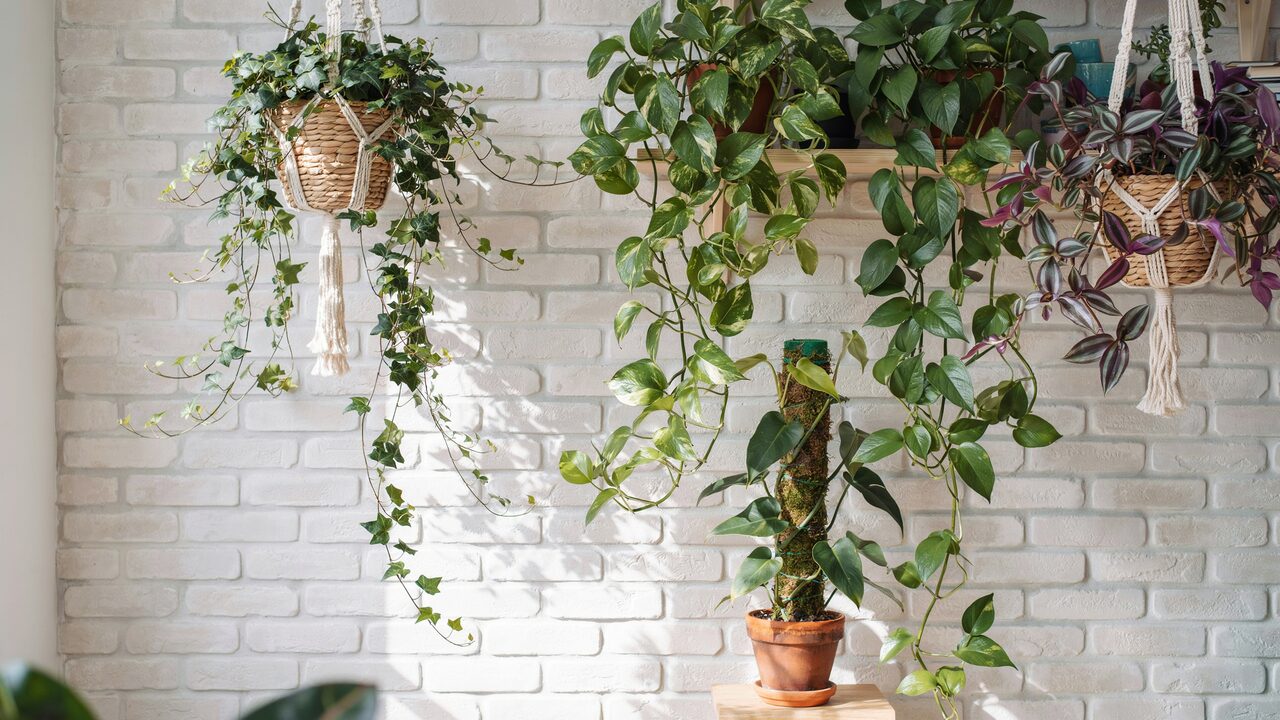
If you want quick results, choose fast-growing climbers. These plants will cover a trellis or moss pole in months, not years.
- Pothos (Epipremnum aureum) is the fastest. It grows 6 to 12 inches per month in good conditions. It is also very forgiving. Low light? Fine. Forget to water? Fine.
- Philodendron hederaceum is another speedster. It grows almost as fast as Pothos. The leaves are heart-shaped and deep green.
- English Ivy (Hedera helix) grows quickly once established. It needs bright indirect light. In low light, growth slows.
- Inch Plant (Tradescantia zebrina) grows fast and trails beautifully. Its leaves are purple and silver. It is very easy to propagate. For more fast-growing options, see inch plant care.
Structural Support: Staking, Poling, and Wall Training
Climbing plants do not climb on their own. They need support. Without support, they trail along the ground or hang from baskets. With support, they reach for the sky.
How to Train Climbing House Plants on Walls
Training plants to climb walls is easier than you think. You do not need to damage your walls.
- Use clear leaf clips. These are small plastic clips that stick to the wall with adhesive. They hold the plant stem in place. They are barely visible.
- Install small hooks or wire loops. Screw small hooks into the wall (if you are allowed). Thread soft plant ties or fishing line through the hooks. Guide the vine along the line.
- Start training when the vine is young. Young stems are flexible. They bend easily. Older stems become woody and stiff. They resist training.
- Guide the vine upward, not sideways. Plants naturally grow toward light. If you train them upward, they will keep climbing. If you train them sideways, they may get confused.
- Do not attach the stem tightly. Leave room for the stem to grow thicker. Tight attachments can strangle the plant.
- Use a trellis or grid for large walls. A wooden or metal trellis attached to the wall gives the plant something to grip. Climbing plants like English Ivy will attach themselves.
How to Support Climbing House Plants with a Moss Pole
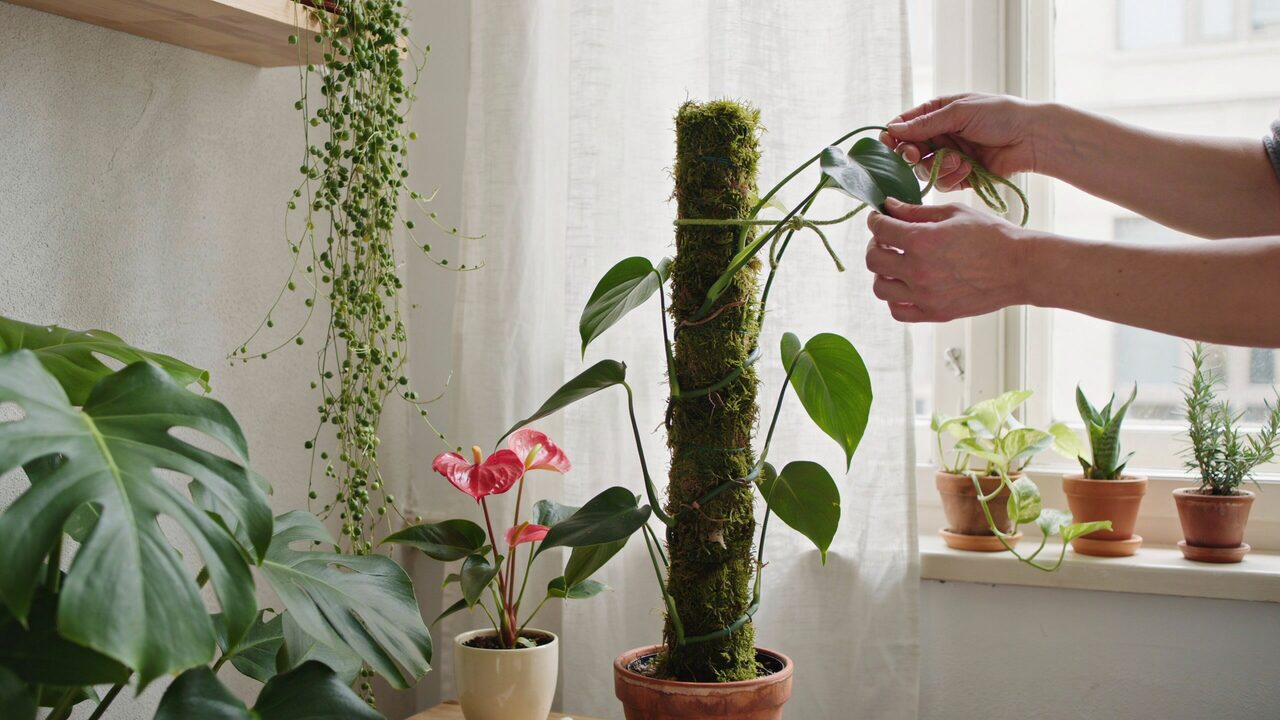
Moss poles are the most popular support for climbing plants. They mimic tree trunks. Plants like Monstera and Philodendron attach their aerial roots to the pole.
- Choose the right size pole. The pole should be at least 2 feet taller than the plant. This gives the plant room to grow.
- Insert the pole into the pot before planting. Place the pole in the center of the pot. Fill soil around it. If you add the pole after planting, you may damage the roots.
- Use soft plant ties to attach the stem. Tie the stem loosely to the pole. Do not crush the stem. The plant will eventually attach itself.
- Mist the moss pole regularly. Moss poles dry out quickly. When you mist the pole, the plant's aerial roots absorb the moisture. This encourages the plant to climb.
- Add extensions as the plant grows. Many moss poles have connectors. You can stack multiple poles to create a taller support.
For a DIY moss pole, you can make one from PVC pipe, sphagnum moss, and twine. For more DIY ideas, see indoor vertical garden.
Best Indoor Climbing Plants for Small Trellises
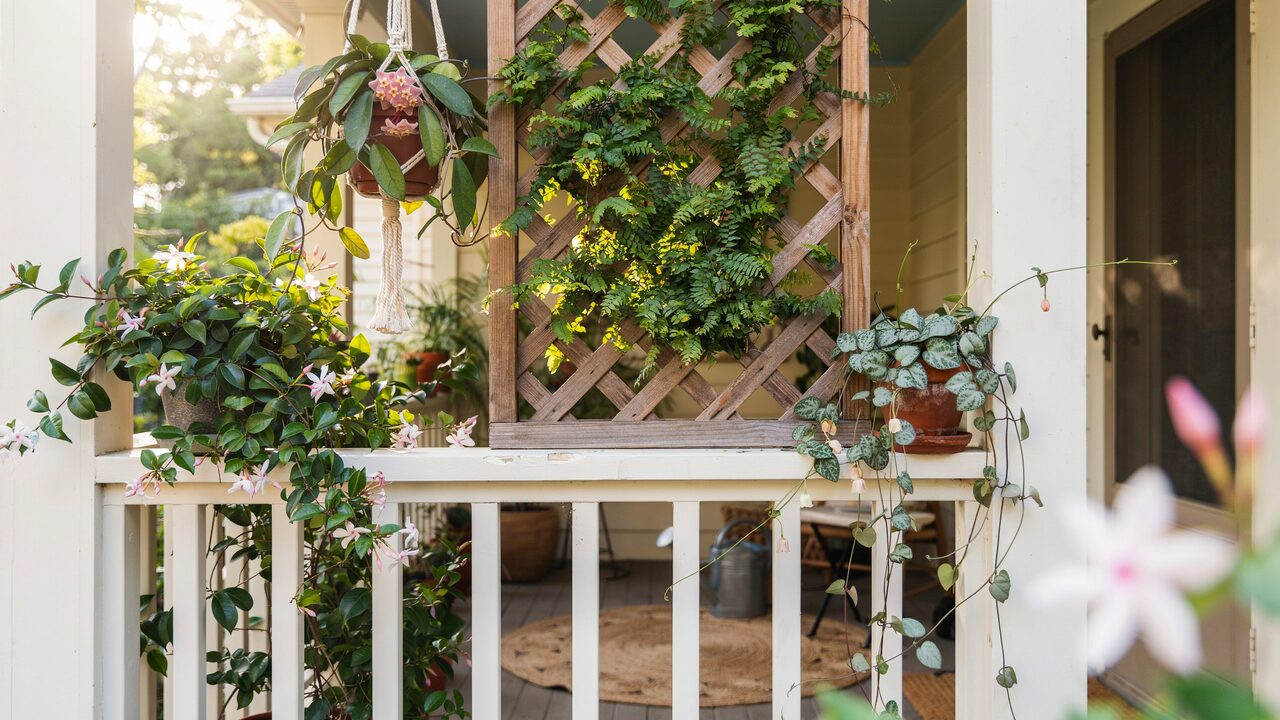
Small trellises are perfect for tabletops, shelves, and small spaces. These plants stay compact but still climb.
- Jasmine (Jasminum polyanthum) has fragrant white or pink flowers. It grows well on a small trellis. It needs bright light.
- Hoya (Hoya spp.) has thick, waxy leaves and star-shaped flowers. It is slow-growing. It fits perfectly on a small trellis.
- Climbing Fig (Ficus pumila) has tiny leaves. It is very fast-growing. It will cover a small trellis in months. However, it needs frequent pruning.
- String of Hearts (Ceropegia woodii) is a delicate vine. Its leaves are heart-shaped. It looks beautiful on a small trellis or in a hanging basket. It is pet-safe.
For more pet-safe options, see safe trailing house plants for cats and dogs (the same principles apply).
Environmental Needs: Soil and Lighting
Climbing plants are adaptable. However, they have specific needs.
Low Light Climbing House Plants for Bedrooms
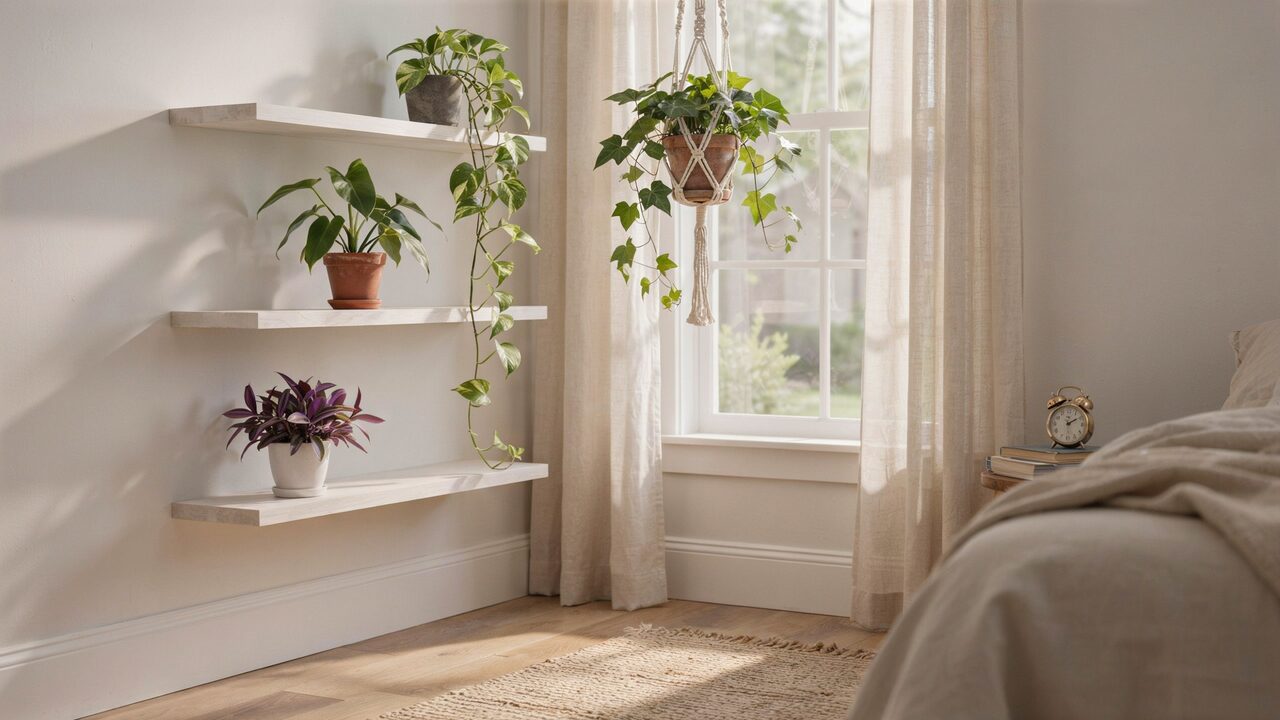
Not every room has bright light. Bedrooms often have lower light. North-facing windows are dim. These climbing plants will survive and even thrive.
- Pothos (Epipremnum aureum) is the best low-light climber. It tolerates almost no light. The leaves may lose variegation, but the plant will live. Water it sparingly.
- Philodendron hederaceum also tolerates low light. Growth slows, but the plant stays healthy. The leaves may become smaller.
Avoid flowering climbers in low light. Jasmine and Hoya need bright light to bloom. Without light, they will not flower.
Best Well Draining Soil Mix for Climbing Plants
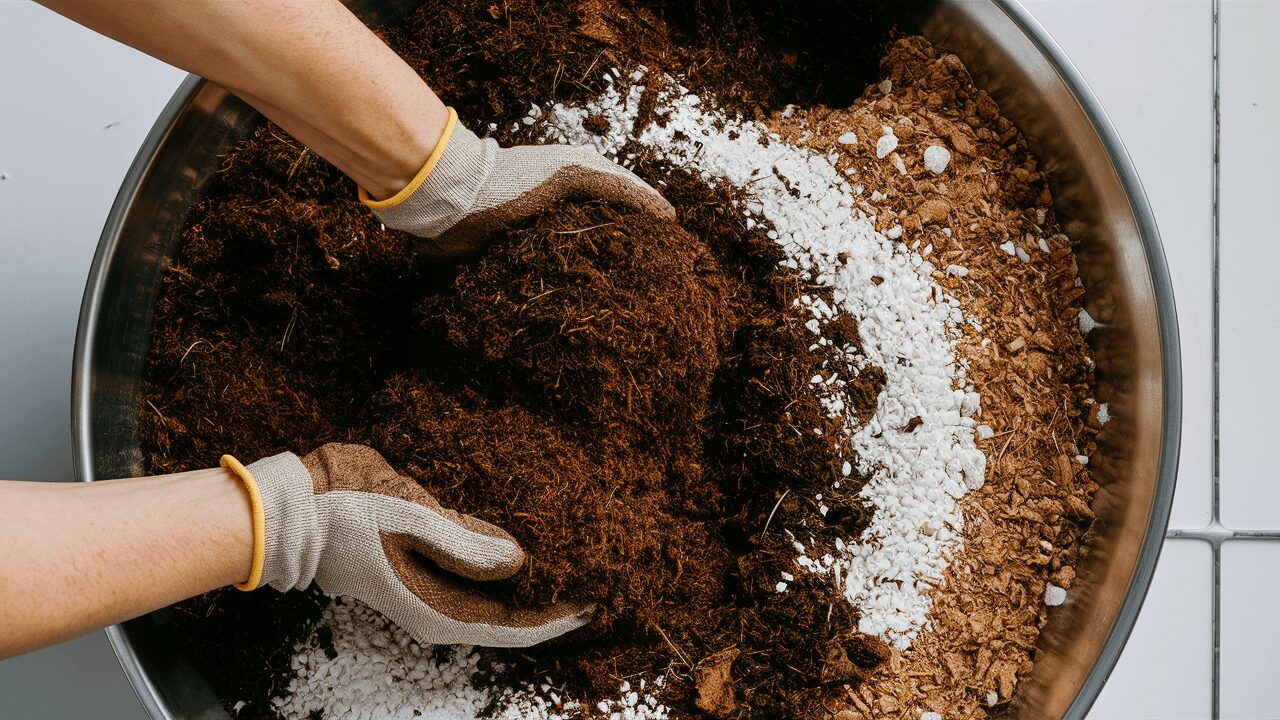
Most climbing plants are aroids (Pothos, Philodendron, Monstera). Aroids need well-draining soil. Heavy, wet soil causes root rot.
- Use a chunky, well-draining mix. Combine 2 parts potting mix, 1 part perlite, and 1 part orchid bark. This creates air pockets. Water flows through easily. Do not use garden soil. Garden soil is too heavy. It compacts in pots. It also may contain pests.
- Add a layer of gravel at the bottom of the pot. This improves drainage. It prevents soil from washing out of the drainage holes.
- For plants on moss poles, use a slightly moisture-retentive mix. The moss pole dries out quickly. The soil should hold a little more water.
- For the perfect well-draining mix, see my full guide on indoor plant potting mix – the same principles apply to climbing plants.
Best Slow Release Fertilizer for Indoor Climbing Vines
Climbing plants are active growers. They need regular food.
Use a balanced, slow-release fertilizer. Look for numbers like 10-10-10 or 14-14-14. Apply it once every 2 to 3 months. The nutrients release gradually.
For plants on moss poles, use a liquid fertilizer. Mix it at half strength. Apply it every 2 to 4 weeks during spring and summer. The moss pole does not hold nutrients well. Do not over-fertilize. Too much fertilizer causes salt buildup. The leaf tips turn brown. Flush the soil with water if this happens.
Stop fertilizing in winter. Climbing plants grow slowly in winter. Fertilizer can burn the roots. For organic option, use worm castings. Mix 1 cup of worm castings per gallon of soil. They release nutrients slowly and safely.
Maintenance, Pruning, and Propagation
Climbing plants need regular maintenance. However, they are not difficult.
How Often to Water Climbing House Plants in Hanging Pots
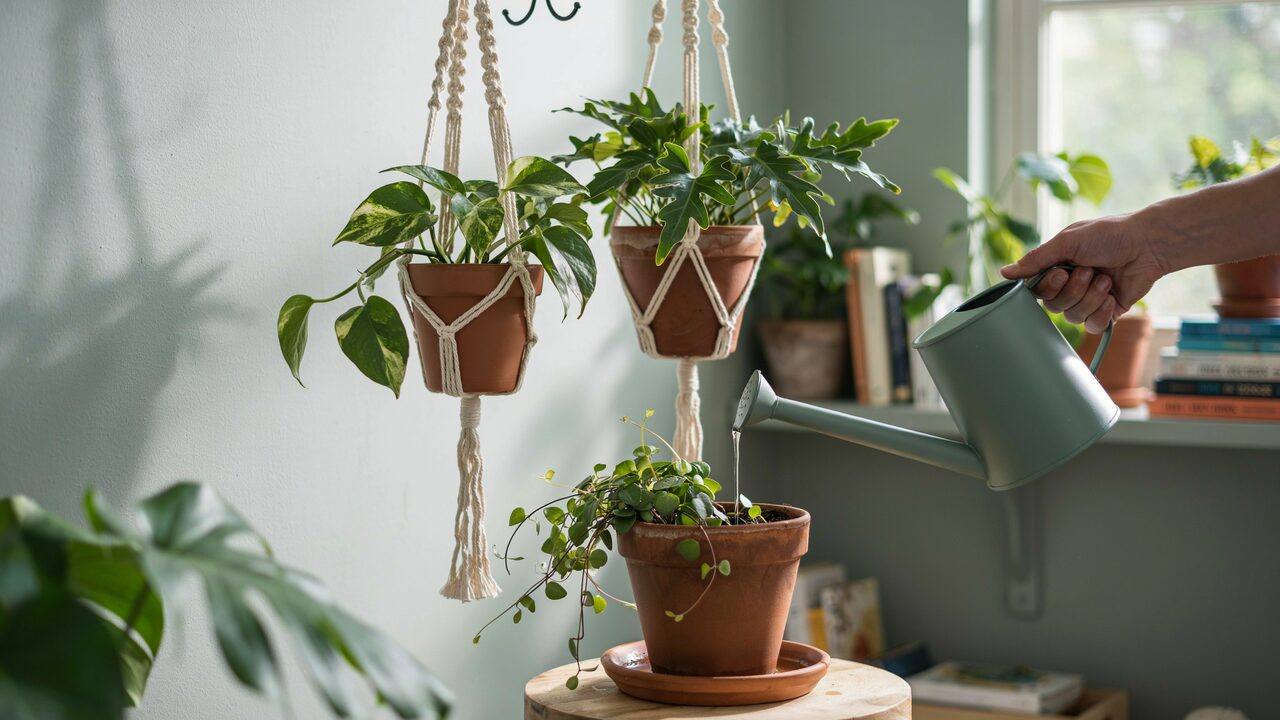
Hanging pots dry out faster than regular pots. The air circulates around all sides of the pot. The soil evaporates quickly.
- Check the soil every 3 to 4 days. Stick your finger into the soil. If the top 1 to 2 inches feel dry, water thoroughly. If the soil feels damp, wait another day.
- In summer, hanging pots may need water every 3 to 5 days. In winter, every 7 to 10 days is typical.
Water until it runs out the bottom. This ensures the entire root ball gets wet. Do not just sprinkle the surface. - Use a pot with a saucer. Hanging pots often drip. A saucer catches the water. Empty the saucer after watering. Do not let the pot sit in water.
If you are forgetful, consider using a self-watering herb garden – the same principles apply to climbing plants.
How to Prune Leggy Climbing Indoor Plants
Leggy plants have long stems with few leaves. They look thin and sad. This happens when the plant does not get enough light.
- Prune back leggy stems by one-half to two-thirds. Use clean scissors or pruning shears. Cut just above a leaf node (where a leaf attaches to the stem). Do not be afraid. Pruning encourages branching. The plant will grow back fuller.
- Prune in spring or early summer. The plant is actively growing. It will recover quickly. After pruning, move the plant to a brighter spot. Leggy growth is a sign of insufficient light. More light prevents future legginess.
- Save the cuttings for propagation. The pruned stems can be rooted in water or soil.
How to Propagate Trailing Climbing House Plants
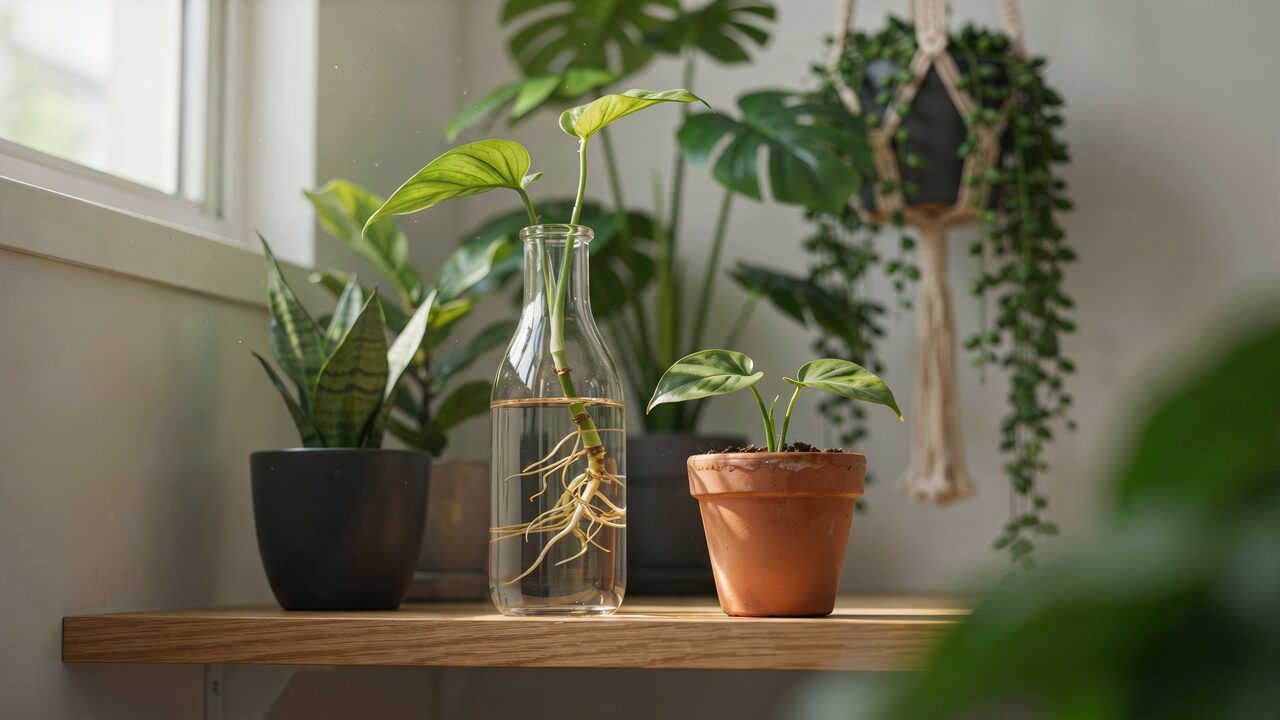
Propagating climbing plants is very easy. You can turn one plant into many for free.
For more propagation techniques, see propagating basil – the same principles apply to climbing plants.
Climbing House Plants That Grow in Water
Some climbing plants can live in water permanently. You do not need soil.
- Pothos grows well in water. Place a cutting in a glass jar. Change the water every 2 weeks. Add a drop of liquid fertilizer once a month.
- Philodendron also thrives in water. The roots grow quickly. The plant stays healthy for years.
- English Ivy can grow in water. However, it prefers soil for long-term growth.
- Lucky Bamboo (Dracaena sanderiana) is not a true bamboo. It is a climbing plant that grows in water. It tolerates low light.
Do not let the water become stagnant. Change it regularly. Algae can grow in the jar. Clean the jar with soap and water if algae appears.
Indoor Climbing Plants with Flowers
Flowering climbers add an extra layer of beauty to your indoor garden. Here are some indoor climbers that produce stunning blooms:
Plant Name | Why It Fits | Why You'll Love It |
Hoya | Produces fragrant flowers | Waxy, star-shaped blooms |
Climbing Hydrangea | Flowers indoors with care | Large, fragrant flowers |
Bougainvillea | Produces vibrant bracts | Striking color, dramatic appearance |
Climbing Snapdragon | Beautiful tubular flowers | Fast-growing, easy care |
Purple Passion Vine | Produces small orange flowers | Unique foliage, eye-catching blooms |
Troubleshooting Visual Care Dilemmas
Even with good care, problems can arise. Here is how to fix them.
Why Are My Climbing House Plant Leaves Small?
Small leaves are the most common complaint. The plant looks thin. The leaves are tiny. The stems are long. The plant is not climbing. This is the most likely reason.
When a climbing plant does not have support, the leaves stay small. The plant thinks it is on the ground. This is the science:
- Climbing plants have a feature called "node maturity." When the plant climbs, each node produces a larger leaf. The higher the plant climbs, the larger the leaves. This is how the plant reaches sunlight in the jungle. Give the plant support. Add a moss pole, trellis, or wall clips. Train the stem upward. Within a few months, the new leaves will be larger.
- Not enough light also causes small leaves. Move the plant to a brighter spot. If natural light is limited, use grow lights.
- Underwatering can also stunt leaf size. Water more consistently. Let the soil dry slightly between waterings, but not completely.
Why Is My Climbing Plant Not Climbing?
This is another common frustration. You added a moss pole. You tied the stem. The plant ignores it.
Not all climbing plants are true climbers. Some plants are trailing plants. They want to hang down, not climb up. String of Pearls and Spider Plant are trailing plants. They will not climb.
True climbers include Pothos, Philodendron, Monstera, and English Ivy. These plants have aerial roots. They attach to surfaces.
The plant may need more light. Climbing takes energy. In low light, the plant conserves energy. It does not waste energy on climbing.
The moss pole may be too dry. Aerial roots need moisture. Mist the moss pole regularly. The roots will attach to the damp moss. Be patient. Some plants take months to attach. Keep the stem tied loosely to the pole. Eventually, the plant will figure it out.
How to Prevent Root Rot in Climbing House Plants
Root rot is the number one killer of houseplants. It happens when the soil stays wet for too long.
- Use well-draining soil. The chunky mix described earlier is best. It does not hold excess water.
- Choose pots with drainage holes. Do not use pots without holes. The water has nowhere to go.
- Do not overwater. Let the top 1 to 2 inches of soil dry out before watering. When in doubt, wait another day.
Signs of root rot include yellow leaves, wilting despite wet soil, and a foul smell from the pot. If you see these, remove the plant from its pot. Cut away any black, mushy roots. Repot in fresh, dry soil. Do not water for a week.
Prevention is the best cure. A well-draining soil mix and proper watering habits prevent root rot entirely.
Selection Guides: Variegation and Pet Safety
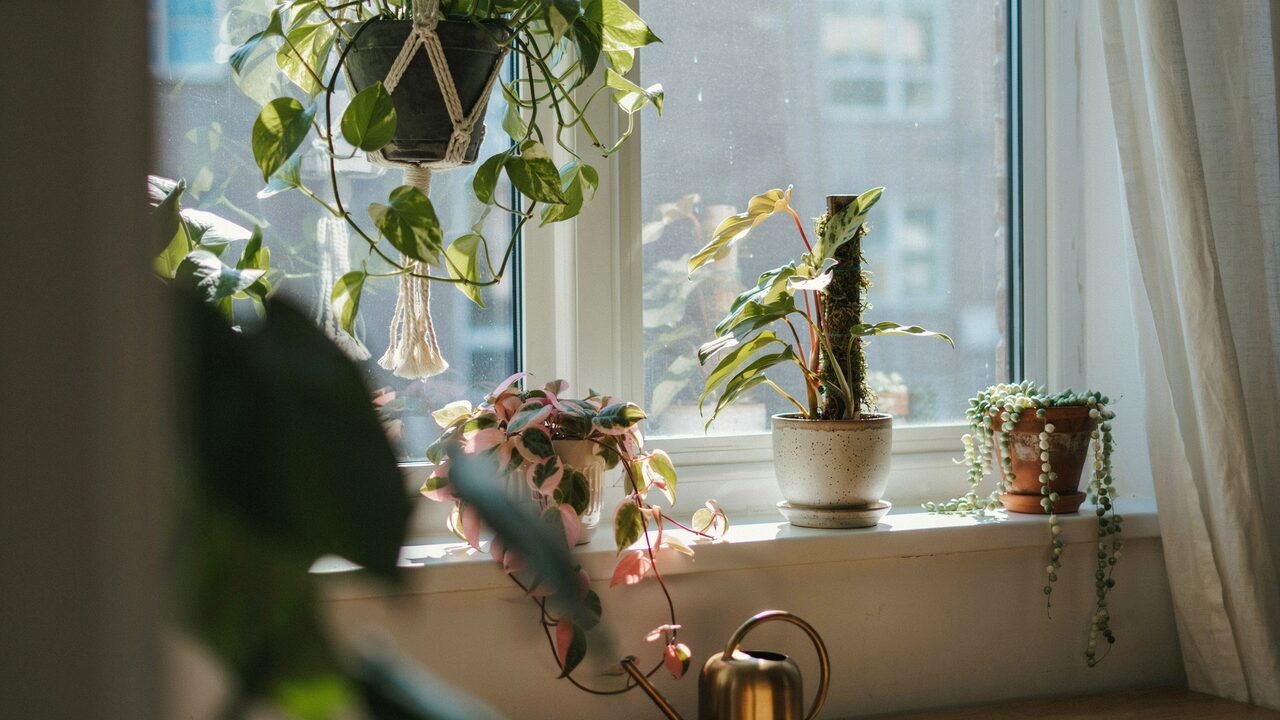
Choosing the right plant for your space and your family is important.
Climbing House Plants with Variegated Leaves
Variegated plants have leaves with multiple colors. They are highly sought after. They add visual interest.
- Pothos 'Marble Queen' has green and white marbled leaves. It is easy to grow. It tolerates low light.
- Pothos 'Neon' has bright chartreuse leaves. It is not variegated in the traditional sense, but it is very colorful.
- Philodendron 'Brasil' has green and lime-green variegation. It grows quickly. It is very forgiving.
- Philodendron 'Micans' has velvety, iridescent leaves. The new leaves are pinkish. The mature leaves are dark green with purple undersides.
- Monstera deliciosa 'Variegata' is the most sought-after. Its leaves have white or yellow patches. It is expensive and slow-growing. However, it is stunning.
- Inch Plant (Tradescantia zebrina) has purple, silver, and green stripes. It is very fast-growing. It trails beautifully.
Safe Climbing House Plants for Cats and Dogs
Pet safety is a top concern for many plant owners. These climbing plants are non-toxic to cats and dogs.
- Hoya (Hoya spp.) is completely non-toxic. The leaves are thick and waxy. The flowers are fragrant. It is slow-growing.
- Spider Plant (Chlorophytum comosum) is safe for pets. The leaves are arching and pointed. It produces baby plants that dangle.
- Grape Ivy (Cissus rhombifolia) is non-toxic. It has glossy green leaves that resemble grape leaves. It climbs well on a trellis.
- Climbing Snapdragon (Asarina scandens) is safe for pets. It has delicate, tubular flowers. It is fast-growing.
- String of Hearts (Ceropegia woodii) is safe for pets. The leaves are small and heart-shaped. It trails beautifully.
- Betel Leaf Plant (Piper betle) is safe for pets. It has heart-shaped leaves. It is fast-growing.
Toxic Climbing House Plants to Avoid
Pothos, Philodendron, Monstera, English Ivy, and Jasmine. These contain calcium oxalates. They cause mouth irritation, drooling, and vomiting in pets. If your cat eats a toxic plant, call your vet immediately.
Printable Climbing Plant Care Chart (Save This)
Plant | Light | Water | Growth Rate | Pet Safe | Best Support |
Pothos | Low to bright | Let top inch dry | Fast | No | Moss pole, trellis |
Philodendron | Low to bright | Let top inch dry | Fast | No | Moss pole, trellis |
Monstera | Bright indirect | Let top inch dry | Moderate | No | Moss pole |
English Ivy | Bright indirect | Keep moist | Moderate | No | Wall, trellis |
Hoya | Bright indirect | Let dry completely | Slow | Yes | Small trellis |
Spider Plant | Bright to moderate | Let top inch dry | Moderate | Yes | Hanging basket |
Inch Plant | Bright indirect | Keep moist | Fast | No | Hanging basket |
String of Hearts | Bright indirect | Let dry completely | Slow | Yes | Hanging basket |
Keep this chart near your plants. It will help you remember the key steps.

Plant Catalog for Climbing House Plants
What to expect in this section: Below you will find detailed plant entries. Each entry includes a photo, a quick-reference table, a description, "toxicity," and care tips. Scroll to find your perfect climbers.
Pothos (Epipremnum aureum)

- Botanical Name: Epipremnum aureum
- Hardiness Zone: 10-12
- Light: Low to bright indirect light
- Water: Water when the top inch of soil is dry
- Mature Size: 6-10 feet long
- Toxicity: Toxic to pets (cats and dogs)
Pothos is a versatile and easy-to-care-for plant, known for its heart-shaped leaves and ability to thrive in various light conditions. It’s a fast grower and can be trained to climb trellises or trail from hanging baskets.
Philodendron (Philodendron hederaceum)

- Botanical Name: Philodendron hederaceum
- Hardiness Zone: 10-11
- Light: Low to bright indirect light
- Water: Water when the top inch of soil is dry
- Mature Size: 10-20 feet long
- Toxicity: Toxic to pets (cats and dogs)
The Philodendron is a classic houseplant, prized for its ability to adapt to low light and its lush, green foliage. It can climb with the support of a trellis or be allowed to trail freely.
English Ivy (Hedera helix)

- Botanical Name: Hedera helix
- Hardiness Zone: 4-9
- Light: Bright indirect light
- Water: Keep soil consistently moist
- Mature Size: 6-8 inches high, 15 feet long
- Toxicity: Toxic to pets (cats and dogs)
English Ivy is a vigorous grower that can quickly cover walls or trellises with its dense, green foliage. It’s an excellent choice for adding a touch of classic greenery to your home.
Monstera (Monstera deliciosa)

- Botanical Name: Monstera deliciosa
- Hardiness Zone: 10-12
- Light: Bright indirect light
- Water: Water when the top inch of soil is dry
- Mature Size: 6-10 feet tall
- Toxicity: Toxic to pets (cats and dogs)
The Monstera, or Swiss Cheese Plant, is known for its large, fenestrated leaves and impressive size. It can be trained to climb, making it a striking addition to any indoor space.
String of Hearts (Ceropegia woodii)

Source: Photo by AfroBrazilian
- Botanical Name: Ceropegia woodii
- Hardiness Zone: 10-11
- Light: Bright indirect light
- Water: Water when the top inch of soil is dry
- Mature Size: 2-4 feet long
- Toxicity: Non-toxic to pets
The String of Hearts is a delicate vine with tiny, heart-shaped leaves. It’s a slow grower, making it perfect for small spaces where you want a subtle touch of greenery.
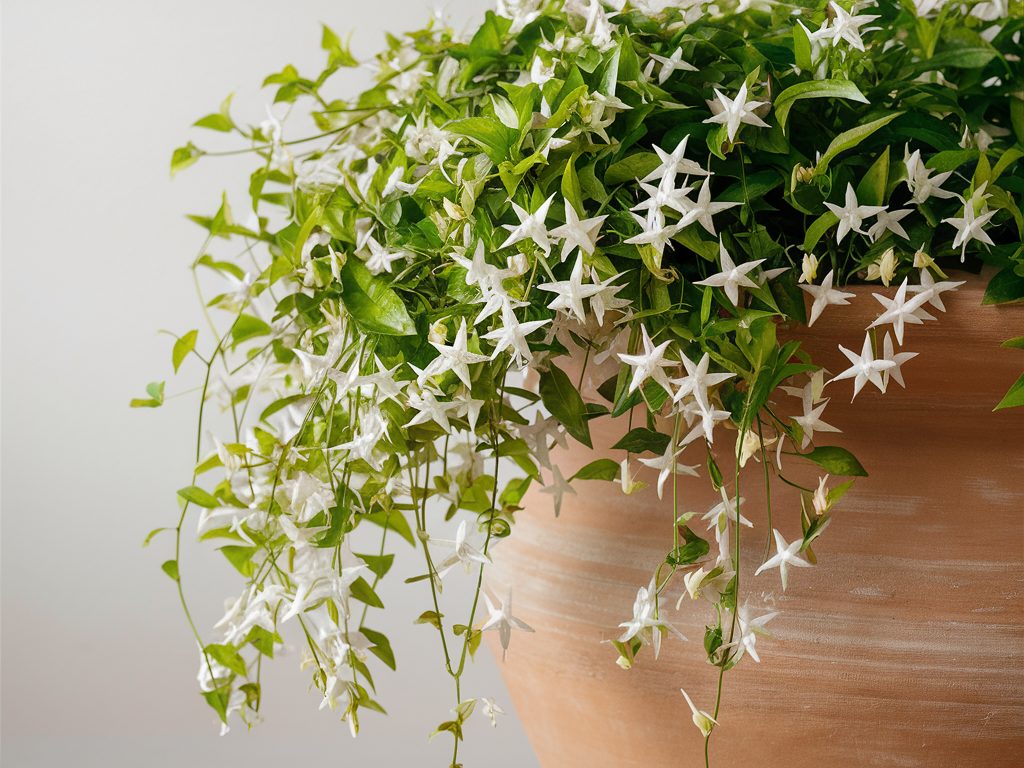
Jasmine (Jasminum polyanthum)
- Botanical Name: Jasminum polyanthum
- Hardiness Zone: 8-10
- Light: Bright indirect light
- Water: Keep soil consistently moist
- Mature Size: 6-10 feet long
- Toxicity: Non-toxic to pets
Jasmine is cherished for its fragrant white or pink flowers and twining growth habit. It’s a great choice for brightening up a room with both its foliage and sweet scent.
Passion flower (Passiflora spp.)

Source: Photo by Captain-tucker
- Botanical Name: Passiflora spp.
- Hardiness Zone: 6-9
- Light: Full sun to partial shade
- Water: Water regularly during the growing season
- Mature Size: 10-15 feet long
- Toxicity: Non-toxic to pets
Passionflower is admired for its unique, intricate blooms and its vigorous climbing habit. It’s perfect for creating a tropical vibe in your home.
Inch Plant (Tradescantia zebrina)

Source: Photo by LucaLuca
- Botanical Name: Tradescantia zebrina
- Hardiness Zone: 9-11
- Light: Bright indirect light
- Water: Keep soil consistently moist
- Mature Size: 6-12 inches tall, 12-24 inches wide
- Toxicity: Toxic to pets (cats and dogs)
The Inch Plant is known for its striking, striped leaves with shades of purple and silver. It's a fast-growing vine that adds a pop of color to your indoor space.
Hoya (Hoya spp.)

- Botanical Name: Hoya spp.
- Hardiness Zone: 10-12
- Light: Bright indirect light
- Water: Water when the top inch of soil is dry
- Mature Size: 2-4 feet long
- Toxicity: Non-toxic to pets
Hoya, often called the Wax Plant, is celebrated for its thick, waxy leaves and clusters of star-shaped flowers. It's a slow grower but a rewarding addition to any indoor garden.
Spider Plant (Chlorophytum comosum)

- Botanical Name: Chlorophytum comosum
- Hardiness Zone: 9-11
- Light: Bright to moderate indirect light
- Water: Water when the top inch of soil is dry
- Mature Size: 12-24 inches long
- Toxicity: Non-toxic to pets
The Spider Plant is a hardy indoor plant known for its arching leaves and small offshoots, or "spiders," that dangle like vines. It's an easy-to-care-for plant that adds movement and interest to any room.
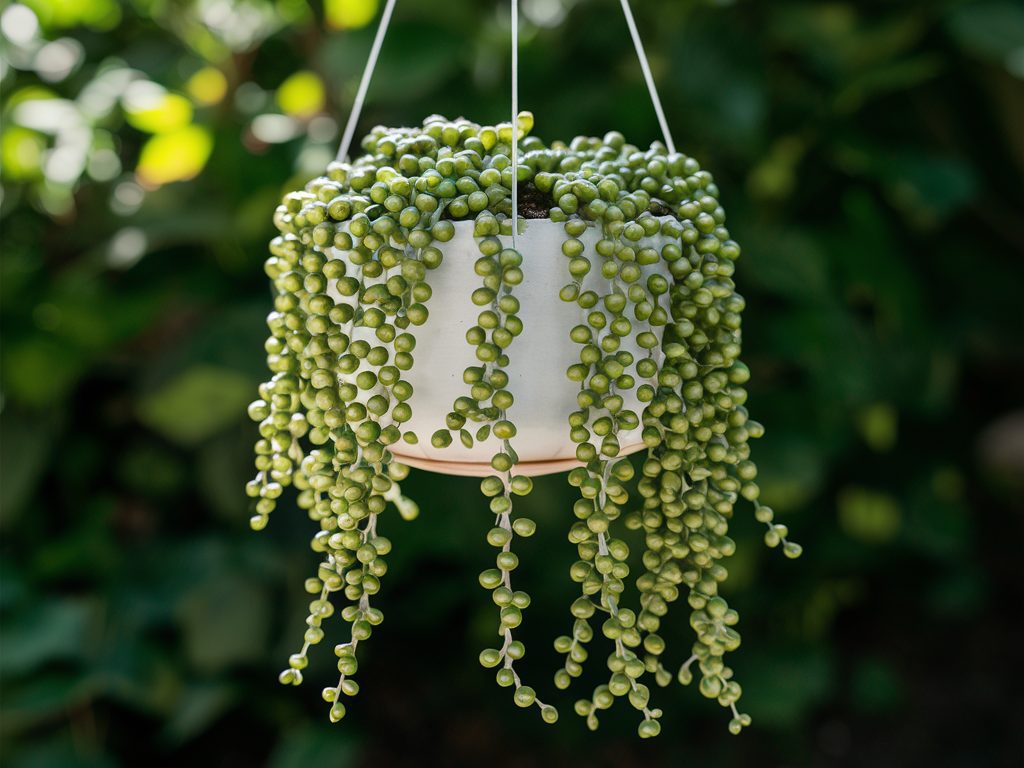
String of Pearls (Senecio rowleyanus)
- Botanical Name: Senecio rowleyanus
- Hardiness Zone: 10-11
- Light: Bright indirect light
- Water: Allow soil to dry between watering
- Mature Size: 1-2 feet long
- Toxicity: Toxic to pets (cats and dogs)
String of Pearls is a unique plant with trailing, bead-like leaves that resemble a string of pearls. It's a striking plant that adds a touch of whimsy to hanging baskets or shelves.
String of Turtles (Peperomia prostrata)

Source: Photo by Stefano
- Botanical Name: Peperomia prostrata
- Hardiness Zone: 10-12
- Light: Bright indirect light
- Water: Water when the top inch of soil is dry
- Mature Size: 1-2 feet long
- Toxicity: Non-toxic to pets
String of Turtles is known for its small, round leaves that resemble turtle shells. It’s a slow grower that adds a unique texture to your indoor garden.
Golden Pothos (Epipremnum aureum ‘Golden’)

Source: Photo by Elvis Ripley
- Botanical Name: Epipremnum aureum
- Hardiness Zone: 10-12
- Light: Low to bright indirect light
- Water: Water when the top inch of soil is dry
- Mature Size: 6-10 feet long
- Toxicity: Toxic to pets (cats and dogs)
Golden Pothos is a variegated variety of Pothos with green and yellow leaves. It’s as easy to care for as the regular Pothos, with the added appeal of its striking foliage.
Betel Leaf Plant (Piper betle)

Source: Photo by Alpha
- Botanical Name: Piper betle
- Hardiness Zone: 10-12
- Light: Bright indirect light
- Water: Keep soil consistently moist
- Mature Size: 10-15 feet long
- Toxicity: Non-toxic to pets
Betel Leaf Plant has heart-shaped leaves that are often used in traditional medicine and culinary applications. It’s a fast-growing climber that thrives indoors with proper care.
FAQs About Climbing House Plants
What is the easiest indoor climbing plant to grow?
Pothos is the easiest. It tolerates low light, irregular watering, and neglect. It grows fast. It is very forgiving.
What is the fastest-growing vine indoor plant?
Inch Plant (Tradescantia zebrina) is the fastest. It can grow several inches per week. However, it needs bright indirect light. In low light, growth slows.
What is the best vine houseplant?
Philodendron hederaceum is often considered the best. It is lush, easy to grow, and adaptable. It climbs well and trails beautifully.
What plants are good for indoor trellis?
Pothos, Philodendron, English Ivy, Hoya, and Climbing Fig are excellent for indoor trellises. They are natural climbers. They will attach and grow upward.
What are the best pet-safe climbing plants?
Hoya, Spider Plant, Grape Ivy, String of Hearts, and Betel Leaf Plant are all non-toxic to cats and dogs.
Quick Summary Tips for Climbing Indoor Plants
- Give them something to climb. This is the most important tip. Without support, leaves stay small. The plant looks thin. A moss pole or trellis changes everything.
- Propagate often. Climbing plants grow quickly. You will have more stems than you need. Cut them and root them in water. Give the baby plants to friends. Trade them for other plants.
- Do not overwater. Climbing plants are more tolerant of dry soil than wet soil. When in doubt, wait another day. Root rot is much harder to fix than underwatering.
If you are just starting your indoor gardening journey, read my full guide on how to start urban gardening . It covers soil, containers, watering, and everything else a beginner needs.
And if you love climbing plants, try inch plant care or pilea care next.
Share Your Climbing Houseplant Setup Below!
I have two small asks for you before you grab your plant clips and start guiding your vines upward:
- First, drop a comment below. Which climbing vine are you trying to train today? Are you building a massive pothos wall in your living room, or wrapping an ivy variety around a small desktop trellis? If your leaves are currently looking small, leggy, or yellow, leave a comment—I personally reply to every single comment within 48 hours to help you troubleshoot your setup!
- Second, save this guide for later. Pin our vertical training and moss pole guide directly to your favorite houseplant, interior design, or indoor gardening board on Pinterest, or text this link to a friend who wants to add some gorgeous, leafy height to their apartment.
Now, grab your moss poles, select your favorite trailing vines, and give your home the beautiful vertical upgrade it deserves. Your jungle is waiting to climb!
Happy gardening, friend!
External Link: For more inspiration, check out these additional resources on climbing indoor plants to perfect your gardening skills: How to Create a Trellis for Indoor Plants and Indoor Vine Plants That Are Stylish
Last Updated on June 4, 2026 by Austine