
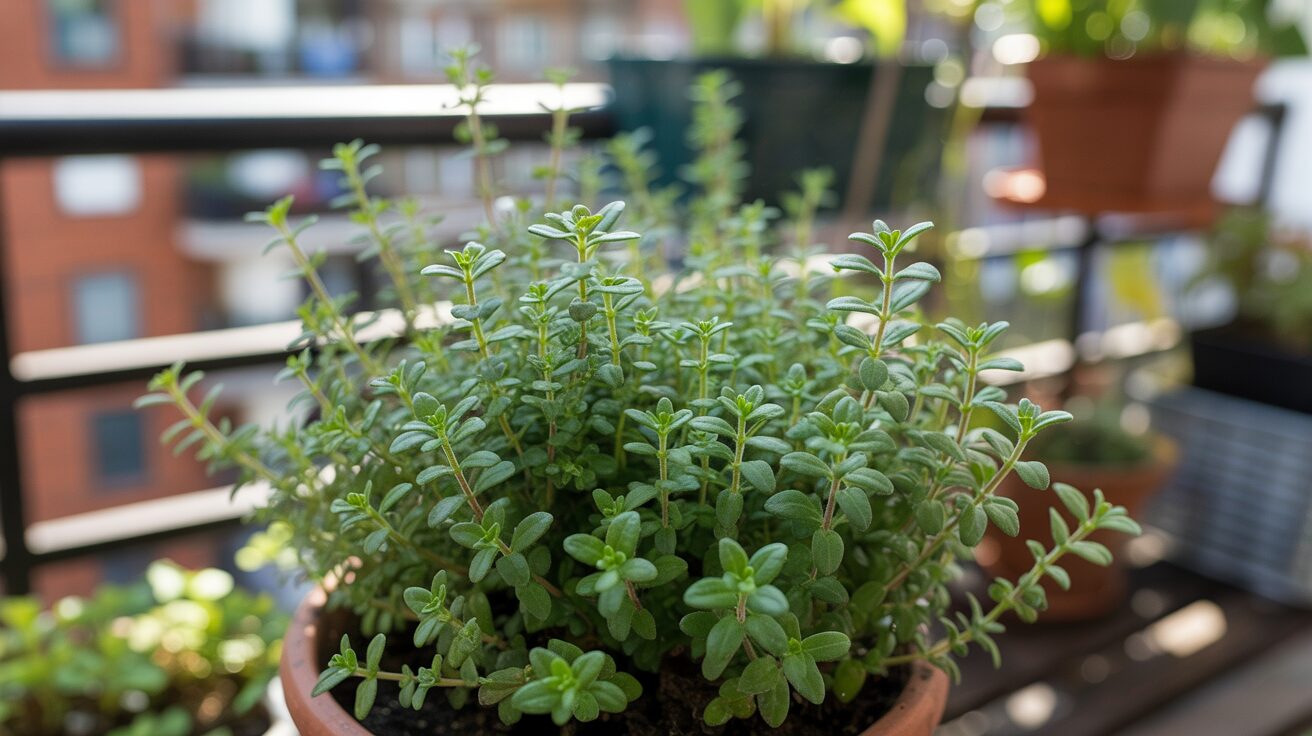
Thyme is a Mediterranean herb. It wants full sun (6-8 hours daily), sandy, well-draining soil, and infrequent watering. Let the soil dry out completely between waterings. Thyme prefers neglect over overwatering. The biggest mistake beginners make is loving their thyme to death with too much water.
Learning how to grow lettuce indoors is one of the most rewarding skills for any home gardener, especially when outdoor temperatures drop.
Whether you are growing lettuce in 4 inch pots on a windowsill or setting up a diy indoor vertical lettuce garden for small spaces, the key to success lies in mimicking the perfect spring environment.
In this guide, we’ll dive into the best soil mix for indoor potted thyme, how often to water thyme plants indoors, and the best techniques for how to harvest indoor thyme so it keeps growing.
Why Thyme is a Challenging Indoor Herb
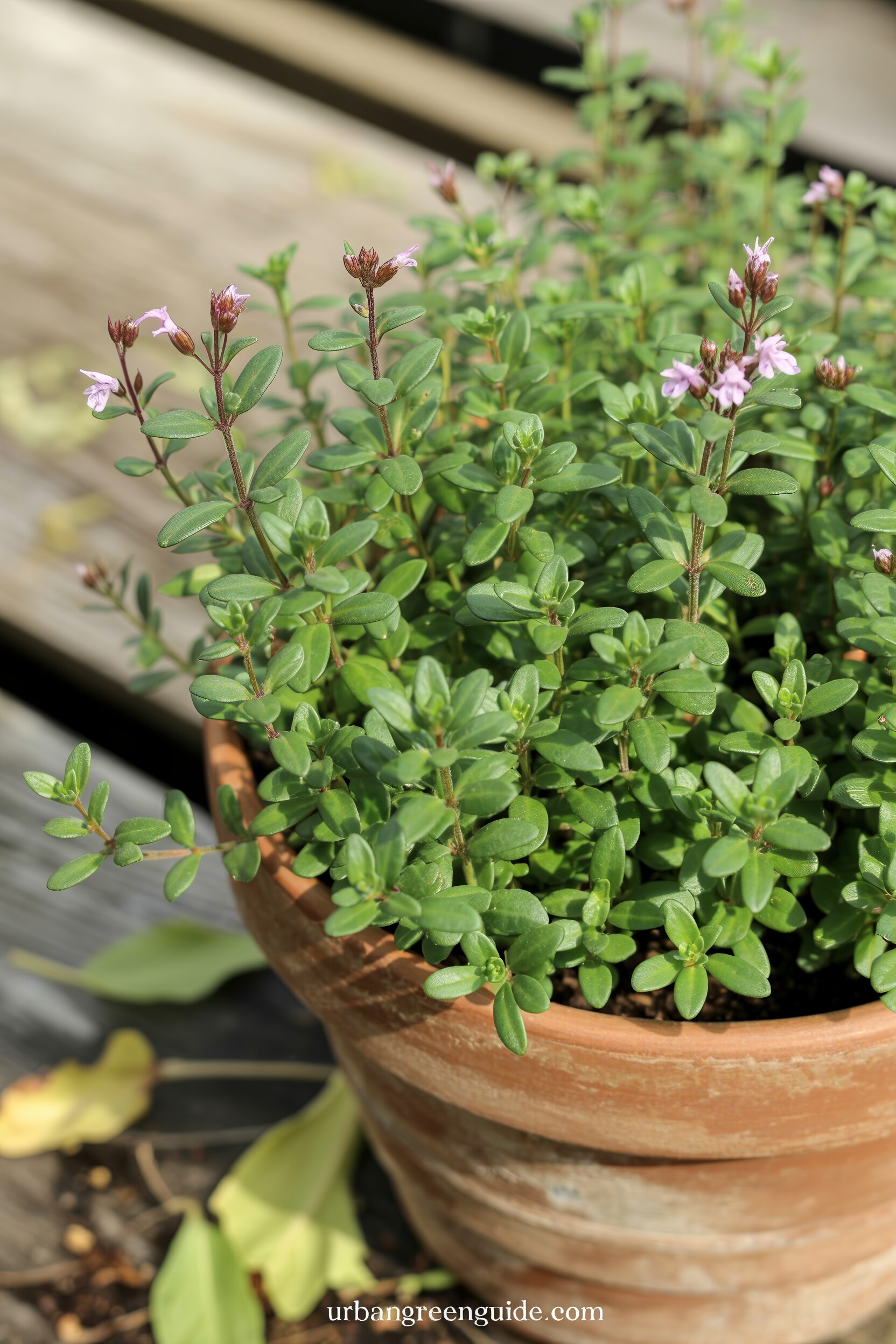
Have you ever bought a beautiful thyme plant from the store, only to watch it turn brown and die within a few weeks? I have been there too. It is frustrating. You think you are doing everything right, but the plant just gives up. The truth is Thyme comes from the Mediterranean region. It grows on rocky hillsides with poor soil and intense sun. It is used to being ignored. When you bring it indoors, your kindness can actually kill it.
Most indoor herbs like basil and mint want constant moisture. Thyme does not. It wants to dry out between waterings. It wants sandy soil that drains fast. It wants as much sun as you can give it.
Therefore, the secret to growing thyme indoors is learning to neglect it properly. Water it less. Give it more light. Use the right soil. Once you understand this, thyme becomes one of the easiest herbs to grow. For another Mediterranean herb with similar needs, see my guide on growing rosemary from seed.
How Much Sun Does Indoor Thyme Need?
Thyme is a sun worshipper. It needs 6 to 8 hours of direct sunlight every single day. A south-facing window is your best option. However, winter sunlight is weaker. Days are shorter. A sunny window in July might be fine, but in December, it may not be enough. Therefore, many indoor thyme growers use grow lights.
Without enough light, thyme becomes leggy. The stems stretch out. The leaves become sparse. The plant loses its strong flavor. In addition, low light makes thyme more susceptible to root rot. A north-facing window will not work. An east-facing window provides only morning sun. That is about 4 hours. Not enough. West-facing windows are better, but south-facing is best.
Setting Up for Success
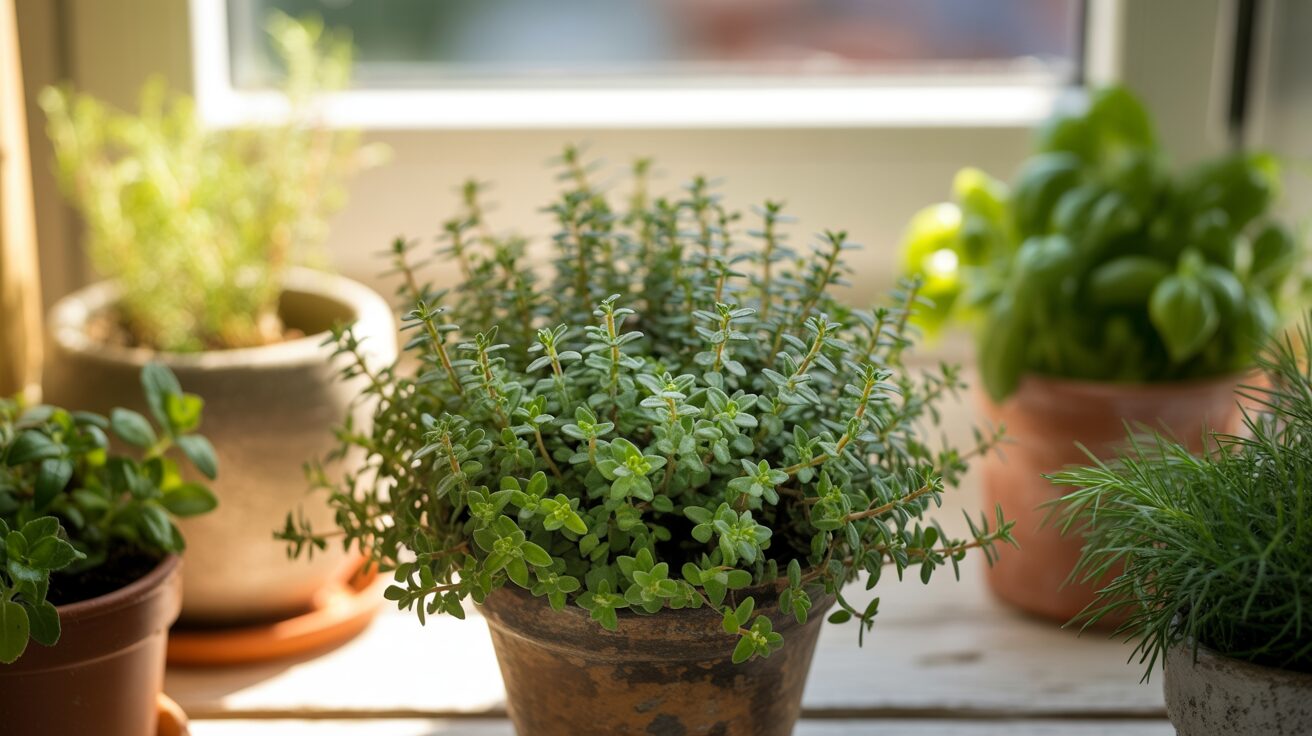
Before you plant, gather the right supplies. Thyme is forgiving, but it has three non-negotiable needs: drainage, drainage, and drainage.
Best Pots for Growing Thyme Indoors with Drainage
Choose a pot with drainage holes. This is not optional. Thyme will die in a pot without holes.
Fill your seedling tray or pot with lightly moistened seed starting mix if you are starting seeds. For mature plants, use a potting mix designed for containers.
Best Soil Mix for Indoor Potted Thyme
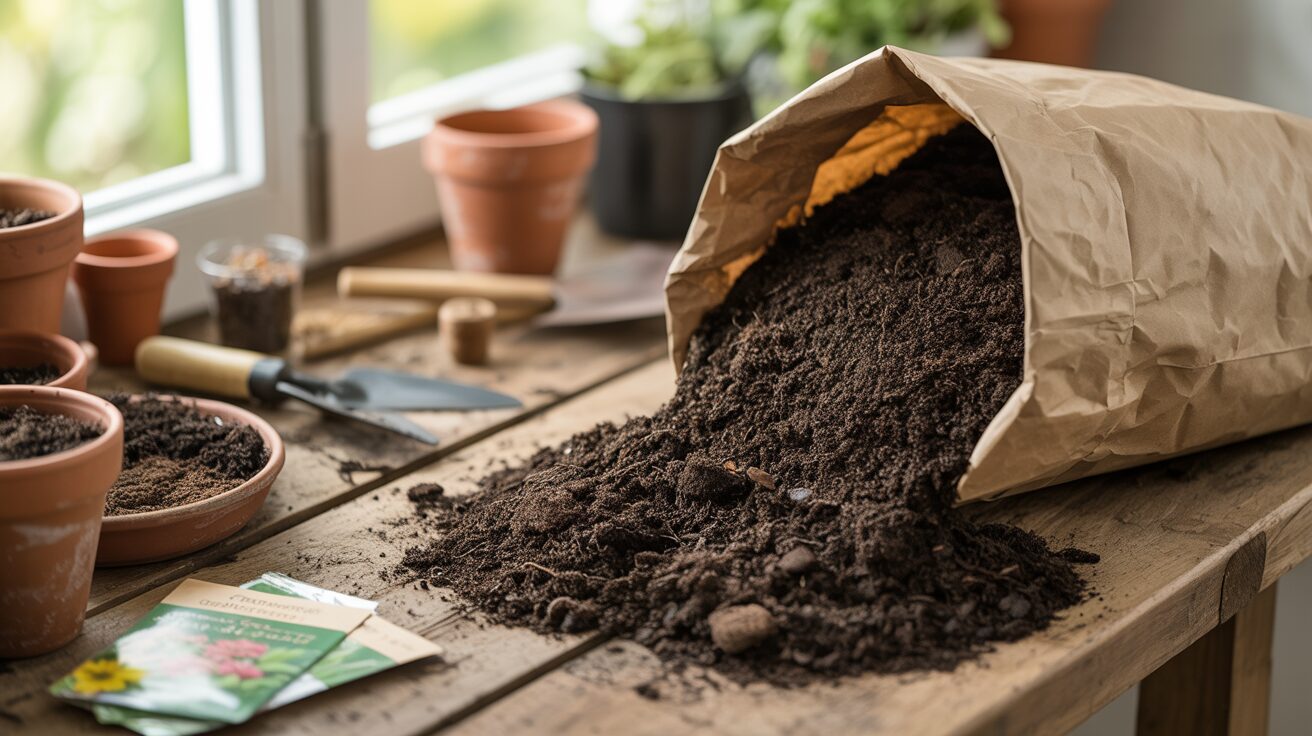
Regular potting soil is too rich and holds too much moisture. Thyme needs a sandy, well-draining mix.
My simple recipe. Mix equal parts of regular potting mix, coarse sand, and perlite. The sand improves drainage. The perlite creates air pockets. The potting mix provides a little nutrients.
You can also buy a pre-made cactus or succulent mix. These are designed for plants that hate wet roots. They work perfectly for thyme. Do not add compost. Compost holds moisture. Thyme does not need rich soil. In fact, poor soil produces more flavorful leaves. For more on choosing the right soil, see indoor plant potting soil.
Best Grow Lights for Indoor Thyme Garden
If you do not have a very sunny window, invest in grow lights. Thyme will survive in a dim window, but it will not thrive.
Printable Thyme Care Chart (Save This)
Here is a quick reference chart you can screenshot or print.
Factor | Thyme's Preference |
|---|---|
Pot type | Terracotta with drainage holes |
Pot size | 4-6 inches wide |
Soil mix | 1 part potting mix + 1 part sand + 1 part perlite |
Sunlight | 6-8 hours daily (south-facing window or grow lights) |
Water | Let soil dry completely between waterings |
Temperature | 60°F to 75°F (15°C to 24°C) |
Humidity | Low (average room humidity is fine) |
Fertilizer | Very little (once monthly at half strength) |
Keep this chart near your indoor garden. It will help you remember Thyme's unique needs.
Starting Your Thyme Plant
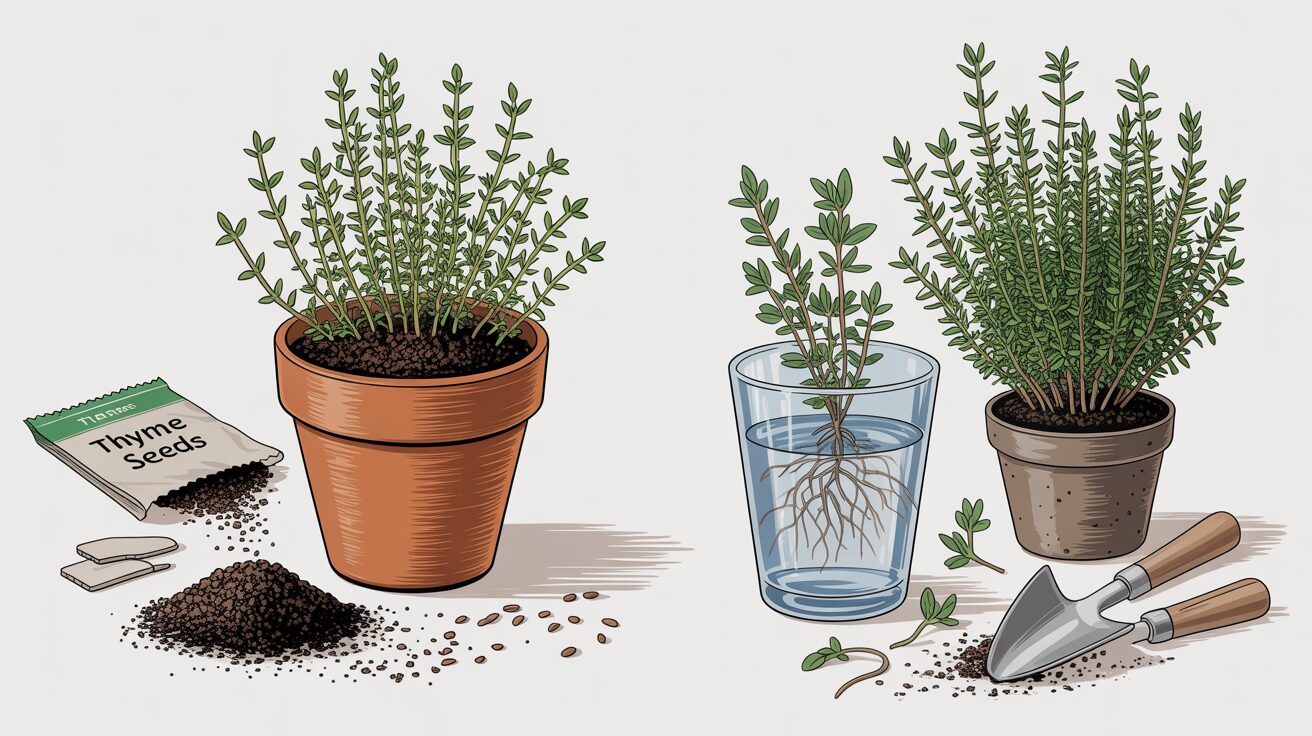
You have three options for getting a thyme plant: seeds, cuttings, or nursery plants. Each has pros and cons.
Growing Thyme Indoors from Seed vs Cuttings
Seeds are the slowest method
Thyme seeds are tiny. They take 2 to 3 weeks to germinate. Then the seedlings grow slowly. You may wait 3 months for a harvestable plant. However, seeds are cheap. You can grow many plants for the price of one nursery plant.
Cuttings are faster
Take a 4-inch stem from a healthy thyme plant. Remove the lower leaves. Place the cutting in water or moist soil. Roots will form in 2 to 3 weeks. The new plant is an exact clone of the parent.
Nursery plants are the easiest
Buy a small thyme plant from a garden center. It is already established. You can start harvesting immediately. This is the best choice for beginners.
For more on propagation, see propagating basil and propagating mint . The same techniques work for thyme.
How to Transplant Nursery Thyme to Indoor Pots
If you buy a nursery plant, transplant it correctly. Here is my step-by-step method.
Setting up is only the first step. You also need to care for your thyme properly over time. Watering, fertilizing, and pruning are all important. In addition, you may encounter problems like woody stems or pests.
In the next section, I will share my best tips for ongoing care. I will also show you how to harvest thyme so it keeps growing back. Keep reading to learn the "soak and dry" watering method and how to prevent your thyme from getting woody.
Routine Care and Maintenance
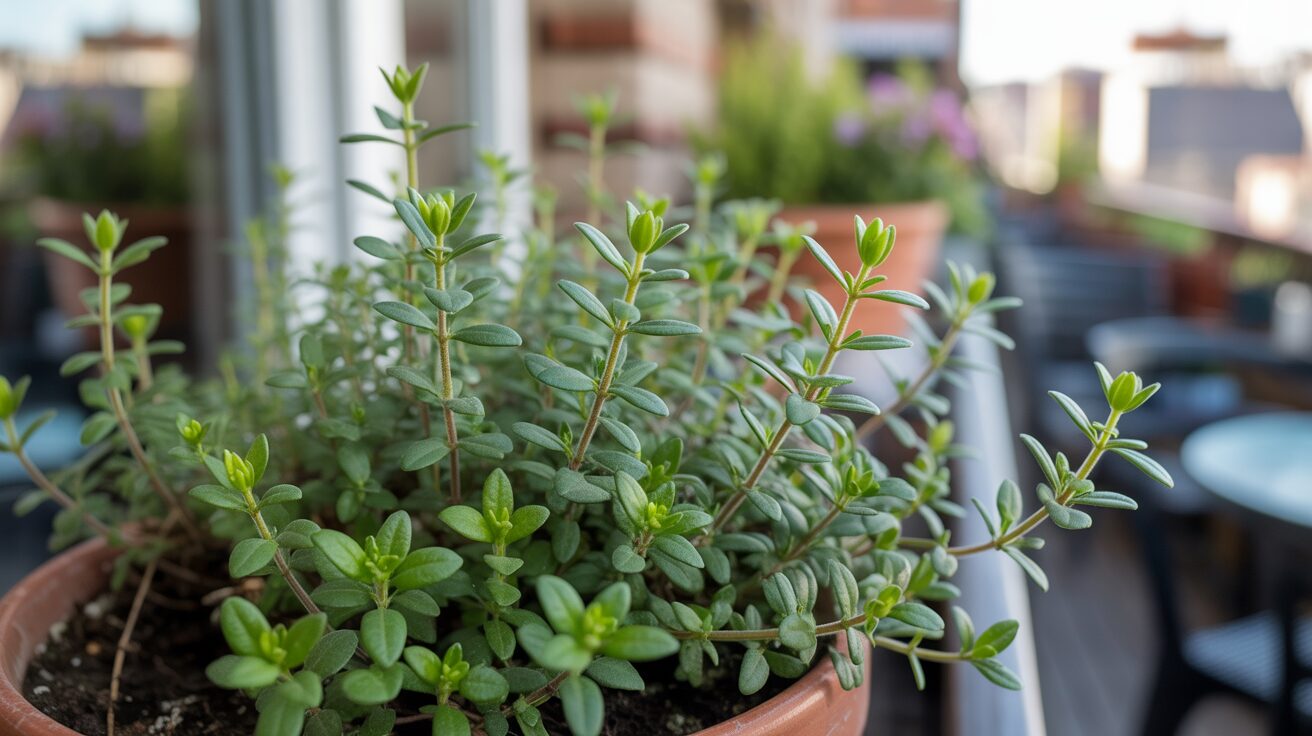
Thyme is low-maintenance. However, a few simple habits will keep your plant healthy for years.
How Often to Water Thyme Plants Indoors
As a thumb rule. Let the soil dry out completely between waterings. Thyme is drought-tolerant. It stores water in its small leaves. It can survive dry soil for days. However, it cannot survive wet soil for long. Wet roots rot.
- Use the "soak and dry" method. Water your thyme deeply until water runs out the drainage holes. Then wait. Do not water again until the soil feels dry when you stick your finger 1 inch deep.
- In winter, you may water every 10 to 14 days. In summer, maybe once a week. Always check the soil first. When in doubt, wait another day.
- Water from below if possible. Place the pot in a shallow dish of water. Let the soil absorb water from the bottom. This keeps the leaves dry. Wet leaves can lead to mold.
- Signs of overwatering include yellow leaves, drooping stems, and a foul smell from the soil. If you see these, stop watering immediately. Let the soil dry out completely.
If you are forgetful, consider building a self-watering herb garden. However, note that thyme prefers to dry out, so self-watering may keep it too wet.
The Best Organic Fertilizer for Indoor Thyme
Thyme is a light feeder. It does not need much fertilizer. In fact, too much fertilizer makes the leaves less flavorful. If you use fresh potting mix, you may not need fertilizer for the first 6 months. The mix already contains nutrients. If your thyme looks pale or grows very slowly, give it a light feeding.
How to Prevent Indoor Thyme from Getting Woody
Thyme naturally becomes woody as it ages. The stems turn brown and hard. The leaves become sparse. This is normal. However, you can delay it.
- Prune regularly. Snip the top 2 to 3 inches of each stem every few weeks. This encourages new green growth from the base. Use sharp scissors. Cut just above a leaf node.
- Do not cut into old wood. Thyme does not regrow from bare brown stems. Always leave some green leaves on each stem.
- Harvest often. The more you harvest, the more the plant produces new growth. Regular harvesting keeps the plant young and vigorous.
- Replace your plant every 2 to 3 years. Even with perfect care, thyme eventually becomes woody. Start a new plant from a cutting before the old one declines.
Can You Grow Oregano and Thyme Together Indoors?
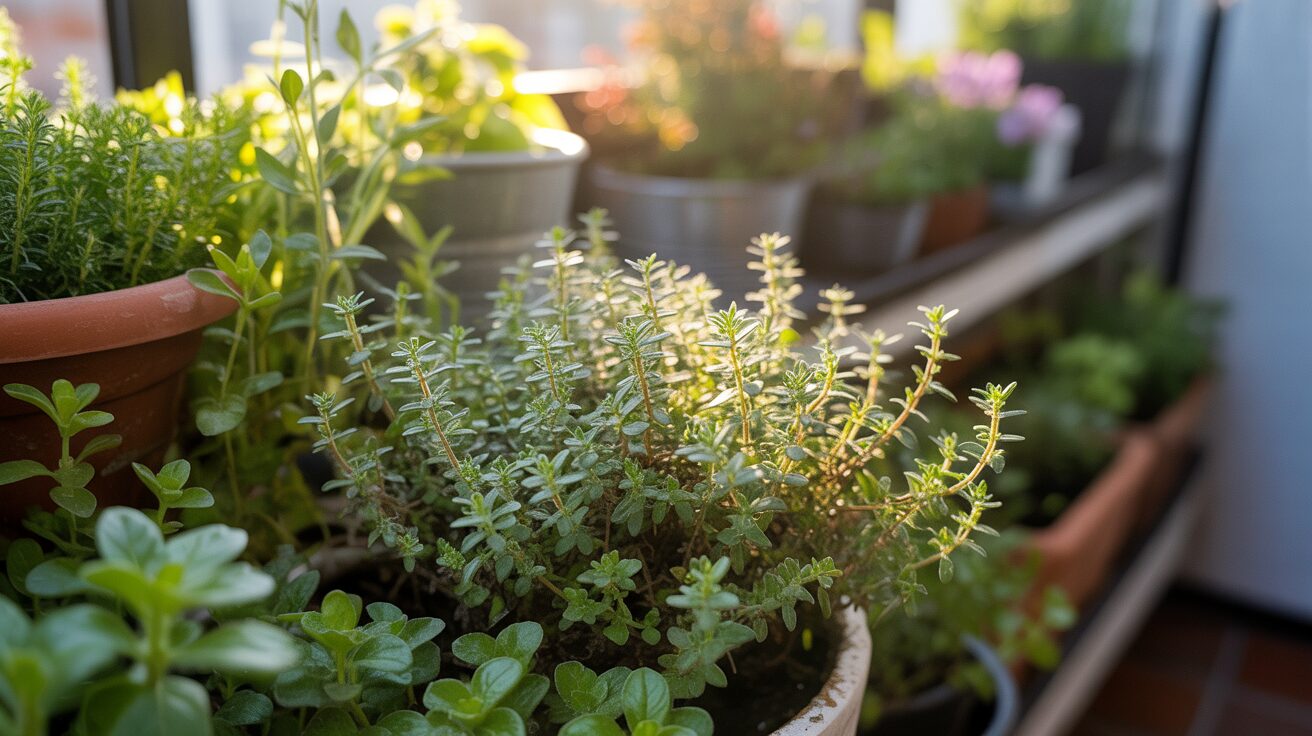
Yes, you can. Oregano and thyme are both Mediterranean herbs. They have the same needs. Both want full sun. Both want sandy, well-draining soil. Both want infrequent watering. They can share a pot as long as it is large enough.
Use a pot that is at least 8 inches wide. Fill it with the sandy soil mix. Plant one thyme and one oregano together. They will not compete. For more on growing herbs together, see best plants for pots all year round.
Troubleshooting Common Problems
Even with good care, problems can arise. Here is how to fix them.
Why is My Indoor Thyme Plant Dying?
Thyme is tough. If it is dying, the cause is usually one of two things.
- 1Root rot from overwatering is the most common killer. The leaves turn yellow, then brown. The stems feel soft. The soil smells bad. Stop watering immediately. Let the soil dry out completely. If the plant is very sick, repot it in fresh, dry soil. Cut off any rotten roots.
- 2Lack of light is the second most common problem. The plant becomes leggy. The stems stretch out. The leaves are pale and sparse. Move your thyme to a sunnier window or add grow lights.
Less common causes include poor drainage (use sandy soil), cold drafts (keep away from windows in winter), or extreme heat (keep away from radiators).
Common Pests on Indoor Thyme and How to Treat Them
Indoor thyme has fewer pests than outdoor plants. However, a few bugs can still find their way inside.
Prevention is the best cure. Inspect your plants every few days. Quarantine any new plants before adding them to your indoor garden. For more on identifying pests, see white fuzzy bugs on plants and scales bugs on plants.
In the final section, I will show you how to harvest thyme so it keeps growing. I will also introduce you to two popular varieties: lemon thyme and creeping thyme. Keep reading to learn how to get the most from your indoor thyme garden.
Harvesting and Varieties
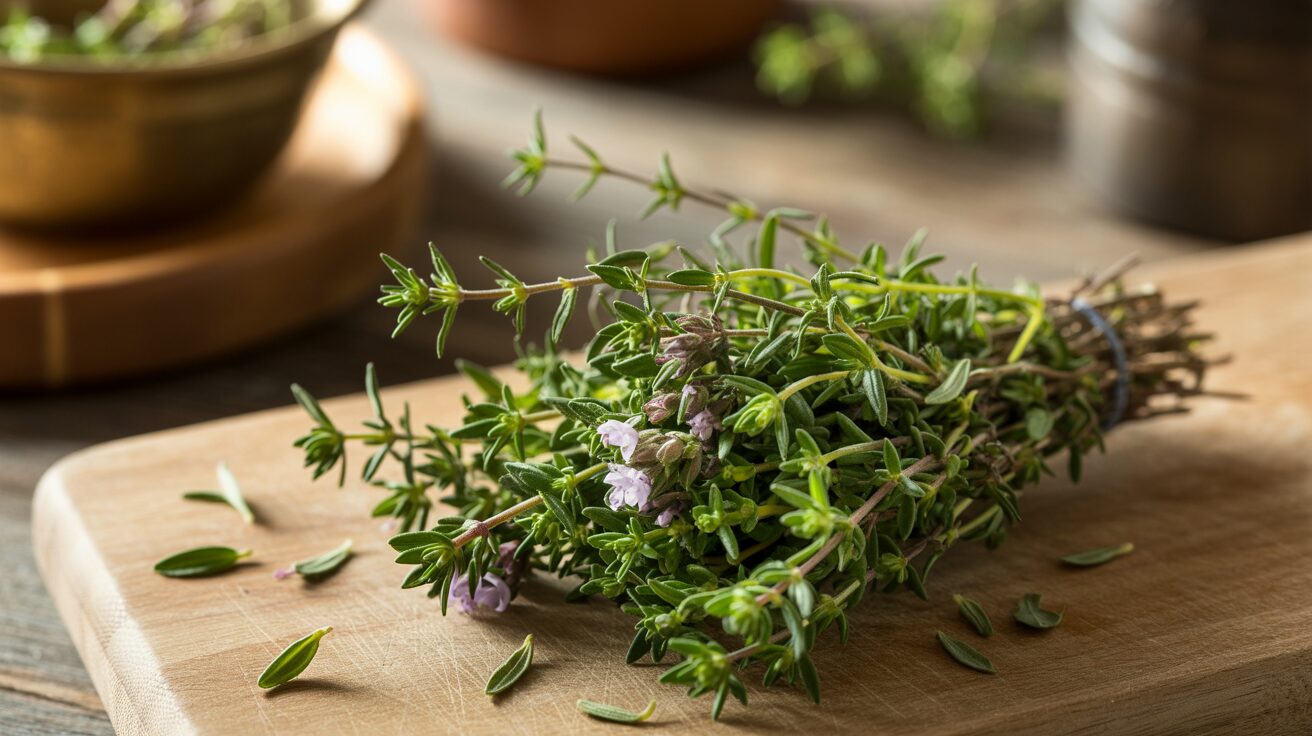
Once your thyme is established, you can start harvesting. The key is to harvest correctly so the plant keeps producing.
How to Harvest Indoor Thyme So It Keeps Growing
Thyme is a "cut and come again" herb. The more you harvest, the more it grows.
- Use sharp scissors or pruning shears. Snip the top 2 to 3 inches of each stem. Cut just above a leaf node (where leaves attach to the stem).
- Do not cut into old, woody growth. Thyme will not regrow from bare brown stems. Always leave some green leaves on each stem.
- Harvest in the morning for the best flavor. The essential oils are most concentrated after a cool night. Do not harvest more than one-third of the plant at once. Taking too many leaves stresses the plant. It may stop growing.
- Fresh thyme can be stored in the refrigerator for up to a week. Wrap it in a damp paper towel. Place it in a plastic bag.
- To dry thyme, tie small bunches of stems together. Hang them upside down in a dry, dark room. After 1 to 2 weeks, strip the leaves from the stems. Store in an airtight jar.
For more harvesting tips, see growing cilantro from seed.
Growing Lemon Thyme Indoors for Cooking
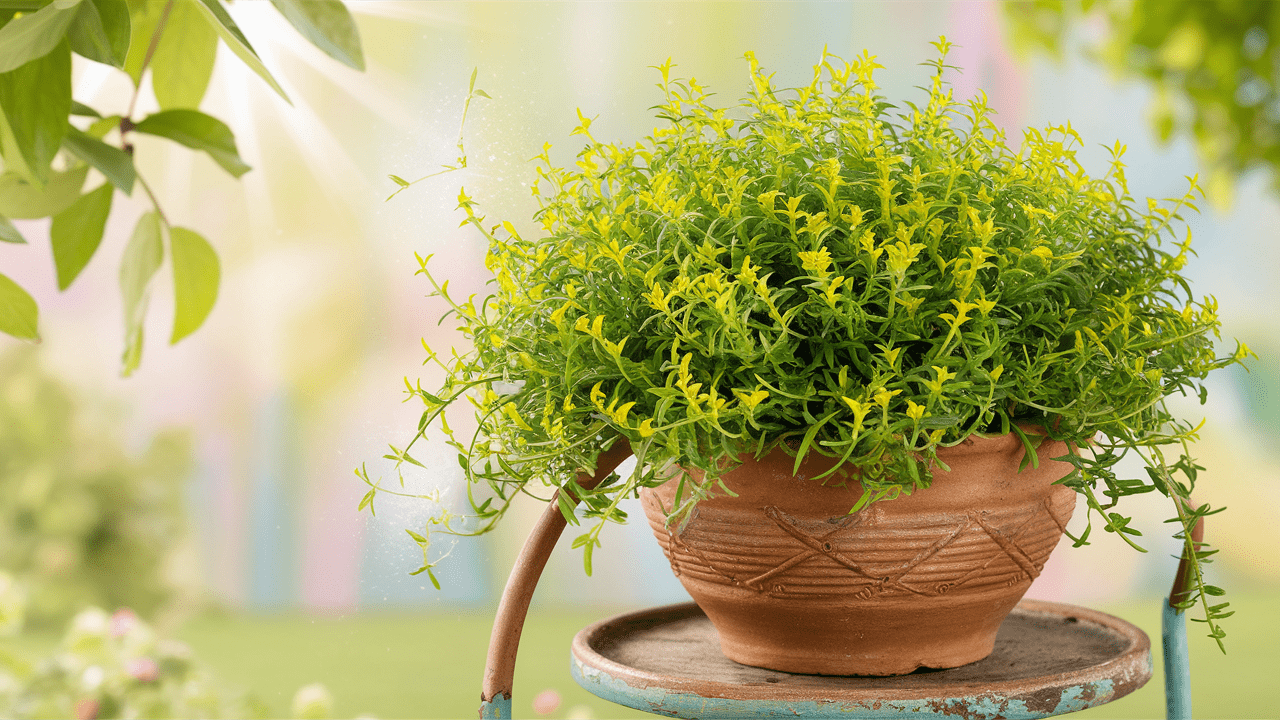
Lemon thyme is a variety with a citrusy twist. It smells like lemon and tastes like lemon. It is perfect for fish dishes, teas, and desserts. It has the same care requirements as common thyme. It wants full sun, sandy soil, and infrequent watering. The only difference is that lemon thyme is slightly more tender. It may need a little more warmth.
Use lemon thyme fresh. The lemon flavor fades when dried. Snip a few sprigs into your tea. Add it to roasted chicken. Use it in salad dressings.
Lemon thyme also makes a beautiful houseplant. The leaves are variegated with yellow edges. It adds color to your indoor garden.
Growing Creeping Thyme Indoors in Pots
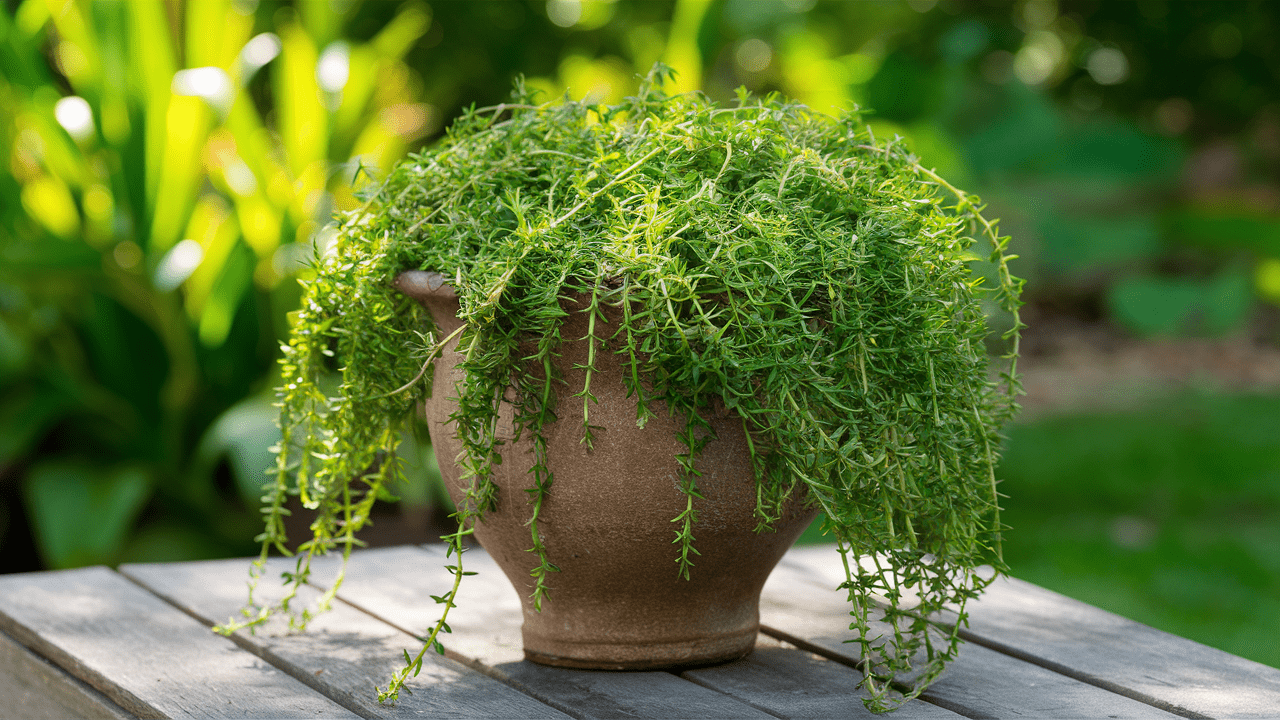
Creeping thyme is a low-growing variety. It spreads along the soil surface instead of growing upright. It is perfect for hanging baskets or shallow pots. It has smaller leaves than common thyme. The flavor is milder. It is still edible, but it is often grown for decoration.
Creeping thyme needs a little more space. Use a wide, shallow pot. A bowl-shaped container works well. The plant will trail over the edges.
Watering is the same. Let the soil dry out completely between waterings. Creeping thyme is just as drought-tolerant as upright thyme.
Prune regularly to keep it tidy. Snip back any stems that grow too long. This encourages branching and a fuller look.
For more on indoor herbs, see how to grow chives indoors and how to grow basil from cuttings.
FAQs About Growing Thyme Indoors
How often to water thyme indoors?
Water when the top inch of soil feels dry. In practice, this means every 7 to 14 days. Always check the soil first. When in doubt, wait another day.
Does thyme need full sun to grow?
Yes, thyme needs 6 to 8 hours of direct sunlight daily. A south-facing window is best. If you do not have enough natural light, use grow lights.
How much room does thyme need?
A 4 to 6 inch pot is plenty for one thyme plant. Thyme has shallow roots. It does not need a large pot.
Does thyme come back every year?
Yes, thyme is a perennial. It will live for several years with proper care. However, it may become woody after 2 to 3 years. Start a new plant from a cutting before the old one declines.
Can you grow thyme indoors year-round?
Absolutely. Thyme is one of the best herbs for indoor growing. It does not mind dry air. It tolerates lower light in winter (with grow lights). You can harvest fresh thyme all year.
How long does thyme take to grow?
From seed, thyme takes 2 to 3 weeks to germinate. Then another 2 to 3 months to reach harvest size. From a nursery plant, you can start harvesting immediately.
How do you grow potted thyme?
Use a terracotta pot with drainage holes. Fill with sandy, well-draining soil. Place in a very sunny window or under grow lights. Water when the soil is dry. Harvest regularly.
What are the best thyme varieties for indoors?
English thyme is the best for cooking. Lemon thyme adds a citrus flavor. Creeping thyme is good for hanging baskets.
My Final Tips
You made it to the end. That means you are serious about growing your own thyme. Thank you for reading. Here are my three final tips.
Use a terracotta pot. It is porous. It helps the soil dry out faster. Plastic pots retain moisture. Moisture is the enemy of thyme. Water less than you think. Thyme is drought-tolerant. It can survive dry soil for days. It cannot survive wet soil for long. When in doubt, wait another day.
Harvest often. Regular pruning keeps the plant young and bushy. It prevents woodiness. Plus, you get fresh thyme for your cooking.
If you are just starting your indoor gardening journey, read my full guide on how to start urban gardening. It covers soil, containers, watering, and everything else a beginner needs.
And if you love growing herbs indoors, try growing rosemary from seed or grow lettuce indoors next.
One more thing before you go...
If you find these tips helpful, drop a comment below. What is your biggest thyme growing struggle right now? Overwatering? Leggy growth? Woody stems? Or do you have a tip that I missed? I personally reply to every comment within 48 hours.
Save this post for later. Pin the printable chart to your Pinterest board. Share this guide with a friend who loves cooking with fresh herbs. The more people who grow their own food, the better. Now go plant that thyme. And remember: neglect it properly.
Happy gardening!
Here are some great external resources for further reading on growing herbs indoors:
Old Farmer's Almanac – A comprehensive guide to growing herbs indoors
Epic Gardening – Tips and tricks for indoor herb gardening
Last Updated on May 9, 2026 by Austine