
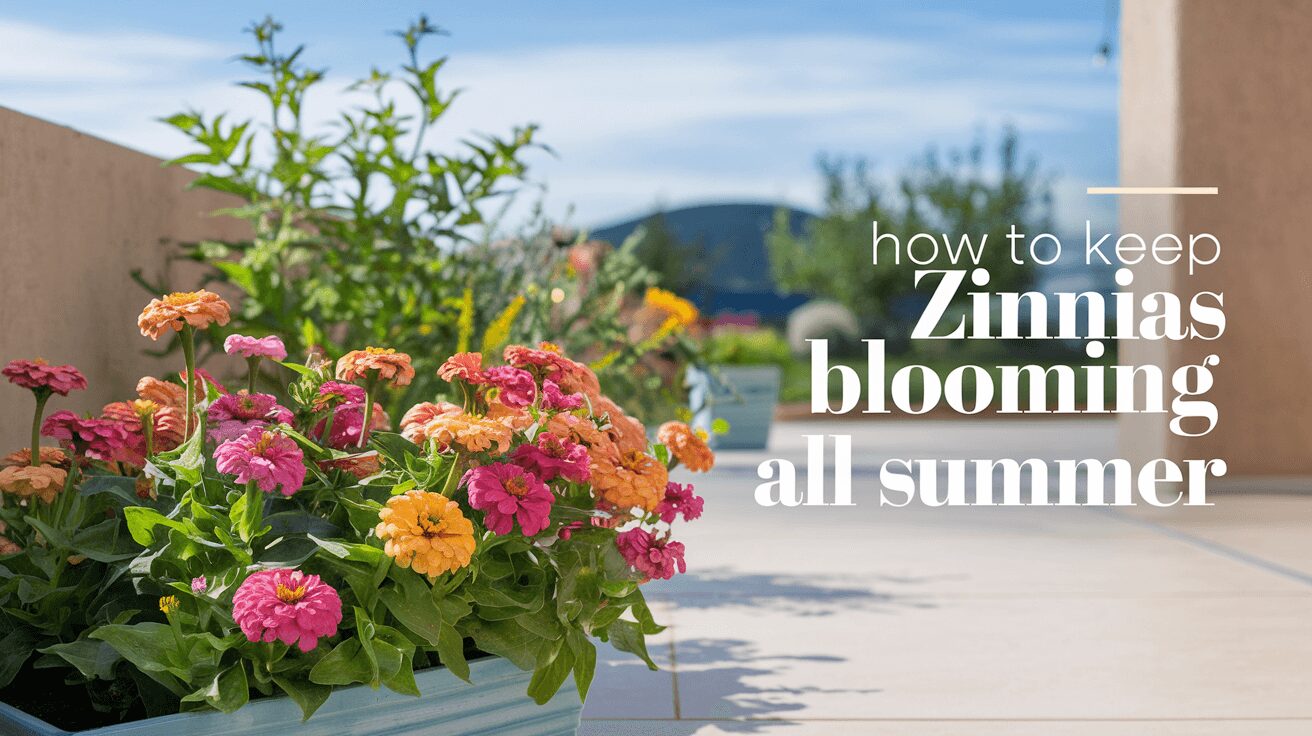
Zinnias are the ultimate reward of the summer garden, offering an explosion of bright, cheerful colors that last from midsummer right up until the first frost. However, unlocking their full "cut-and-come-again" potential requires a dedicated approach to caring for zinnias, especially when dealing with hot, humid weather.
Zinnia care at a glance: Zinnias need full sun (6-8 hours daily), well-draining soil, and consistent watering – water at the base, not overhead. Do NOT over-fertilize – too much nitrogen produces leaves, not flowers. Deadhead spent blooms regularly to encourage continuous flowers.
Space plants 12-18 inches apart for good air circulation to prevent powdery mildew. For cut flowers, use the "wiggle test" – cut when the stem feels firm and does not wiggle.
Whether you are growing Benary's Giant zinnias from seed for tall bouquets or learning how to pinch back zinnia seedlings for bushier plants, small adjustments early in the season will dramatically increase your yield.
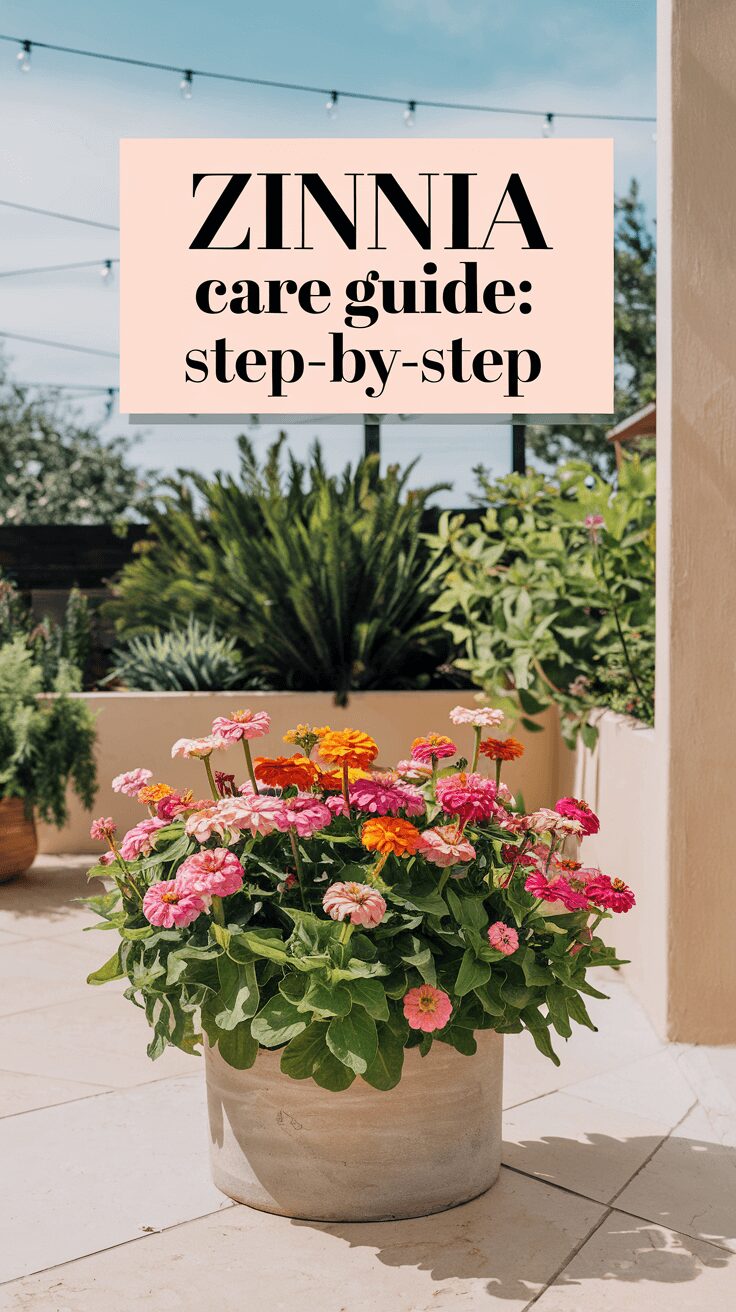
In this guide, we will break down preventing powdery mildew on zinnias naturally, outline the best fertilizer for zinnias in containers, and reveal exactly how to deadhead zinnias for continuous blooms so your garden stays packed with color all season.
Sowing and Early Plant Setup
Growing Benary's Giant Zinnias from Seed
Benary's Giant zinnias are the gold standard for cut flowers. They have huge, double blooms on long, strong stems. The flowers can reach 4 to 6 inches across.
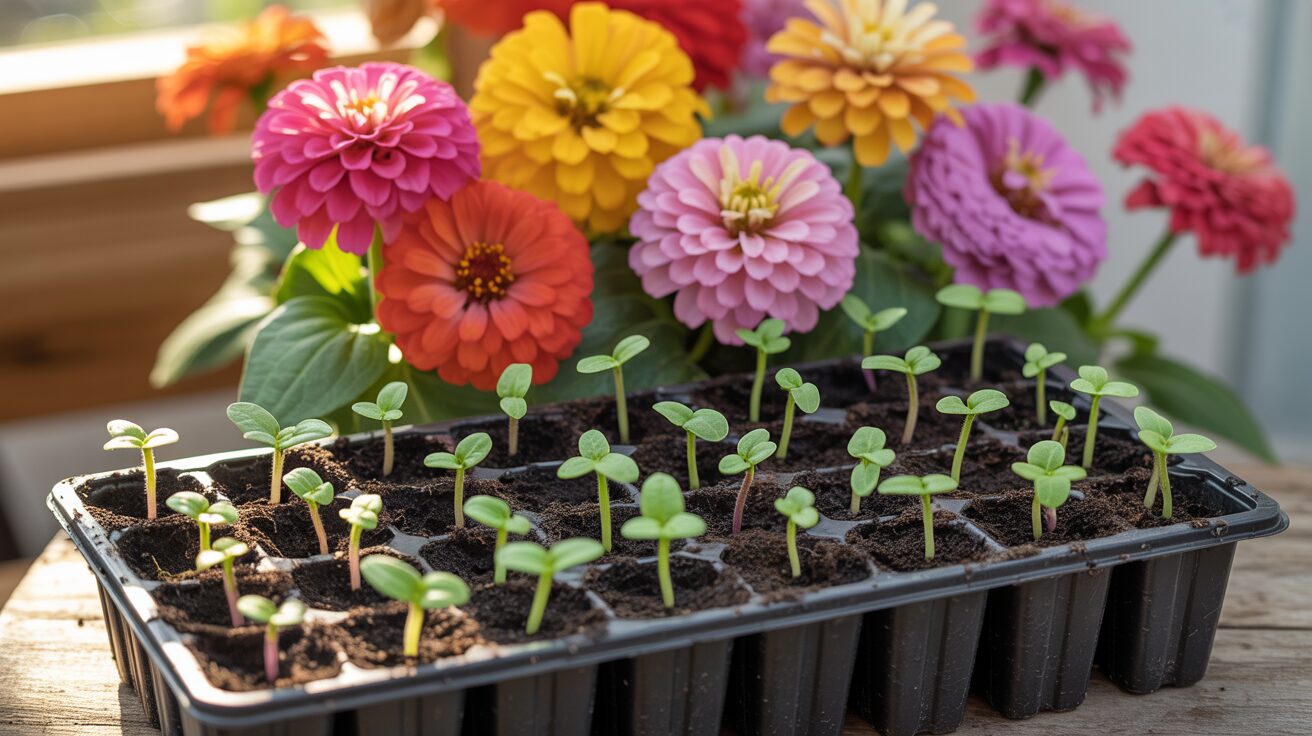
- Start seeds indoors 4 to 6 weeks before the last frost. Fill a seedling tray with seed starting mix. Moisten the mix. Sow seeds 1/4 inch deep. Cover lightly with soil.
- Keep the soil warm. Zinnia seeds germinate best at 70°F to 75°F (21°C to 24°C). A heat mat speeds up germination. Seeds sprout in 5 to 10 days.
- Provide bright light immediately. Place the tray under grow lights or in a very sunny window. Keep lights on for 12 to 14 hours daily. Without enough light, seedlings become leggy.
- You can also direct sow seeds outdoors. Wait until the soil temperature reaches 70°F (21°C) and all danger of frost has passed. Sow seeds 1/4 inch deep. Space them 12 inches apart. Thin to 18 inches apart once seedlings are 2 inches tall.
How to Pinch Back Zinnia Seedlings for Bushier Plants
Pinching sounds mean, but the plant loves it. Pinching removes the top growing tip. This forces the plant to branch out. You get more stems and more flowers.
Pinch when seedlings are 4 to 6 inches tall. Use your fingernails or small scissors. Remove the top 1 to 2 inches of the main stem. Cut just above a set of leaves.
Do not be afraid. I was nervous the first time. However, the plant recovered quickly. Within 2 weeks, multiple new stems appeared.
Pinch again after transplanting. Once the plant is established in the garden, pinch the tips of the side branches. This encourages even more branching.
Pinch for the last time 4 weeks before you want blooms. Stop pinching in mid-summer. Let the plant focus on flower production.
How Far Apart to Space Zinnia Plants to Prevent Disease
Spacing is critical for zinnias. They need good air circulation. Without it, powdery mildew spreads quickly.
- Space standard zinnias 12 to 18 inches apart. This includes Benary's Giant, Zinnia elegans, and other tall varieties. Cramped plants trap moisture. Mildew thrives in humid, still air.
- Space dwarf zinnias 6 to 12 inches apart. Dwarf varieties are smaller. They can be planted closer together. However, they still need air flow.
- Space plants in rows 18 to 24 inches apart. If you are planting multiple rows, give them room. This allows you to walk between rows for watering, deadheading, and cutting.
Do not plant zinnias in the same spot every year. Rotate your crops. Powdery mildew spores can survive in soil. Plant zinnias in a different bed each year.
Printable Zinnia Care Chart (Save This)
Factor | Zinnia's Preference |
Sunlight | 6 to 8 hours daily (full sun) |
Soil | Well-draining, loamy |
Soil pH | 6.0 to 7.5 (neutral to slightly acidic) |
Spacing | 12 to 18 inches apart (standard varieties) |
Seed depth | 1/4 inch |
Germination time | 5 to 10 days |
Germination temp | 70°F to 75°F (21°C to 24°C) |
Water | Water at base, let soil dry between waterings |
Fertilizer | Low-nitrogen (5-10-5 or similar), once or twice per season |
Deadheading | Remove spent blooms regularly |
Pinching | Pinch back when 4 to 6 inches tall |
Keep this chart near your garden. It will help you remember the key steps.
Essential Environmental and Care Needs

Source: Photo by Sarah Nabih
Zinnias are tough plants. However, they have clear preferences.
Can You Grow Zinnias in Partial Shade?
Zinnias love full sun. However, they can tolerate light partial shade.
If your garden is shady, choose a different flower. Marigolds or impatiens are better choices. For more options, see geranium plant care and caring for marigolds next.
How Often to Water Zinnias in Pots
Zinnias in pots dry out faster than those in the ground. However, overwatering is still a risk.
- Water when the top inch of soil feels dry. Stick your finger into the soil. If it feels dry, water deeply. If it feels damp, wait another day.
- Water at the base of the plant. This is critical. Overhead watering wets the leaves. Wet leaves are the number one cause of powdery mildew. Use a watering can with a narrow spout. Direct the water at the soil, not the foliage.
- Water in the morning. This gives any accidental splashes time to dry. Wet leaves overnight encourage fungal growth.
In hot, dry weather, potted zinnias may need daily water. Check them every morning. Wave petunias in hanging baskets have similar needs.
Signs of overwatering include yellow leaves, wilting despite wet soil, and rot at the base. If you see these, stop watering. Let the soil dry out completely.
Signs of underwatering include drooping leaves and dry, crispy edges. Water deeply, then check again in a few hours. The plant should perk up.
Best Fertilizer for Zinnias in Containers
Zinnias are not heavy feeders. Too much fertilizer is worse than too little.
For more on fertilizer basics, see indoor plant potting mix.
Growing zinnias is not just about keeping them alive. You want abundant flowers all summer. You may also want to cut them for bouquets.
In the next section, I will show you how to deadhead zinnias for continuous blooms. I will also share the secret "wiggle test" for cutting flowers that last a week in a vase.
Maximizing Your Flower Harvest
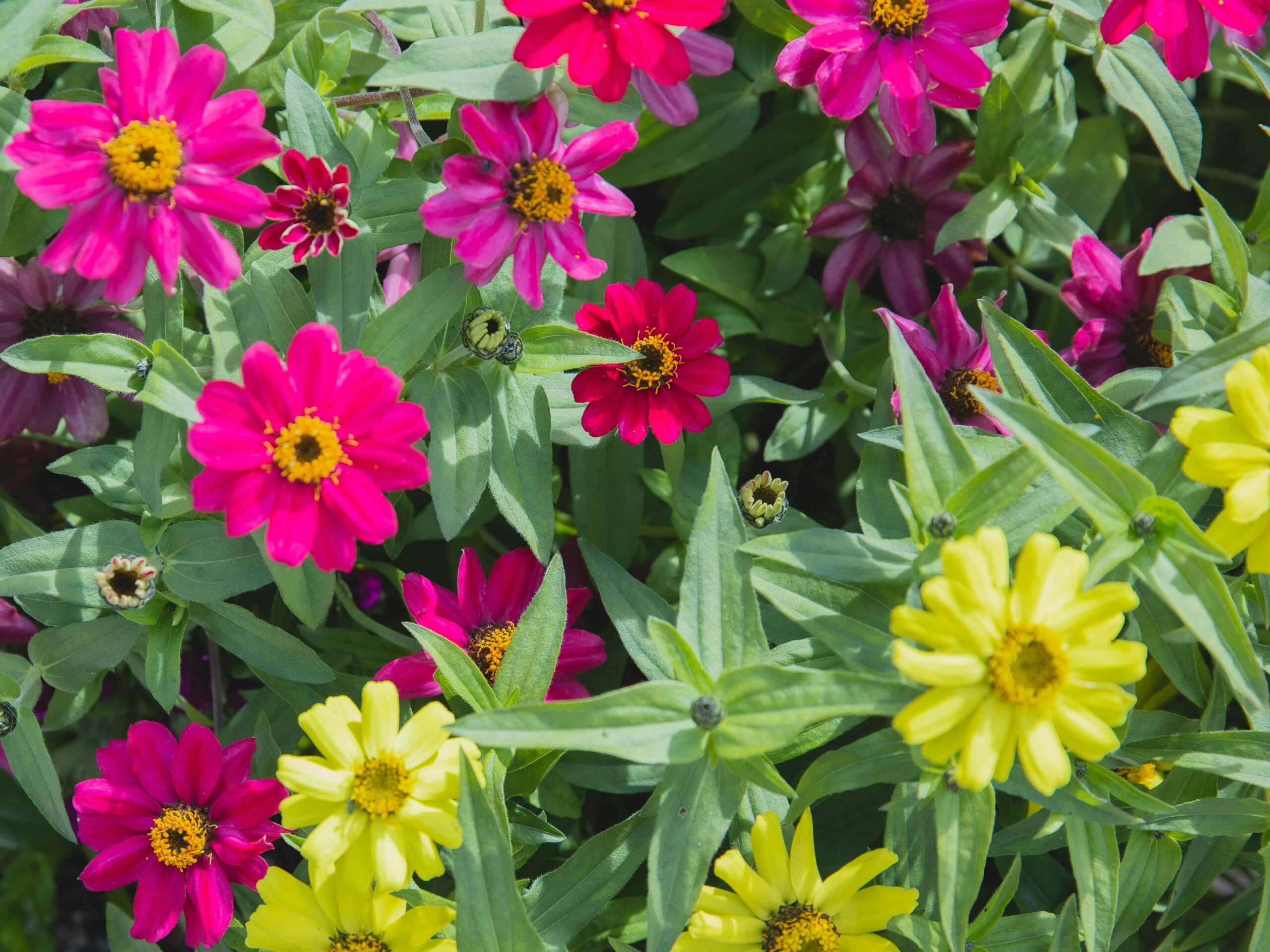
Source: Photo by Ryutaro Tsukata
Zinnias are generous plants. However, they need a little help to keep producing.
How to Deadhead Zinnias for Continuous Blooms
Deadheading is the secret to nonstop flowers. Removing spent blooms tells the plant to make more.
- Wait until the flower starts to fade. The petals will look sad and wrinkled. The center may turn brown.
- Follow the stem down to the first set of leaves. Use clean scissors or pruning shears. Snip the stem just above a leaf node (where a leaf attaches to the stem). Do not just pull off the petals. The flower stem will not produce another bloom. You must remove the entire stem.
- Deadhead every few days. In peak blooming season, check your plants regularly. Spend 2 minutes walking around with scissors. You will be shocked at how many new flowers appear.
If you want to save seeds, leave a few flowers to go to seed. Choose 2 to 3 flowers at the end of the season. Let them dry on the plant. Then harvest the seeds. Deadhead the rest.
How to Cut Zinnias for Flower Arrangements So They Last
Cut zinnias can last 7 to 10 days in a vase. However, you must cut them correctly.
Use the "wiggle test" to check stem maturity. Gently wiggle the stem just below the flower head. If the stem feels firm and does not wiggle, it is ready to cut. If the stem feels floppy or wiggles, it is too young. Wait a few more days.
- Cut in the morning. The plants are most hydrated then. Use sharp, clean scissors or shears. Cut the stem at a 45-degree angle. This increases water absorption.
- Cut stems 12 to 18 inches long. Remove the lower leaves that will be below the water line. Leaves in the water rot and shorten vase life.
- Place cut stems immediately in a bucket of cool water. Bring them indoors as soon as possible. Do not let them wilt in the sun.
- Change the vase water every 2 days. Recut the stems at an angle each time. This keeps the flowers drinking.
Do not cut more than one-third of the plant at once. Taking too many stems stresses the plant. It may stop producing new blooms. For more on cut flowers, see caring for marigolds.
Growing Dwarf Zinnias in Window Boxes
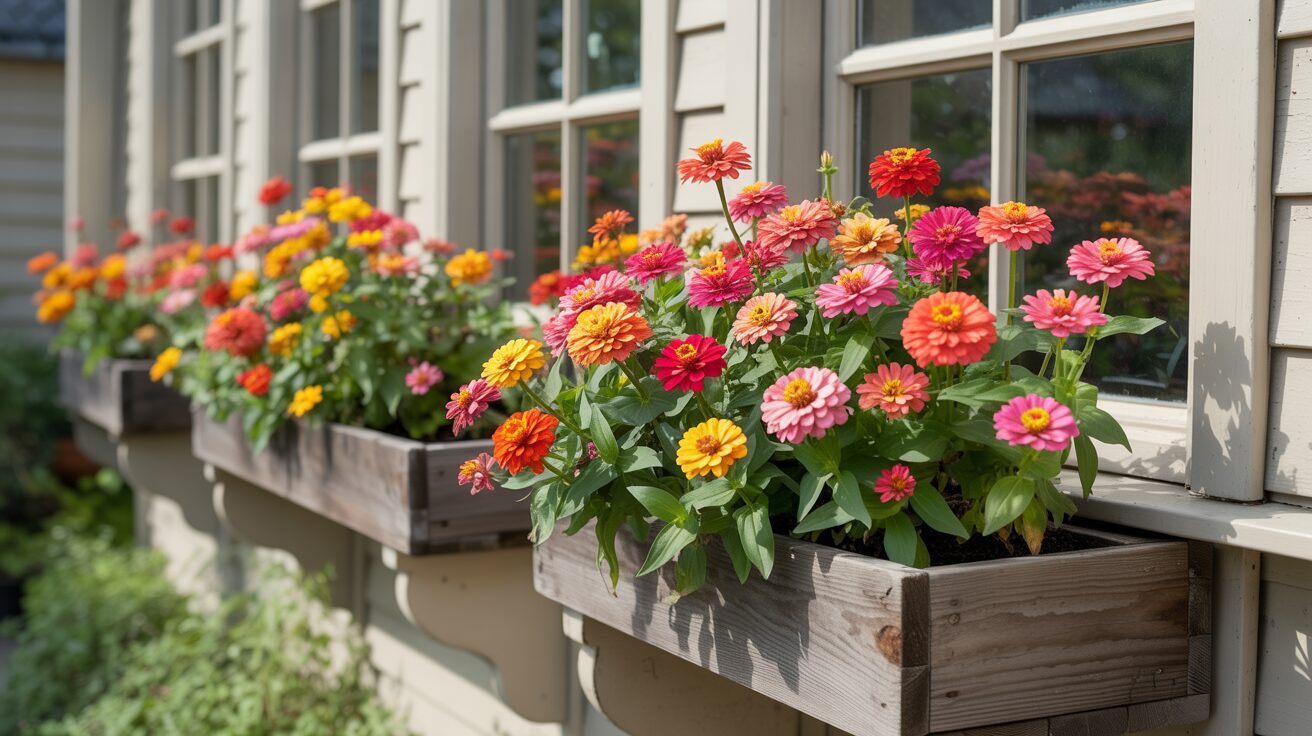
Dwarf zinnias are perfect for window boxes. They stay under 12 inches tall. They still produce abundant flowers.
- Choose a dwarf variety. Look for seeds labeled 'Thumbelina', 'Profusion', or 'Zahara'. These varieties stay compact. They do not need staking.
- Use a window box with drainage holes. Fill with potting mix. Do not use garden soil. It is too heavy.
- Sow seeds directly in the box. Plant them 1/4 inch deep. Space them 6 inches apart. Water gently.
- Place the window box in full sun. Dwarf zinnias need 6 to 8 hours of direct sunlight daily. Without enough sun, they become leggy.
- Water when the top inch of soil feels dry. Window boxes dry out faster than garden beds. Check them every day in summer.
For more container tips, see best plants for pots all year round and top evergreen plants for window box.
Troubleshooting Zinnia Pests and Diseases
Zinnias are generally healthy. However, they can face a few problems.
Preventing Powdery Mildew on Zinnias Naturally
Powdery mildew is the most common zinnia problem. It looks like white powder on the leaves. It spreads quickly in humid weather with poor air circulation. Prevention is the best cure.
If the infection is severe, use a fungicide. Look for a product labeled for powdery mildew on ornamentals. Follow the instructions carefully.
Why Are My Zinnia Leaves Turning Brown?
Brown leaves can have several causes.
- Underwatering is the most common cause. The leaves get crispy and brown at the edges. Water deeply. Then let the soil dry before watering again.
- Fertilizer burn can also cause brown leaves. If you over-fertilized, the leaf tips turn brown. Flush the soil with plain water. Stop fertilizing for a few weeks.
- Bacterial leaf spot is another possibility. Brown spots with yellow halos appear on the leaves. Remove affected leaves. Water at the base of the plant. Do not spray the leaves.
- Natural aging is also a factor. Older leaves at the bottom of the plant turn brown and die. This is normal. Do not worry.
Why Are My Zinnia Leaves Turning Yellow?
Yellow leaves are also common. Here are the possible causes.
- Overwatering is the most common cause. The soil stays too wet. The roots cannot breathe. Stop watering immediately. Let the soil dry out completely.
- Underwatering can also cause yellowing. However, the leaves usually look crispy and dry, not soft. Water deeply. Then let the soil dry before watering again.
- Nutrient deficiency is another possibility. If the lower leaves turn yellow while the upper leaves stay green, the plant may need nitrogen. Apply a balanced fertilizer at half strength.
- Spider mites can cause yellow speckling on leaves. Look for fine webbing under the leaves. For more on pest control, see white fuzzy bugs on plants.
Natural Pest Control for Japanese Beetles on Zinnias
Japanese beetles are metallic green and bronze. They eat zinnia leaves and flowers. They leave behind skeletonized leaves.
- Handpick them early in the morning. Japanese beetles are sluggish in the cool morning. Knock them into a bucket of soapy water. Do this daily during beetle season.
- Use neem oil as a repellent. Spray neem oil on your zinnias every 5 to 7 days. Neem oil deters beetles from feeding. It also disrupts their life cycle.
- Cover your zinnias with floating row cover. This is a lightweight fabric that lets in light and water but keeps beetles out. Cover plants when beetles are active (late June to August).
- Plant companion plants that repel beetles. Garlic, catnip, and tansy are known to deter Japanese beetles. For more companion planting tips, see companion plants for tomatoes and arugula.
Late Season Care and Propagation
Zinnias are annuals. However, you can save seeds for next year. You can also use them to benefit your vegetable garden.
Best Companion Plants for Zinnias in Vegetable Gardens
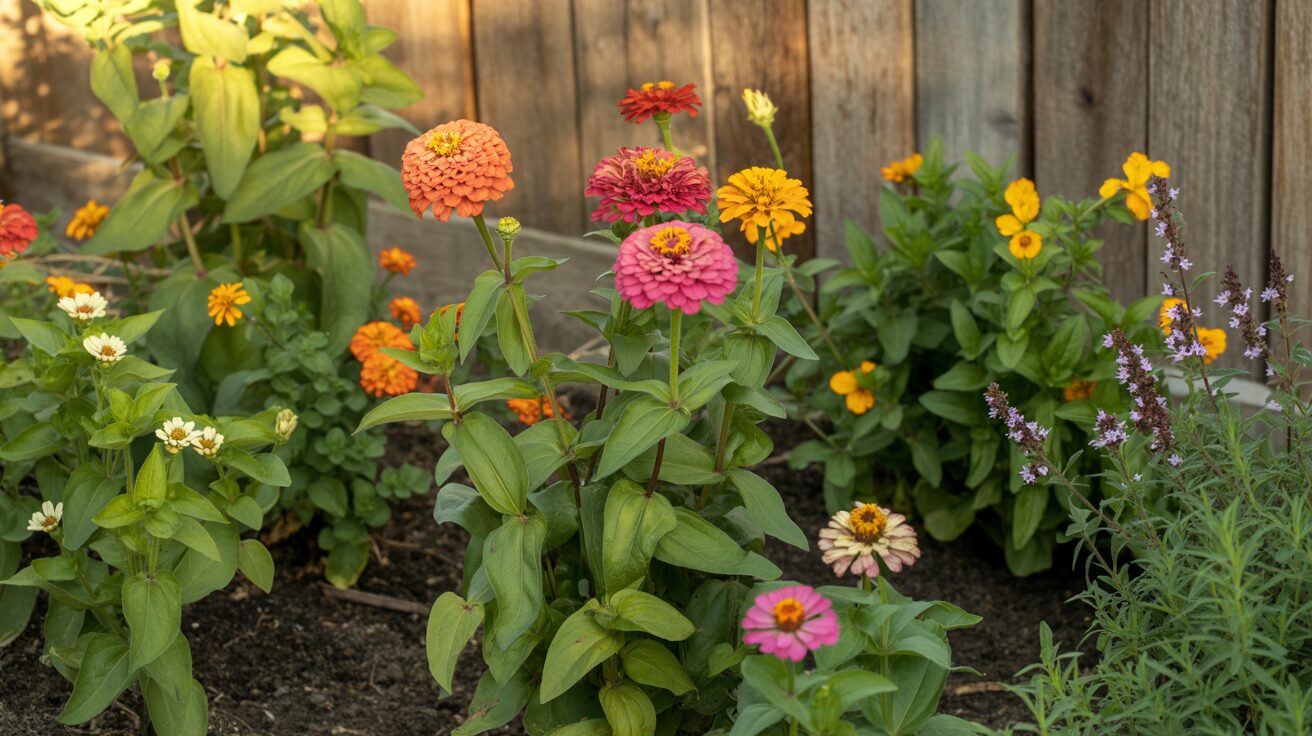
Zinnias are excellent companion plants. Their bright flowers attract pollinators. More pollinators mean more vegetables.
Plant zinnias at the edge of your vegetable garden. This draws pollinators in without taking up space in your vegetable beds. For more companion planting ideas, see cucumber companion plants and cauliflower companion plant .
Can Zinnias Survive a Light Frost in Fall?
Zinnias are frost-tender. A light frost (32°F to 28°F / 0°C to -2°C) will damage the leaves. A hard freeze (below 28°F / -2°C) will kill the plant completely.
- If a light frost is forecast, cover your zinnias. Use a sheet or frost cloth. Remove the cover in the morning. Potted plants can be moved indoors or into a garage.
- Do not leave zinnias outside in freezing weather. They will not recover. The leaves turn black and mushy.
Enjoy your zinnias until the first hard freeze. They will bloom until then. After the freeze, pull them out. Add them to your compost pile. For more on frost protection, see petunias care.
How to Harvest Zinnia Seeds for Next Year
Saving seeds is easy. It also gives you free plants for next season.
- Choose the best plants for seed saving. Pick plants that bloomed early, had large flowers, and showed no signs of disease. Do not save seeds from weak or diseased plants.
- Let the flowers go to seed. Stop deadheading a few flowers at the end of the season. Leave them on the plant. The petals will drop off. A brown, cone-shaped seed head will form.
- Wait for the seed head to turn brown and dry. The seeds inside are ready when the head is crispy. This takes several weeks.
- Harvest on a dry day. Pick the brown seed heads. Put them in a paper bag. Do not use plastic. Plastic traps moisture and causes mold.
- Let the seed heads dry further. Leave the bag open in a dry, warm room for another week.
- Crush the seed heads over a bowl. Zinnia seeds are flat and arrow-shaped. They have a little "tail" on one end. Separate the seeds from the chaff (the dry plant bits). Discard any seeds that are shriveled or discolored.
- Store seeds in a paper envelope. Label it with "Zinnia" and the year. Keep the envelope in a cool, dark, dry place. A drawer works well.
You can now sow seeds the following spring. Start them indoors 4 to 6 weeks before the last frost. Or direct sow after the soil warms to 70°F (21°C). For more on seed saving, see house plants from seeds.
FAQs About Caring for Zinnias
How do I keep zinnias blooming all summer?
Deadhead spent flowers regularly. This is the most important thing. Also, provide full sun (6-8 hours daily). Water at the base when the top inch of soil feels dry. Do not over-fertilize. Too much nitrogen reduces blooms.
Do zinnias like full sun or shade?
Zinnias love full sun. They need at least 6 hours of direct sunlight daily. In partial shade, they become leggy and produce fewer flowers. In deep shade, they will not bloom well.
Do zinnias come back every year?
Zinnias are annuals. They complete their life cycle in one season. They do not come back on their own. However, they self-seed easily. New plants may appear the following spring from dropped seeds. You can also save seeds and replant.
Do zinnias do better in pots or in the ground?
Zinnias can thrive in both. In the ground, they have more room for roots. They grow taller and produce more flowers. In pots, choose dwarf varieties. Use a large pot (12 inches wide or more) with drainage holes. Water more frequently than in-ground plants.
How often should I water zinnias?
Water when the top inch of soil feels dry. In hot, dry weather, this may be every day for potted plants. In garden beds, once or twice a week is typical. Always water at the base. Avoid getting the leaves wet.
What temperature will kill zinnias?
Zinnias are warm-weather plants. Temperatures below 32°F (0°C) will kill them. Plant after the last frost in spring. Enjoy them until the first frost in fall.
How tall do zinnias grow?
Zinnias range from 6 inches to 4 feet tall. Dwarf varieties (e.g., 'Thumbelina') stay under 12 inches. Standard varieties (e.g., 'Benary's Giant') reach 3 to 4 feet. Check your seed packet for the mature height.
My Summary Tips for Zinnias
- Pinch early, pinch often. Pinching back seedlings is the best way to get bushy plants. Do not be afraid. The plant will reward you with twice as many stems and flowers.
- Water at the base. Overhead watering is the number one cause of powdery mildew. Use a watering can with a narrow spout. Direct the water at the soil. Your zinnias will stay healthier.
- Save seeds from your best plants. Choose the earliest, biggest, most vibrant flowers. Let them go to seed. Save those seeds. Next year, your zinnias will be even better.
If you are just starting your flower gardening journey, read my full guide on how to start urban gardening . It covers soil, containers, watering, and everything else a beginner needs.
And if you love cut flowers, try caring for marigolds or geranium plant care next.
Share Your Zinnia Questions & Tips Below!
I have two small asks for you before you head out to your cutting garden:
- First, drop a comment below. What is your biggest challenge when caring for zinnias right now? Are Japanese beetles chewing holes in your petals, or are your plants struggling with powdery mildew? Tell me about your current garden zone—I personally reply to every comment within 48 hours to help you fix your garden.
- Second, save this guide for later. Pin our step-by-step zinnia pinching chart to your favorite gardening Pinterest board, or share this link with a friend who wants a gorgeous, budget-friendly cut-flower garden this year.
Now, grab your garden shears and go get those flowers blooming. Your zinnias are ready to fill your home with stunning, fresh bouquets!
Happy gardening, friend!
External Resources: For more gardening tips caring for zinnias, check Almanac and Chicago Botanic Garden for more techniques.
Last Updated on May 23, 2026 by Austine