
Petunia care at a glance: Petunias need full sun (6+ hours daily), well-draining soil, and regular watering – check hanging baskets daily in summer.
Use a liquid, water-soluble fertilizer every 1-2 weeks. Deadhead spent blooms regularly to encourage continuous flowers. If plants become leggy in mid-summer, give them a "mid-season chop" – prune back by one-third to trigger fresh growth.
What Makes Petunias So Special?
Petunias are the ultimate showstoppers of the summer garden, blanketing patios, window boxes, and flowerbeds in cascades of brilliant color.
However, keeping these vibrant annuals looking their best through the blazing heat requires a dedicated approach to petunias care.
Whether you are growing wave petunias in containers for beginners or trying to figure out how often to water petunias in hanging baskets during a heatwave, success comes down to a few key habits.
In this guide, we will break down the best fertilizer for petunias to get more blooms, outline exactly how to deadhead petunias for continuous flowers, and solve common mysteries like why are my petunia leaves sticky and yellow.
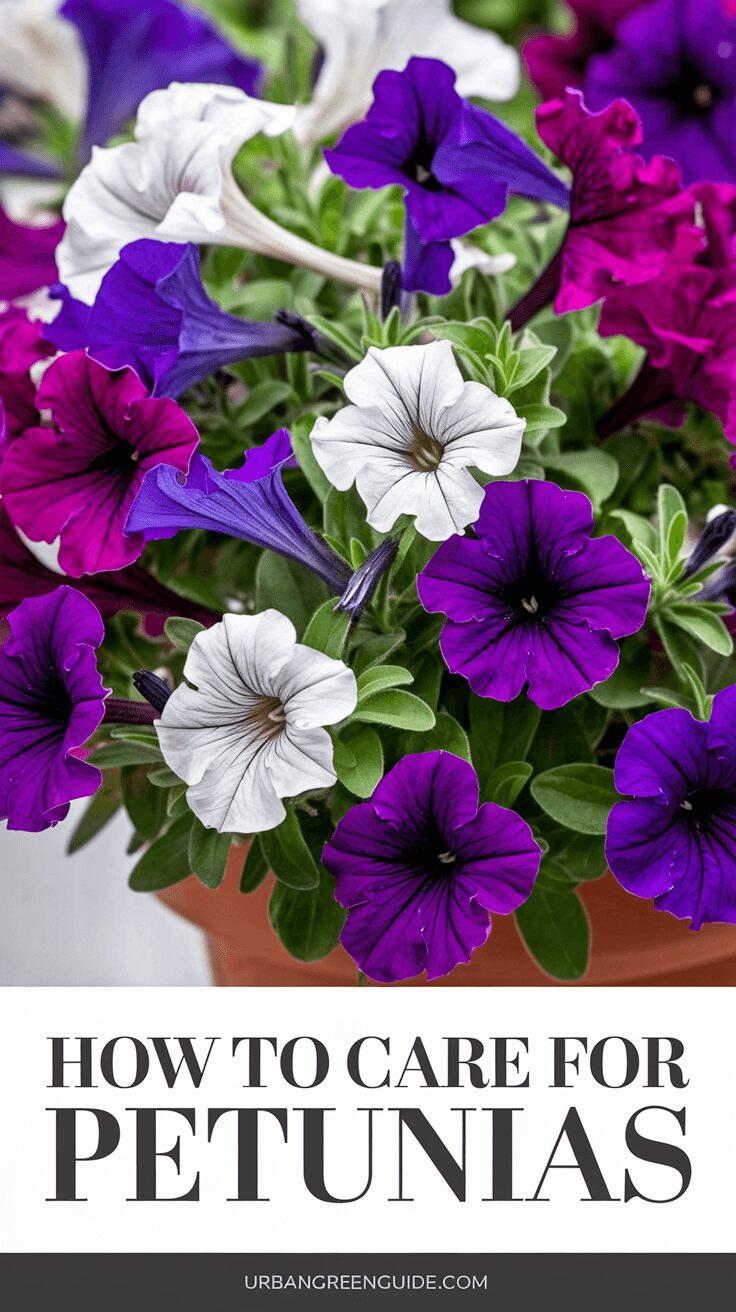
Get ready to enjoy a lush, thriving display that lasts all season long.
Getting Started: Varieties and Setup
Choosing the right type makes a big difference. I learned this the hard way when I planted Grandiflora petunias in a windy spot. Their large flowers got shredded within days. For more on starting your garden the right way, check out my beginner guide on how to start urban gardening.
Growing Wave Petunias in Containers for Beginners
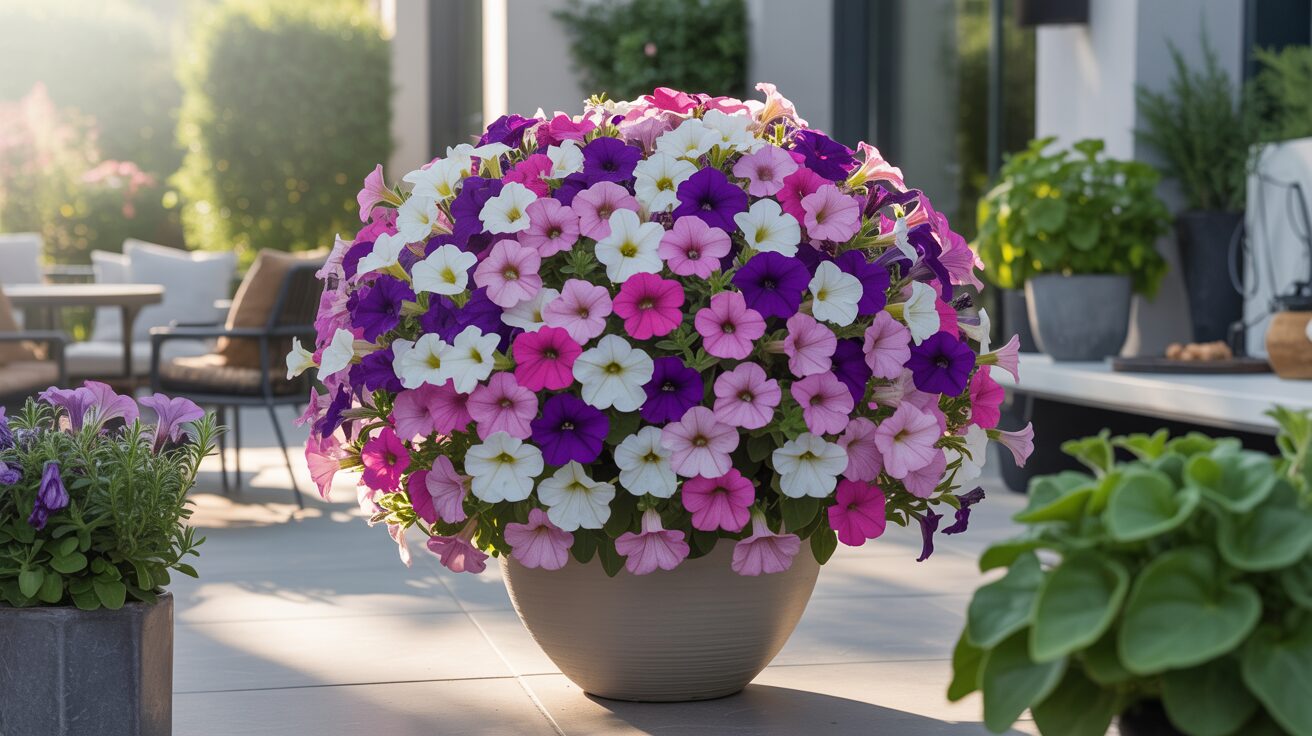
Wave petunias are a game-changer. They spread so wild. They trail over the sides of pots and hanging baskets. One plant can cover 3 to 4 feet.
- Choose a large container. Wave petunias need room. Use a pot that is at least 12 inches wide. A 14-inch hanging basket works well for one plant.
- Use well-draining potting mix. Do not use garden soil. It is too heavy. Mix in a little perlite for drainage. Wave petunias do not like wet roots.
- Plant one Wave petunia per 12-inch pot. They spread quickly. If you plant two, they will crowd each other. You will get fewer flowers.
- Water more often than standard petunias. Wave petunias have shallow roots. They dry out faster. Check the soil every day in summer. Water when the top inch feels dry.
For more container tips, see best plants for pots all year round.
Best Soil Mix for Potted Petunia Plants
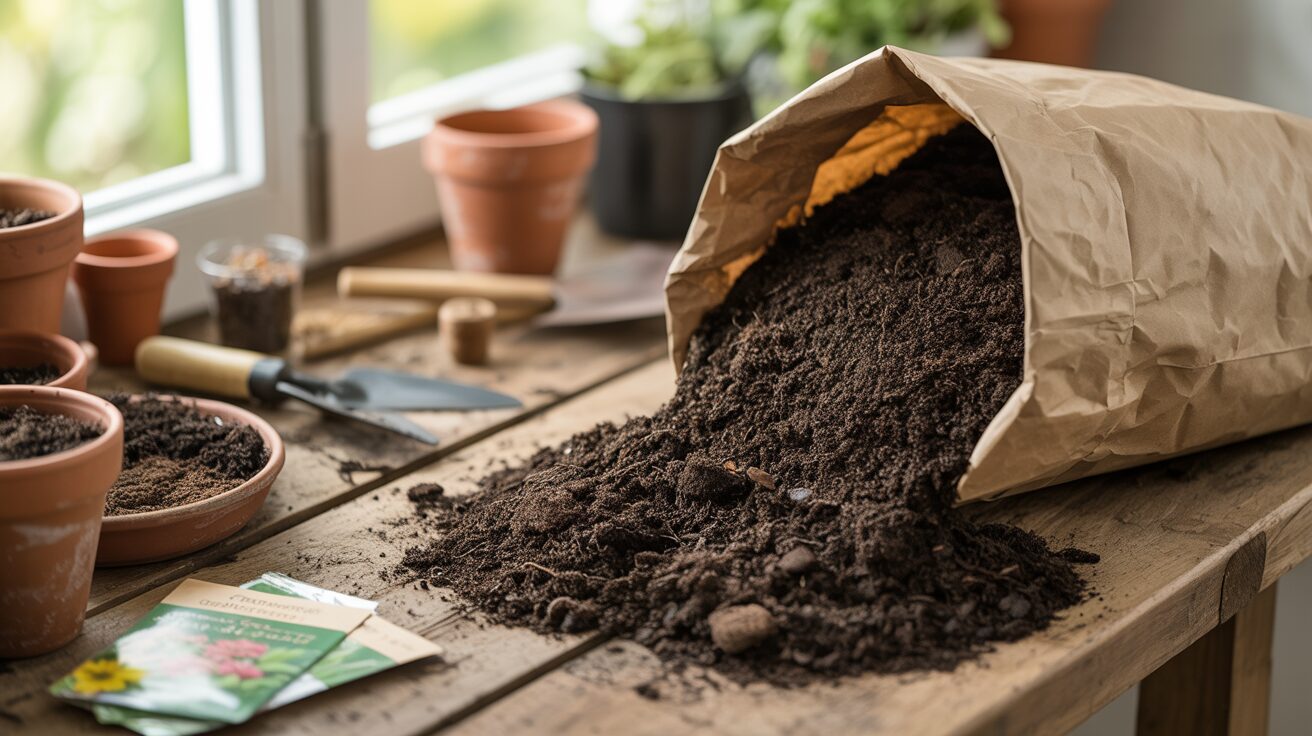
Petunias are not fussy about soil. However, they need good drainage. Heavy, wet soil leads to root rot.
- Use a high-quality potting mix. Look for a mix with perlite or vermiculite. These ingredients create air pockets. The roots can breathe.
- Do not use garden soil. It is too dense. It compacts in pots. Water cannot drain properly. Your petunias will suffer.
- Add extra perlite for hanging baskets. Hanging baskets dry out fast. However, they also need good drainage. Mix 20% perlite into your potting mix. This balances moisture retention and drainage.
- Avoid moisture-control potting mixes. These mixes hold extra water. Petunias prefer to dry out between waterings. Moisture-control mixes keep the soil too wet. For more soil tips, see indoor plant potting soil.
How Much Sun Do Outdoor Petunias Need Daily?
Petunias are sun worshippers. They need 6 to 8 hours of direct sunlight daily. A south or west-facing spot is ideal.
Without enough sun, petunias become leggy. The stems stretch out. The leaves become sparse. The plant produces few flowers. Too much shade also makes the plant more susceptible to fungal diseases.
In very hot climates (zones 9-10), afternoon shade helps. The intense midday sun can stress the plants. Morning sun with afternoon shade is the perfect balance.
If your petunias are in a hanging basket, rotate it. Hanging baskets often lean toward the light. Rotate the basket every few days. This keeps the plant growing evenly.
Wave petunias need full sun. They will not spread well in shade. The more sun they get, the wider they grow.
Can You Grow Petunias in Partial Shade?
Yes, petunias can grow in partial shade. However, you will get fewer flowers.
In partial shade (4 to 6 hours of sun), petunias will survive. However, the plants may become leggy. They stretch toward the light. You will see more leaves and fewer blooms.
In deep shade (less than 4 hours), petunias struggle. They will not die, but they will not flower well. The leaves may turn yellow. The plant looks sad.
If your garden is shady, choose Multiflora petunias. They tolerate shade better than Grandiflora or Wave types. Multiflora petunias have smaller flowers but more of them.
Consider a different flower for deep shade. Impatiens or begonias are better choices. For more options, see geranium plant care.
Printable Petunia Care Chart (Save This)
Factor | Petunia's Preference |
Sunlight | 6+ hours daily (full sun) |
Soil | Well-draining potting mix with perlite |
Soil pH | 6.0 to 7.0 (slightly acidic to neutral) |
Spacing | 6 to 12 inches apart (depending on variety) |
Water | Check daily – water when top inch of soil feels dry |
Fertilizer | Liquid, water-soluble (10-10-10 or 20-20-20), every 1-2 weeks |
Deadheading | Remove spent blooms regularly |
Pruning | Trim leggy stems back by one-third in mid-summer |
Hardiness zones | 10-11 (grown as annual elsewhere) |
Keep this chart near your garden. It will help you remember the key steps.
Essential Maintenance: Watering and Feeding
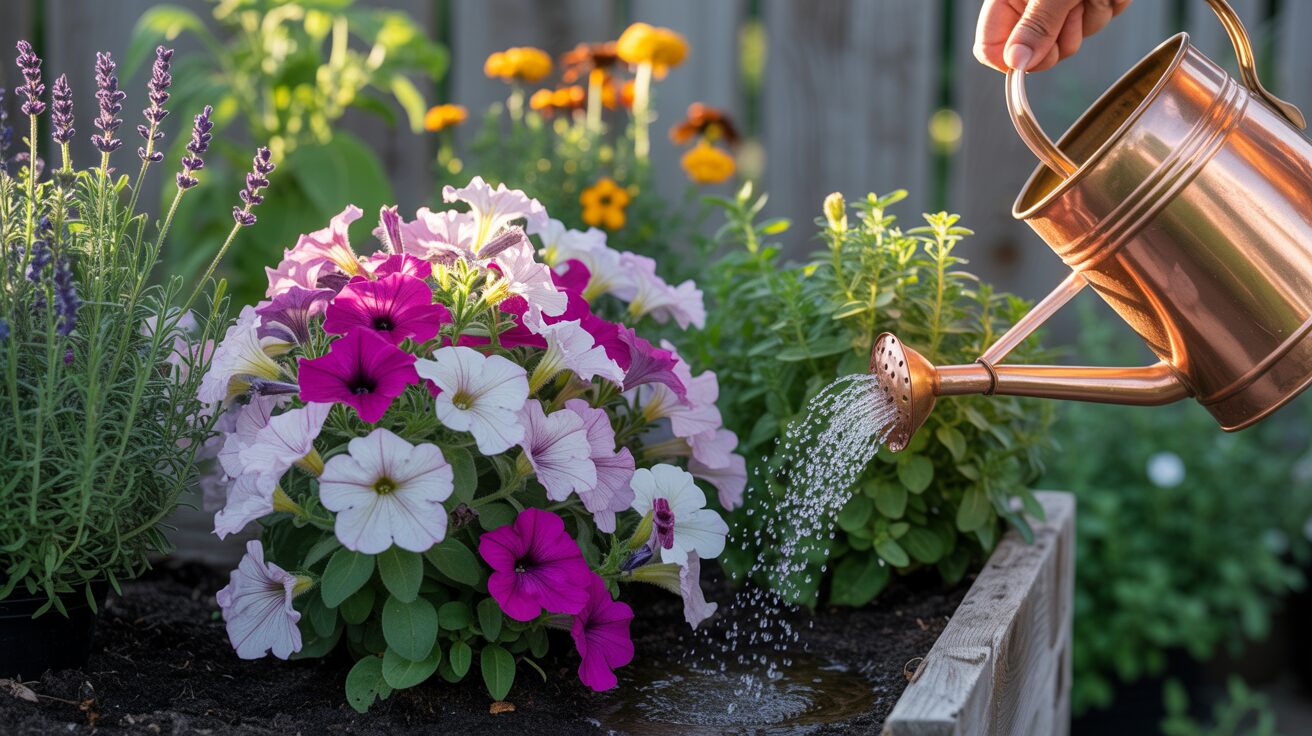
Petunias are thirsty plants. However, they also hate wet feet. Getting the balance right is critical.
How Often to Water Petunias in Hanging Baskets
Hanging baskets dry out faster than ground plantings. The soil is exposed to air on all sides. The wind also dries them out. Check your hanging baskets every day in summer.
- Stick your finger into the soil. If the top inch feels dry, water. If it feels damp, wait another day. Water until it runs out the bottom. This ensures the entire root ball gets wet. Do not just sprinkle the surface.
- On hot, windy days, you may need to water twice a day. Morning and evening is best. Avoid watering in the middle of the day. The water evaporates quickly, and wet leaves can burn in the sun.
- Self-watering baskets are a good option. They have a reservoir at the bottom. The plant pulls water up as needed. This reduces the risk of drying out. For more, see self-watering herb garden .
Signs of overwatering include yellow leaves, wilting despite wet soil, and rot at the base of the plant. If you see these, stop watering immediately. Let the soil dry out.
Signs of underwatering include drooping leaves and dry, crispy edges. Water deeply, then check again in a few hours. The plant should perk up.
How to Care for Petunias in Hanging Baskets (Daily Checklist)
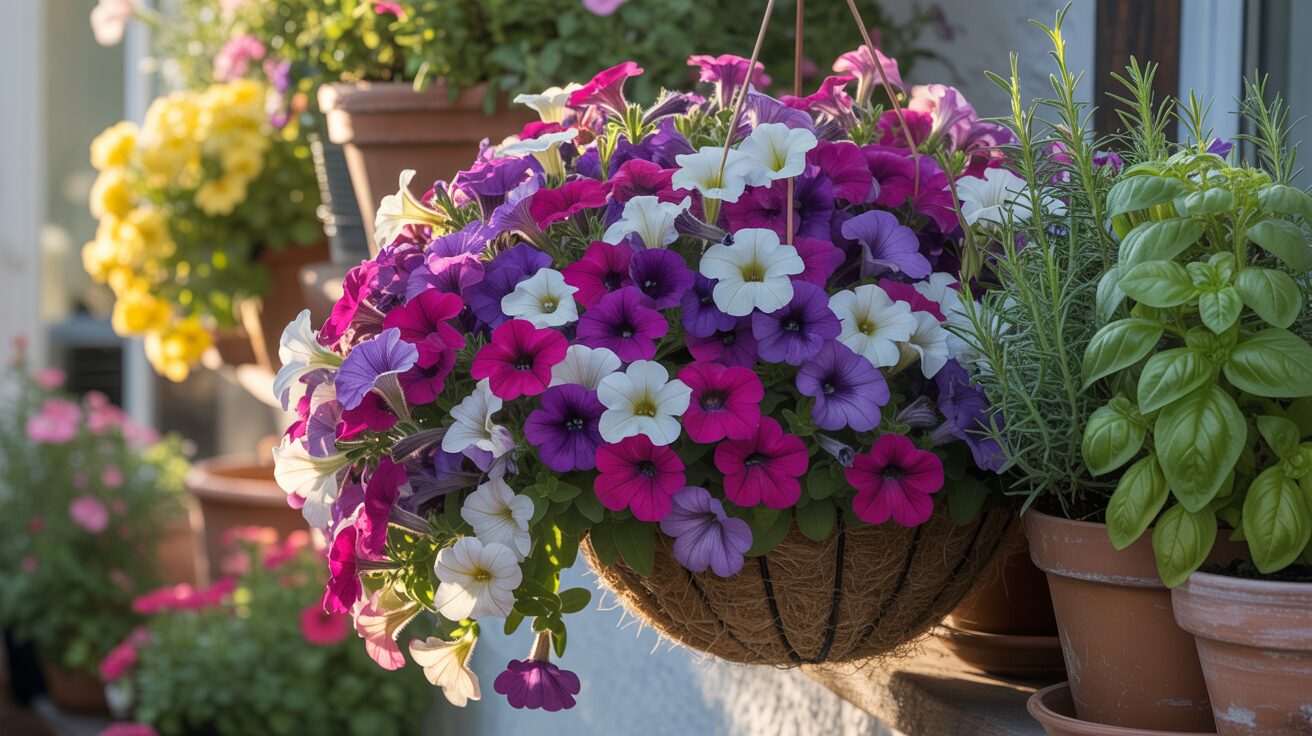
- Check soil moisture every morning. Stick your finger into the soil. If the top inch feels dry, water. If it feels damp, wait and check again in the afternoon.
- Water until it runs out the bottom. This ensures the entire root ball gets wet. Do not just sprinkle the surface.
- Rotate the basket every few days. Hanging baskets lean toward the light. Rotating keeps the plant growing evenly.
- Fertilize weekly. Use a liquid fertilizer at half strength. Baskets have less soil. Nutrients wash out faster.
- Deadhead every few days. Remove spent flowers and seed pods. This keeps the plant focused on producing new blooms.
- Prune leggy stems immediately. If you see long, bare stems, cut them back by one-third. The plant will regrow bushier.
Best Fertilizer for Petunias to Get More Blooms
Petunias are heavy feeders. They need regular fertilizer to produce nonstop blooms.
- Use a liquid, water-soluble fertilizer. This type is easy to apply. Mix it with water and pour it on. The roots absorb it quickly.
- Look for a balanced fertilizer. Numbers like 10-10-10 or 20-20-20 work well. These provide equal amounts of nitrogen, phosphorus, and potassium. Nitrogen supports leaf growth. Phosphorus and potassium support flowers and roots.
- Fertilize every 1 to 2 weeks during the growing season. In spring and summer, petunias grow fast. They use up nutrients quickly. Skipping fertilizer leads to fewer flowers.
For hanging baskets, use a diluted fertilizer every week. Baskets have less soil. Nutrients wash out faster. Mix the fertilizer at half strength and apply weekly.
Slow-release fertilizer pellets are another option. Mix them into the soil at planting time. They release nutrients slowly over several months. However, they may not be enough for heavy feeders. Supplement with liquid fertilizer in mid-summer.
For more on fertilizer basics, see caring for marigolds.
keeping petunias blooming all summer requires more than just basic care. They can become leggy by mid-summer. The flowers may slow down.
In the next section, I will show you how to deadhead petunias for continuous blooms. I will also share the secret "mid-season chop" that brings leggy plants back to life.
Mid-Summer Refresh: Pruning and Trimming
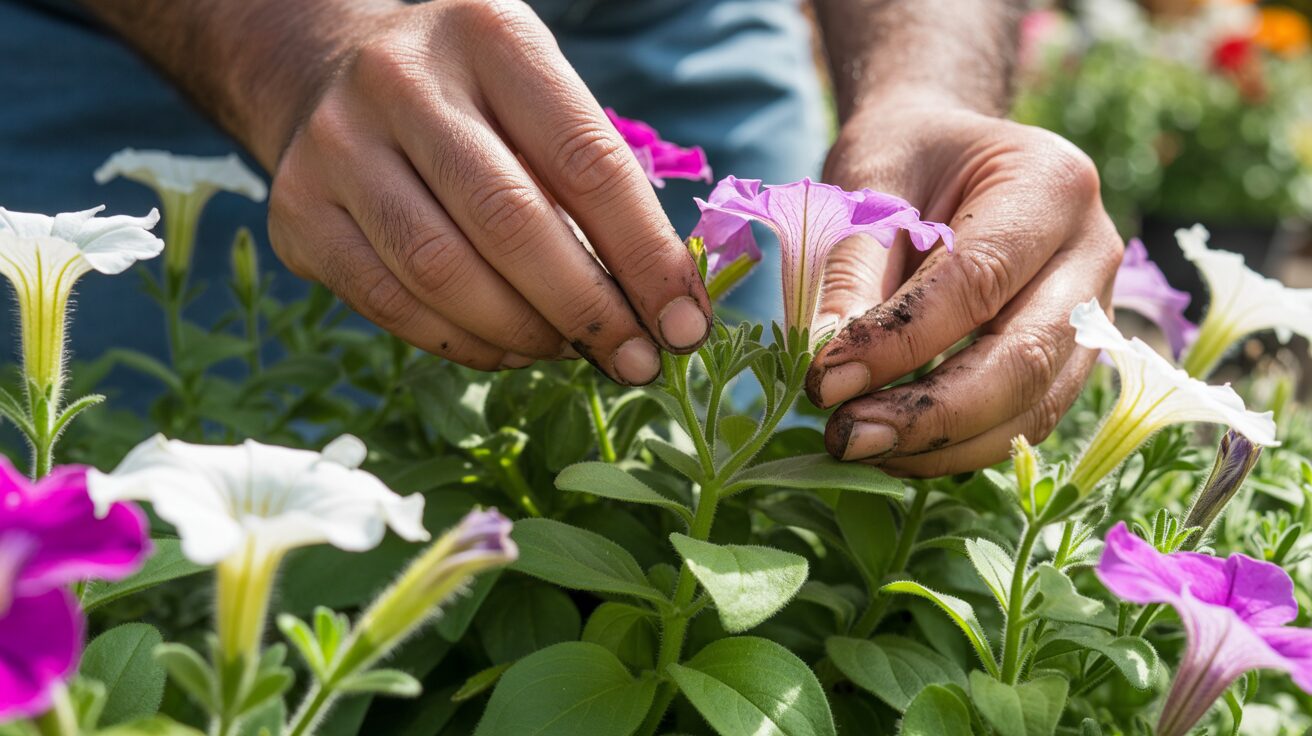
By mid-summer, petunias often look tired. The stems get long and bare. The flowers are smaller. Do not give up. A good trim brings them back.
How to Deadhead Petunias for Continuous Flowers
Deadheading is the secret to nonstop blooms. Removing spent flowers tells the plant to make more.
Follow is the simple method.
- Wait until the flower starts to fade. The petals will look sad and wrinkled. The flower will close up.
- Pinch or snip off the entire flower stem. Remove the stem all the way back to where it meets the main stem. Do not leave a stub. Use your fingernails or small scissors.
- Remove the seed pod behind the flower. After the petals drop, a small green pod forms. That pod contains seeds. If you leave it, the plant stops flowering. It puts all its energy into making seeds.
- Deadhead every few days. In peak blooming season, check your plants regularly. Spend 2 minutes walking around with scissors. You will be shocked at how many new flowers appear.
For Wave petunias, deadheading is less critical. They are self-cleaning. The old flowers drop off naturally. However, a quick trim still helps keep them tidy.
How to Fix Leggy Petunias in Summer
Leggy petunias have long, bare stems with leaves only at the tips. This happens when the plant does not get enough sun. It can also happen as the plant ages. The solution is the "mid-season chop."
- Cut your petunias back by one-third to one-half. Do not be afraid. They will grow back.
- Use clean scissors or pruning shears. Make your cuts just above a leaf node (where a leaf attaches to the stem). This encourages branching.
- After cutting, water lightly. Then fertilize with a balanced liquid fertilizer. The plant needs nutrients to produce new growth.
Within 2 weeks, you will see new shoots. The plant will look fuller. It will produce a new flush of flowers.
Do this in mid-summer, around July. If you cut too late in the season, the plant may not have time to recover before frost.
For Wave petunias, you can cut back even harder. They are vigorous. They will bounce back quickly.
How to Prune Petunias for Bushier Growth
Pruning is not just for fixing leggy plants. Regular pruning keeps petunias bushy from the start.
- Pinch back the tips when plants are young. When your petunia is 4 to 6 inches tall, pinch off the top inch. This encourages branching. The plant will grow multiple stems instead of one long one.
- Pinch every few weeks. Each time you pinch, the plant gets bushier. Stop pinching about 4 weeks before you want full blooms.
- Prune any stems that are growing much longer than others. This keeps the plant balanced. It also prevents one stem from taking over.
Do not prune after mid-August. The plant needs time to recover before the first frost. Late pruning can reduce fall blooms. For more pruning tips, see geranium plant care.
Troubleshooting Common Petunia Problems
Even with good care, problems can arise. Here is how to fix them.
Why Are My Petunia Leaves Sticky and Yellow?
Sticky leaves are a sign of aphids. These tiny insects suck sap from the leaves. They excrete a sticky substance called honeydew. Check the undersides of the leaves. Aphids cluster there. They are small, soft-bodied, and green, black, or white. Solution:
- Spray them off with water. A strong stream from a hose knocks them off. Do this every morning for several days. The aphids will not climb back up.
- Use insecticidal soap for severe infestations. Spray in the evening when pollinators are not active. Follow the package instructions.
- Attract natural predators. Ladybugs, lacewings, and hoverflies eat aphids. Plant nectar-rich flowers like marigolds nearby.
Yellow leaves can also be a sign of overwatering. If you do not see aphids, check your watering. Let the soil dry out between waterings. For more on pest identification, see white fuzzy bugs on plants.
Why Are My Petunia Leaves Turning Brown?
Brown leaves can have several causes.
Underwatering is the most common cause. The leaves get crispy and brown at the edges. Water deeply. Then let the soil dry before watering again.
Fertilizer burn can also cause brown leaves. If you over-fertilized, the leaf tips turn brown. Flush the soil with plain water. Stop fertilizing for a few weeks.
Too much sun can scorch leaves. The brown patches appear on the side facing the sun. Move the plant to a spot with afternoon shade.
Bacterial leaf spot is another possibility. Brown spots with yellow halos appear on the leaves. Remove affected leaves. Water at the base of the plant. Do not spray the leaves.
Natural Pest Control for Petunia Budworms
Budworms are the worst petunia pest. They are small caterpillars. They burrow into unopened flower buds. The buds never open. Or they open with holes.
Look for small black droppings on the leaves. This is a sign of budworms. The droppings look like tiny black specks.
Handpick the caterpillars at dusk. Budworms are active at night. Use a flashlight. Pick them off the plants. Drop them into soapy water.
Use Bacillus thuringiensis (Bt). This is a natural bacterial pesticide. It kills caterpillars but is safe for bees and humans. Spray it on the buds and leaves. Reapply every 5 to 7 days.
Prevent budworms by removing plant debris. They overwinter in dead leaves. Clean up your garden in fall.
How to Treat Powdery Mildew on Petunias Naturally
Powdery mildew looks like white powder on the leaves. It spreads quickly in humid weather with poor air circulation.
- Improve air circulation immediately. Thin out crowded plants. Space your petunias farther apart. Remove weeds around them.
- Water at the base of the plant. Do not spray the leaves. Wet leaves encourage mildew. Water in the morning so leaves dry quickly.
- Remove infected leaves. Use scissors to cut off badly affected leaves. Put them in the trash, not the compost.
- Apply a milk spray. Mix one part milk with two parts water. Spray on the leaves every 5 to 7 days. This sounds strange, but it works. The milk changes the pH on the leaf surface.
Use a fungicide if the infection is severe. Look for a product labeled for powdery mildew on ornamentals. Follow the instructions carefully.
Petunias are annuals in most climates. They die with the first frost.
In the final section, I will show you how to overwinter petunias indoors. I will also teach you how to propagate new plants from cuttings and how to save seeds for next year.
End of Season Care and Propagation
Petunias are annuals in most climates. However, you can keep them going indoors. You can also start new plants for free.
Can Petunias Survive a Light Frost in Autumn?
Petunias are frost-tender. A light frost (32°F to 28°F / 0°C to -2°C) will damage the leaves. A hard freeze (below 28°F / -2°C) will kill the plant completely.
If a light frost is forecast, cover your petunias. Use a sheet or frost cloth. Remove the cover in the morning. Potted plants can be moved indoors or into a garage. Do not leave petunias outside in freezing weather.
Even if they survive, they will look terrible. The leaves turn black and mushy. In zones 10 and warmer, petunias can grow as perennials. They may survive winter outdoors. In colder zones, treat them as annuals or bring them indoors.
Growing Petunias from Cuttings in Water
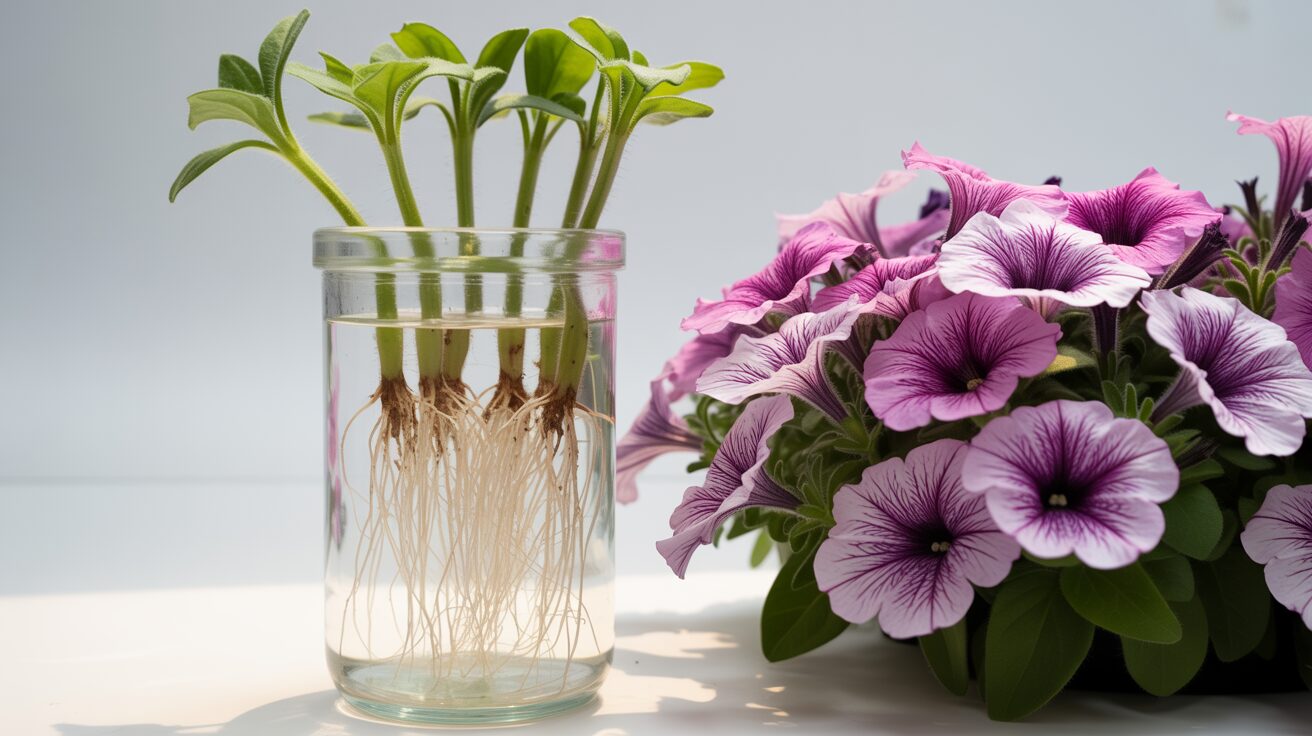
Taking cuttings is the easiest way to get free petunias for next year. It works in fall or spring. Take cuttings in late summer or early fall.
- Choose a healthy plant. Snip 4 to 6 inch stems. Remove the lower leaves. Leave 2 to 3 leaves at the top.
- Place the cuttings in a glass of water. Use room temperature water. Put the glass in a bright spot, but out of direct sunlight. Change the water every few days.
- Roots will appear in 2 to 3 weeks. You will see small white roots growing from the cut end. Wait until the roots are 1 to 2 inches long.
- Plant the rooted cuttings in small pots. Fill a pot with potting mix. Plant the cutting at the same depth it was in the water. Water lightly.
- Keep the new plants indoors over winter. Place them in a sunny window. Water when the top inch of soil feels dry. In spring, move them back outside.
For more propagation tips, see propagating basil and propagating mint.
How to Grow Petunias from Seed Indoors (Step-by-Step)
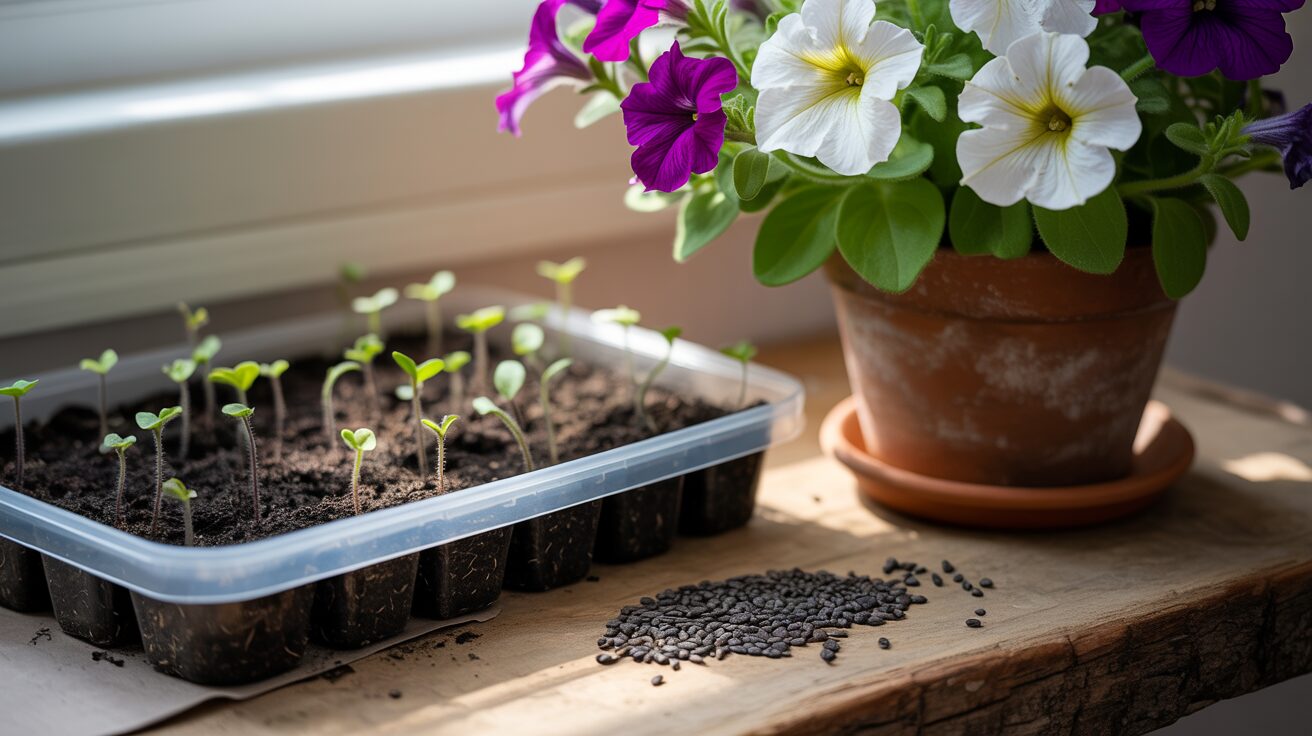
Start seeds 10 to 12 weeks before the last frost. In most areas, this is January or February. Mark your calendar.
- Fill a seedling tray with seed starting mix. Moisten the mix. Do not use garden soil.
- Sow seeds on the surface. Petunia seeds are tiny. They need light to germinate. Do not cover them with soil. Press them gently into the mix.
- Mist with water. Use a spray bottle. Keep the soil moist but not soaking wet. Cover the tray with a plastic dome or plastic wrap to retain humidity.
- Provide warmth. Place the tray in a warm spot (70°F to 75°F / 21°C to 24°C). A heat mat speeds up germination.
- Provide light immediately. Petunia seeds need light to sprout. Place the tray under **grow lights** or in a bright window. Keep lights on for 12 to 14 hours daily.
Germination takes 7 to 14 days. Be patient. Once sprouts appear, remove the plastic cover. Transplant seedlings when they have 2 to 3 true leaves. Move them into small pots filled with potting mix. Handle them gently by the leaves, not the stems.
Harden off before moving outdoors. For one week, place seedlings outside for a few hours each day. Gradually increase the time. Then transplant into garden beds or hanging baskets.
How to Save Petunia Seeds for Next Year
Saving seeds is another way to get free plants. However, petunia seeds are tiny. They require patience.
- Let some flowers go to seed. Stop deadheading a few flowers at the end of the season. Leave them on the plant.
- Wait for the seed pod to turn brown and dry. The pod forms behind the flower. It will turn brown and crack open. This takes several weeks.
- Harvest on a dry day. Pick the brown pods. Put them in a paper bag. Do not use plastic. Plastic traps moisture and causes mold.
- Let the pods dry further. Leave the bag open in a dry, warm room for another week. The pods will crack open on their own.
- Separate the seeds from the pod pieces. Petunia seeds are tiny and dark. They look like specks of black pepper. Discard any debris.
- Store seeds in a paper envelope. Label it with "Petunia" and the year. Keep the envelope in a cool, dark, dry place. A drawer works well.
Sow seeds indoors 10 to 12 weeks before the last frost. Petunia seeds need light to germinate. Sprinkle them on the surface of seed starting mix. Do not cover them. Press them gently into the soil. Keep the soil moist.
For more on seed starting, see house plants from seeds.
Frequently Asked Questions About Petunias Care
Do petunias like sun or shade?
Petunias love full sun. They need at least 6 hours of direct sunlight daily. In partial shade, they will grow but produce fewer flowers. In deep shade, they will not bloom well.
How long do petunias last?
Petunias are annuals in most climates. They bloom from spring until the first frost in fall. That is 4 to 5 months in many areas. In warm climates (zones 10-11), they can grow as perennials and last for years.
How often should I water petunias?
Water when the top inch of soil feels dry. In summer, this may be every day for hanging baskets. In garden beds, every 2 to 3 days is typical. Always check the soil before watering. Do not water on a fixed schedule.
How long do petunias last in pots?
With proper care, petunias in pots last from spring until fall frost. Regular watering, fertilizing, and deadheading keep them blooming. If they become leggy in mid-summer, give them a "mid-season chop." They will regrow and bloom again.
Quick Summary Tips for Petunias
- Fertilize regularly. Petunias are heavy feeders. If you skip fertilizer, the flowers will slow down. Use a liquid fertilizer every 1 to 2 weeks. Your plants will reward you with nonstop color.
- Do not be afraid to cut back. Leggy petunias are fixable. Give them a "mid-season chop." Cut them back by one-third. Water and fertilize. Within 2 weeks, they will be full and blooming again.
- Check hanging baskets daily. They dry out fast. On hot days, they may need water twice a day. Stick your finger in the soil. If it is dry, water. Do not guess.
If you are just starting your flower gardening journey, read my full guide on how to start urban gardening . It covers soil, containers, watering, and everything else a beginner needs.
And if you love annual flowers, try caring for marigolds or nasturtium care next.
Share Your Petunia Questions & Success Below!
I have two small asks for you before you head out to trim your flowers:
- First, drop a comment below. What is your primary struggle with petunias care right now? Are your hanging baskets drying out too fast, or are tobacco budworms destroying your flower buds? Let me know your current garden setup—I personally reply to every comment within 48 hours to help you troubleshoot.
- Second, save this guide for later. Pin our step-by-step petunia pruning chart to your favorite gardening Pinterest board, or share this link with a friend who wants to keep their porch baskets lush and beautiful until the first frost.
Now, grab your garden shears and give your plants a little extra love. Your petunias are ready to reward you with a spectacular explosion of color!
Happy gardening, friend!
Read next:
Last Updated on May 16, 2026 by Austine