
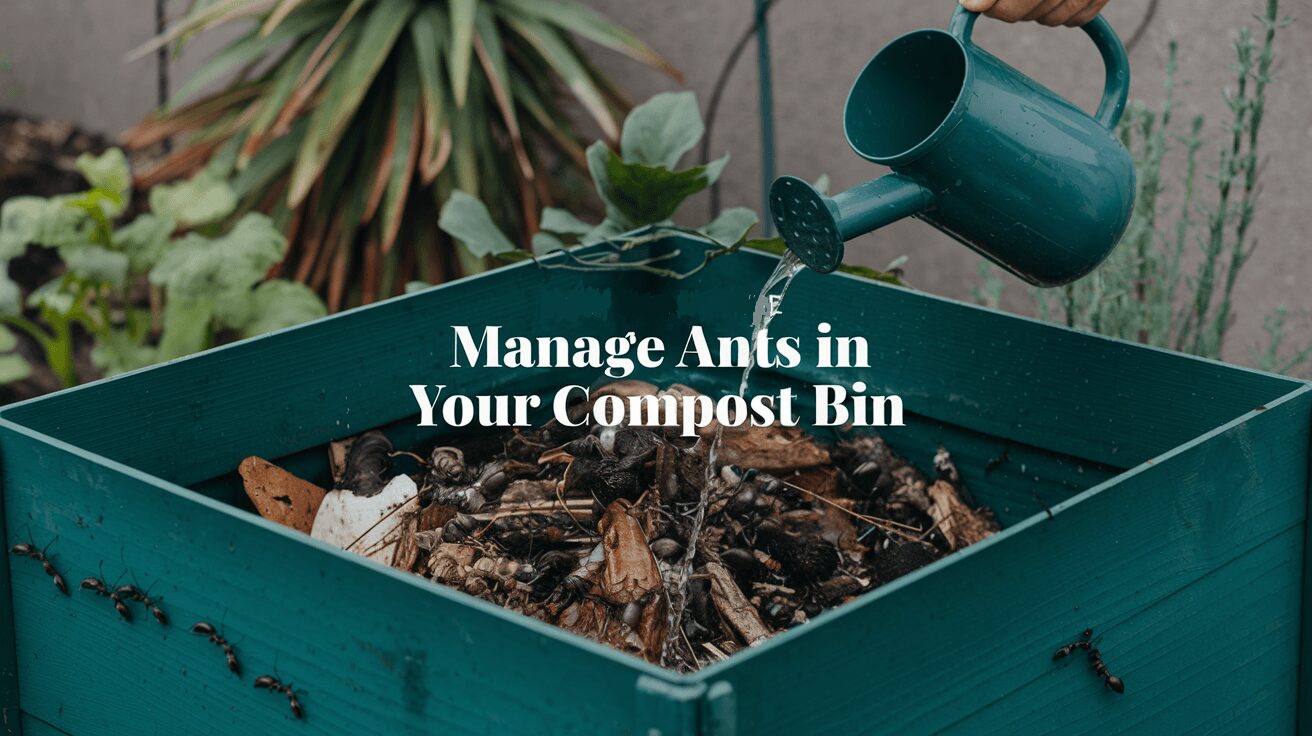
Ants in Compost Bin: What’s the Deal? Ever opened up your compost bin, ready to dump some food scraps, and been greeted by an army of ants? You’re not alone. I can’t count the number of times I’ve peeked into my compost bin, only to see tiny ants scurrying about like they’ve claimed it as their own. It’s one of those “What the heck is happening?” moments.
But here’s the thing: ants in your compost bin are actually pretty common. Some folks even say it’s a good thing. Others, well, they want to evict them ASAP.
So, what’s the deal with ants in compost? Let’s dive into why they show up, what you can do about them, and whether they’re friend or foe in the world of composting.
Why Are There Ants in Your Compost?
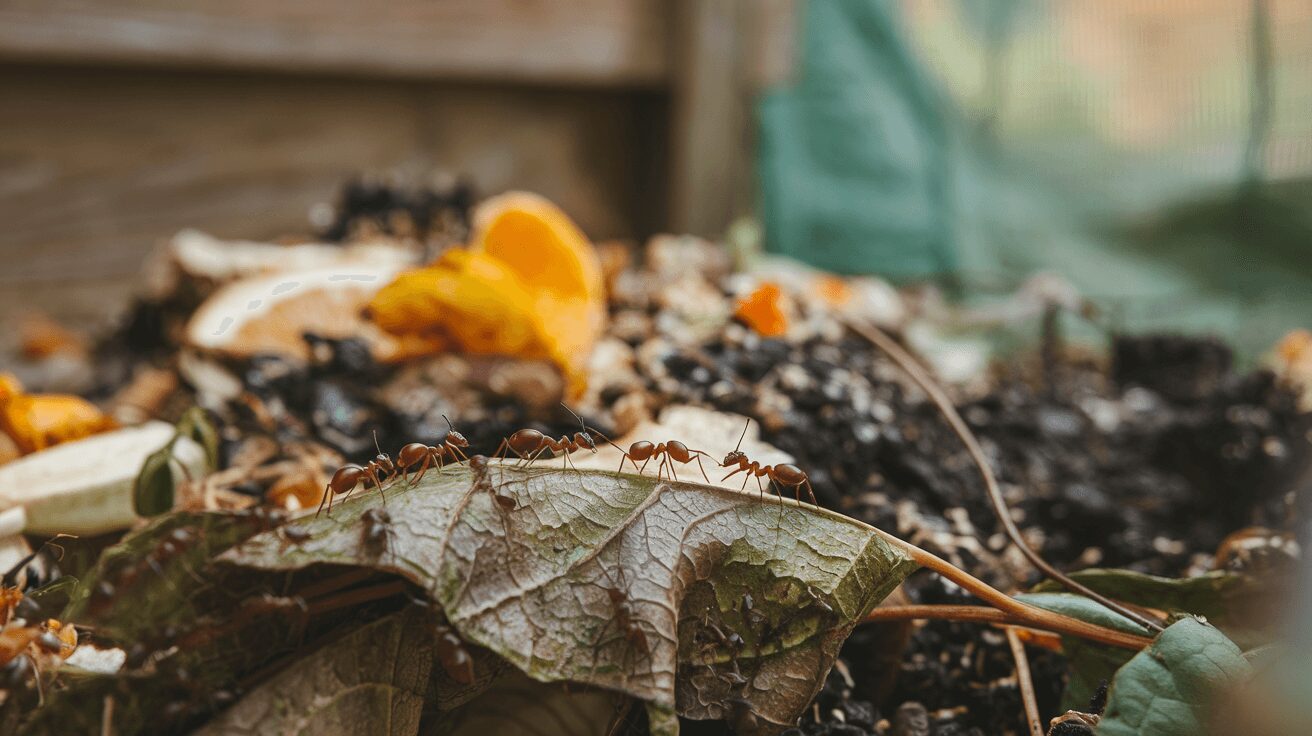
Ants are drawn to two main things: food and shelter. Your compost bin is practically a 5-star resort for them. It’s warm, full of decaying organic matter (a.k.a. food), and offers plenty of little spaces for them to build a cozy nest.
When my compost bin got its first ant infestation, I’ll admit, I was a little freaked out. Turns out, I had been doing too good a job keeping my compost dry. Yep, ants are especially attracted to dry, warm compost heaps. If your compost has dried out, they’ll set up camp faster than you can say, “What’s the point of composting?”
Moisture is key here. If your compost is too dry, you’re basically inviting ants in. When compost is the right level of damp, ants aren’t as interested—they prefer dry, crumbly environments.
Which Ants Are Good for Your Compost?
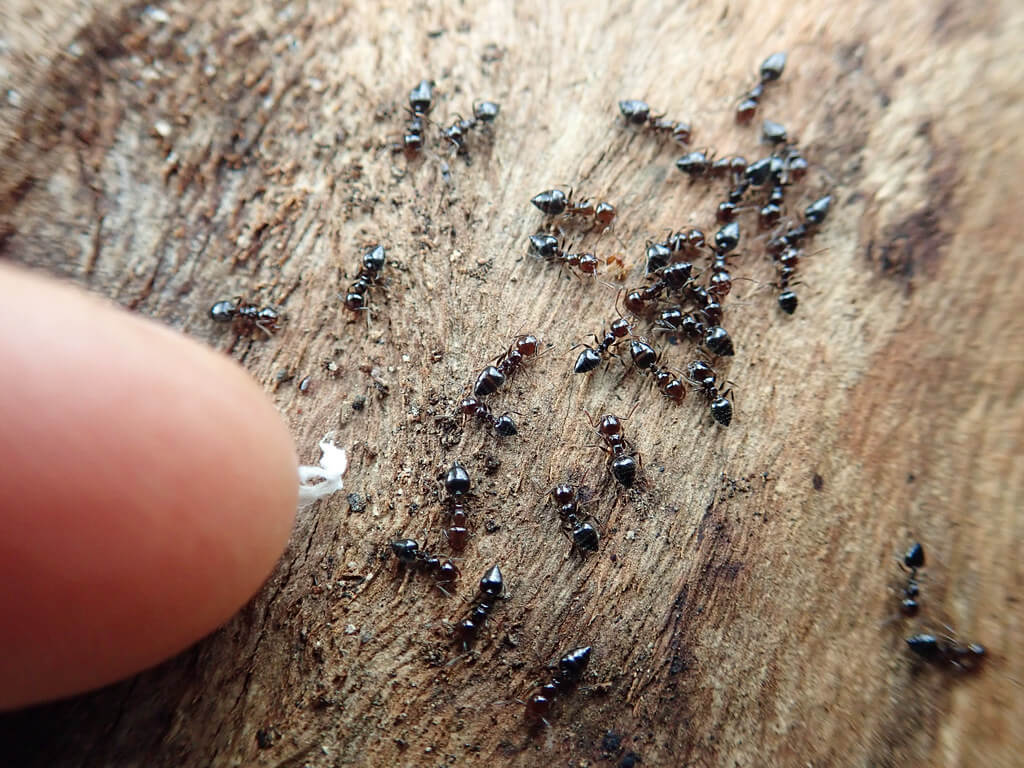
Source: Photo by Harry Rose
Let’s talk specifics. Black ants, or common garden ants, are the ants you’ll most likely find in your compost bin. These guys are pretty harmless and, as mentioned before, can actually help with decomposition.
They’re great at finding small food scraps and breaking them down. Plus, they aerate the compost by creating tunnels, which allows more oxygen in—a key factor for a healthy compost pile.
In my experience, black ants are fine to leave alone unless they’re multiplying out of control.
Read Next:
Which Ants Are Not Good for Your Compost?
On the flip side, fire ants and carpenter ants are not your friends. I once found a nest of fire ants in my compost, and let me tell you—it was not a fun day. Fire ants are aggressive little buggers, and if you disturb their nest, they will sting. And those stings hurt.
Carpenter ants, meanwhile, aren’t interested in your compost per se, but they could be using it as a staging area for an invasion of nearby wooden structures.
If you find carpenter ants, it’s worth taking action not just to save your compost, but also to prevent any damage to your home or shed.
Benefits of Having Ants in Your Compost
You might think ants are just a nuisance, but believe it or not, they can actually benefit your compost bin. Here’s how:
1. Natural Decomposers
- Ants speed up decomposition by breaking down small food scraps and organic material. They feed on food particles and waste, helping to break it down faster than microbes alone could.
- They act like mini-recyclers, especially with smaller pieces of food, contributing to a more efficient composting process.
2. Soil Aerators
- Ants naturally aerate the compost by digging tunnels through the pile. This constant movement allows for more oxygen to penetrate the compost, which is essential for aerobic decomposition.
- More oxygen means your compost can break down faster, reducing the time it takes to convert scraps into rich, dark compost.
3. Control Over Other Pests
- In some cases, ants can deter other pests that are harmful to your compost, like fruit flies and maggots. While they’re not a perfect solution to all pest problems, their presence can help to keep certain infestations in check.
- Ants may also eat eggs or larvae from other insects, which can reduce the population of more harmful pests in your bin.
4. Speeding Up Nitrogen Cycle
- Ants aid in nitrogen cycling. As they eat organic matter and their waste is decomposed, it adds nitrogen to the compost, making it richer and more balanced. This is a natural part of the composting process that helps balance carbon-to-nitrogen ratios.
5. Non-Destructive Workers
- Unlike larger pests like rodents or raccoons, ants aren’t destructive to your compost bin or pile. They work quietly in the background, and unless they’re a specific problematic species, they won’t damage the structure or integrity of your compost setup.
The next time you see ants in your compost, consider if they’re really doing harm. For the most part, they’re helpful workers!
How To Identify Ants in Your Compost
Not all ants are created equal. Knowing which ants are in your compost will help you decide how to handle them. Here’s a step-by-step guide to identifying the most common types of ants you’ll encounter in your compost bin:
1. Black Ants (Garden Ants)
- Appearance: Small (around 2-3 mm), black or very dark brown.
- Behavior: These ants are harmless, often found around gardens and compost heaps. They’re typically non-aggressive and work quietly to help with aeration and decomposition.
- Good or bad: Good for your compost—they help speed up the breakdown of organic matter.
2. Pavement Ants
- Appearance: Dark brown or black, similar in size to garden ants (2-3 mm).
- Behavior: Pavement ants often set up colonies under stones, slabs, or even in cracks near your compost bin. They’re non-aggressive but can swarm in large numbers.
- Good or bad: Neutral—they won’t do much harm to your compost but can be a nuisance if they’re too many.
3. Carpenter Ants
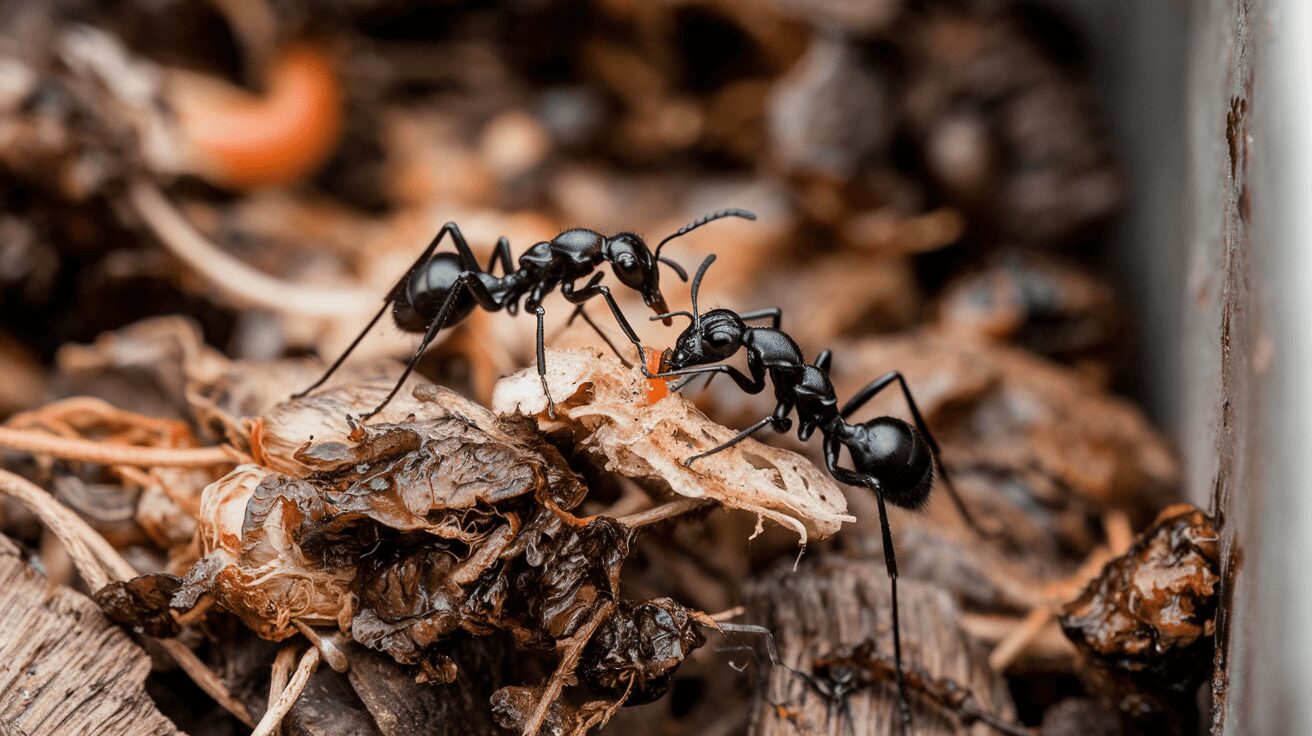
- Appearance: Large ants, typically black or reddish-black. They can grow up to 12 mm (half an inch).
- Behavior: These ants are more interested in wood than compost. If you see them in your bin, they’re likely nesting nearby in wooden structures, like a garden shed or fence.
- Good or bad: Bad, but not because of the compost. They can damage wooden structures around your bin by hollowing out wood to create nests.
4. Odorous House Ants
- Appearance: Small, brown or black, around 2-3 mm.
- Behavior: When crushed, these ants release a foul odor. They’re usually drawn to sweet foods and may infest your compost if there’s too much sugary content.
- Good or bad: Bad if they become too numerous or invade indoor spaces. But in small numbers, they won’t hurt your composting process.
5. Red Ants (Fire Ants)
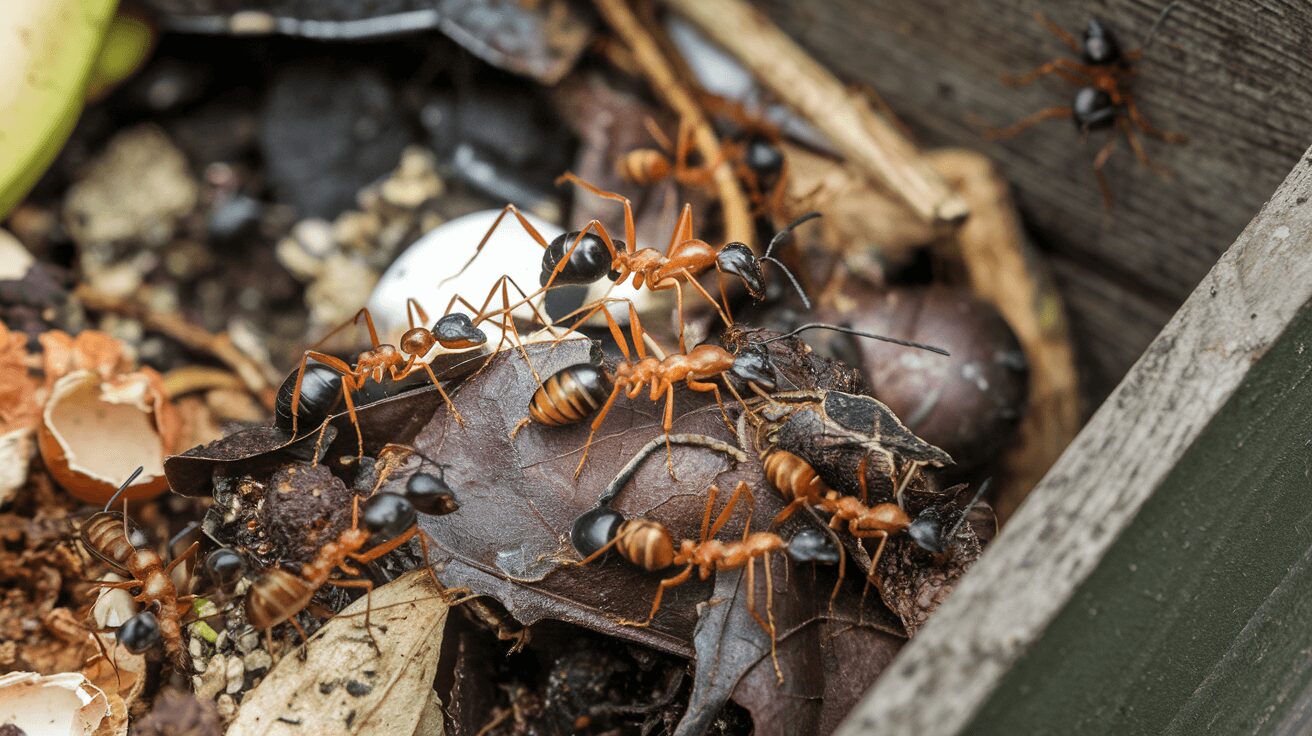
- Appearance: Reddish-brown, slightly larger than black ants (around 3-5 mm).
- Behavior: Fire ants are aggressive and can sting when disturbed. If they’re nesting in your compost bin, they might become a painful problem when you’re working in the bin.
- Good or bad: Bad, especially if you’re composting in an area where you need regular access. Fire ants can also harm beneficial insects.
Read Next:
How to Get Rid of Ants in Compost Bin
If you’ve decided the ants are too much or they’re the wrong type (like fire ants), here’s a practical step-by-step guide to removing them:
1. Turn the Compost Regularly
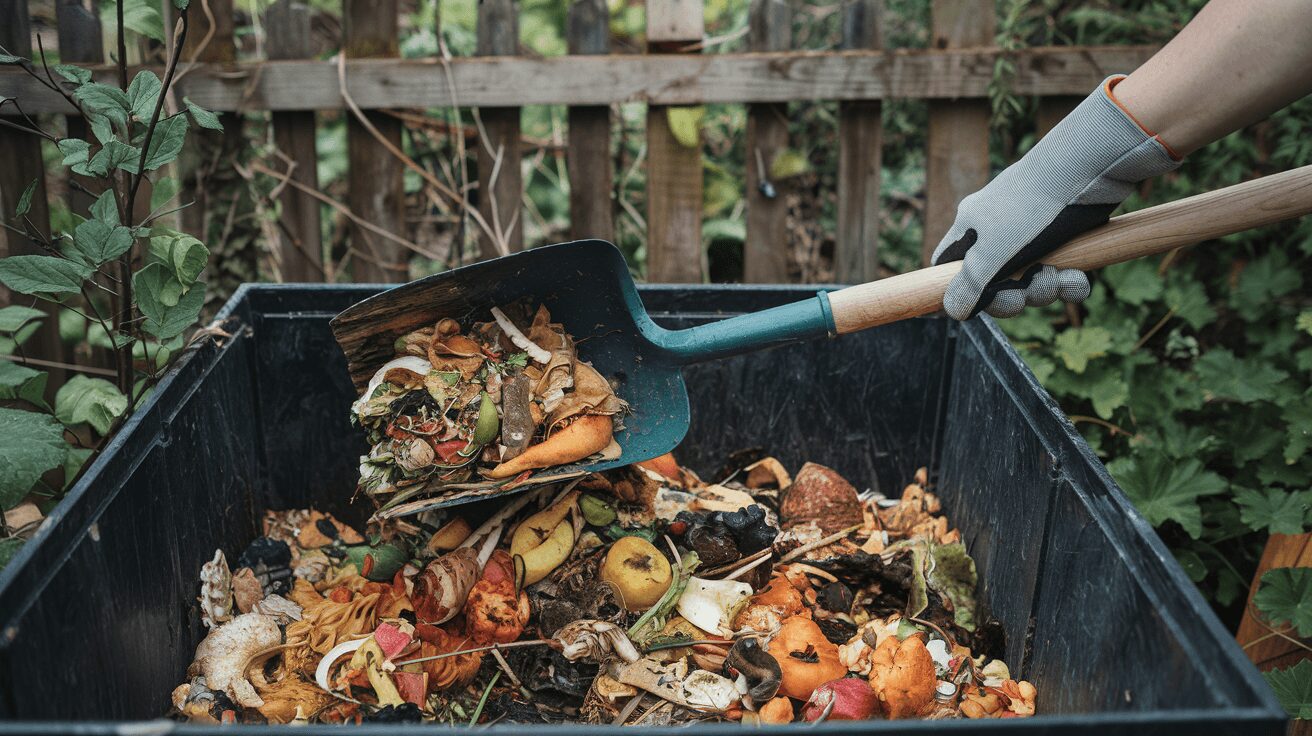
- Why it works: Ants thrive in undisturbed environments. By turning your compost every few days, you’ll disrupt their nests and make the compost less appealing.
- How to do it: Use a pitchfork or compost turner to flip the materials in your compost bin, bringing the bottom to the top. Ants will leave when their environment is disturbed too frequently.
2. Moisten the Compost
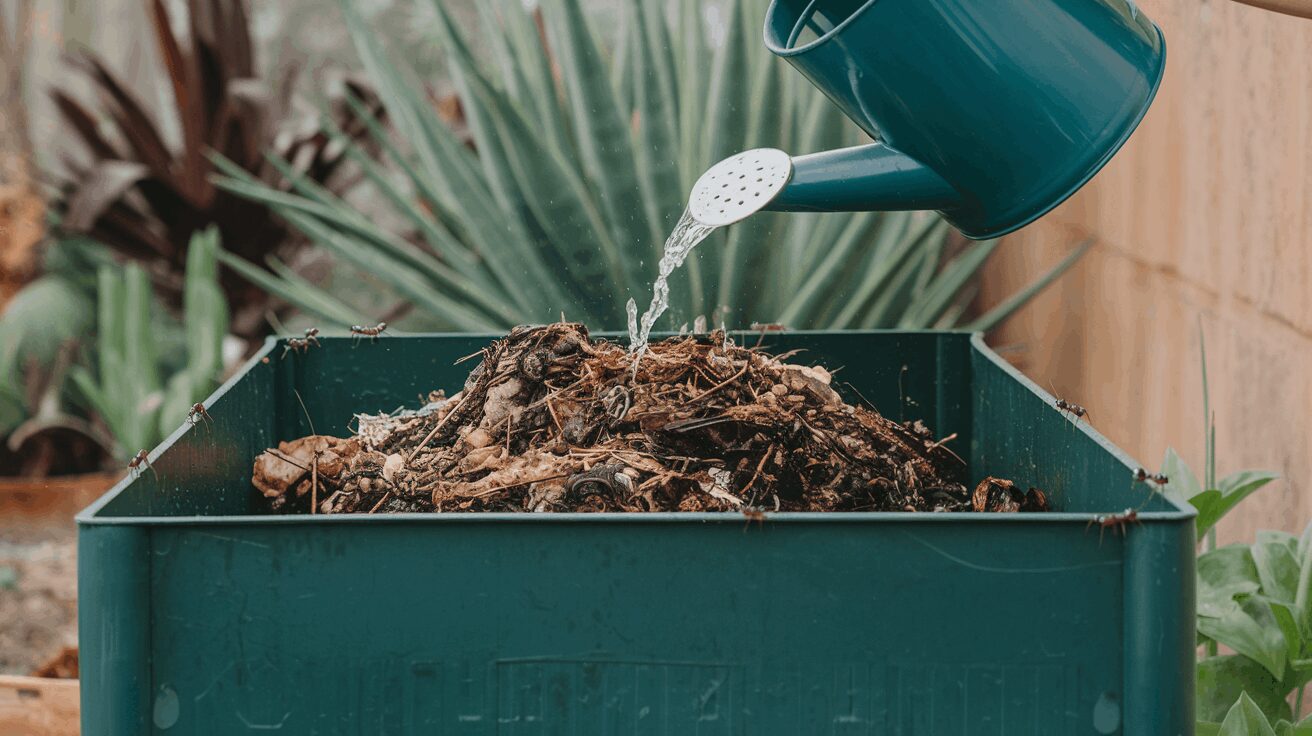
- Why it works: Ants love dry environments. Compost should be damp, not dry or soggy, to discourage ants from nesting.
- How to do it: Use a hose or watering can to add water to your compost. Aim for a texture like a wrung-out sponge. Turn the compost after watering to ensure the moisture is evenly distributed. Do this every few days if the pile tends to dry out quickly.
3. Use Natural Repellents
- Why it works: Certain natural repellents like coffee grounds, cinnamon, and citrus peels are unappealing to ants.
- How to do it: Spread a thin layer of used coffee grounds, cinnamon, or crushed citrus peels around the top of the compost bin. These won’t harm your compost and can help repel ants.
4. Create a Physical Barrier
- Why it works: A simple way to keep ants out is to block their access.
- How to do it: Place a line of diatomaceous earth, ash, or sand around the base of your compost bin. You can also put your bin on bricks or a platform to create a barrier underneath.
5. Ant Bait or Traps (For Fire Ants or Severe Infestations)
- Why it works: Ant baits attract ants, which then carry the poison back to the colony. This can eliminate the entire nest.
- How to do it: Place ant bait stations around the outside of your compost bin. Be cautious when using chemical traps or bait as these can harm beneficial insects if used improperly.
6. Diatomaceous Earth
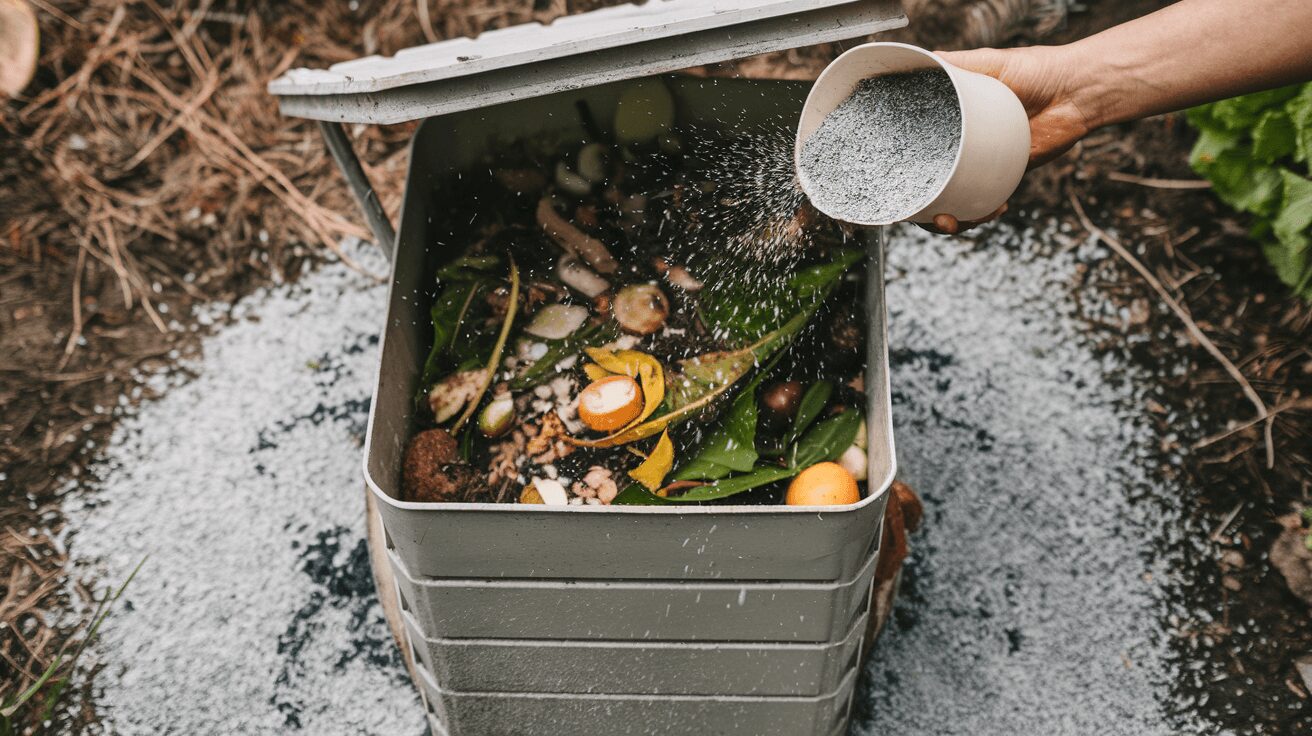
- Why it works: Diatomaceous earth is a natural powder that’s harmless to humans and pets but lethal to ants. It dehydrates ants by damaging their exoskeleton.
- How to do it: Sprinkle diatomaceous earth around the perimeter of the bin and lightly dust the top layer of compost. Reapply after turning or after heavy rain.
Related:
How To Prevent Ants in Your Compost
If you’re like me and prefer to avoid ant infestations in the first place, there are a few things you can do to prevent them from moving in.
- Keep Your Compost Moist: I cannot stress this enough! If your compost is properly moist, ants won’t stick around.
- Use a Lid or Cover: I keep a lid on my compost bin to maintain the moisture and prevent ants from getting too comfortable.
- Balance Your Greens and Browns: Too many “browns” (dry materials like leaves and twigs) can create a dry environment that ants love. Make sure you’re balancing them out with “greens” (wet materials like vegetable scraps).
- Choose the Right Spot for Your Compost: If possible, place your compost bin in a shady spot. This keeps it cooler and moister, which ants don’t like.
- Avoid Adding Sugary Food: While it’s okay to add some fruit, try not to overdo it with sweet, sugary scraps. Ants have a sweet tooth (or whatever ants have) and will swarm your compost if there’s too much sugary material. Also, you should limit the amount of fruits like watermelon, berries, and citrus. If you do add them, make sure they’re well-mixed into the pile and covered with other compost material.
The Time I Accidentally Created an Ant Colony
This is a bit embarrassing, but I once ignored my compost pile for way too long. I was busy, the weather was nice, and I just wasn’t thinking about it. When I finally checked in, it was like a scene from a horror movie—ants everywhere. Turns out, I had let it dry out completely and hadn’t turned it in weeks.
Lesson learned: compost doesn’t take care of itself! I had to spend the better part of a weekend rehydrating and turning the pile, sprinkling diatomaceous earth, and setting up natural barriers to keep the ants from coming back.
The good news? That mistake taught me a lot about what not to do.
Final Thoughts
Ants in your compost bin can be a blessing or a curse, depending on how you handle them. With a little moisture, regular turning, and maybe some natural deterrents like diatomaceous earth or coffee grounds, you can keep ants under control without too much hassle.
Remember, not all ants are bad, and in some cases, they’re actually helping your compost pile. But if you’re dealing with aggressive fire ants or carpenter ants, it’s time to take action.
Now that you know the ins and outs of managing ants in your compost bin, I encourage you to give some of these tips a try.
And hey, if you’ve got any tricks up your sleeve for dealing with ants, drop them in the comments! The more we share, the easier it gets to deal with these tiny invaders. Let’s keep that compost turning and those ants in check.
External Resources: For more gardening tips on ants in your compost bin, check out Garden Doctor and StonePost Gardens.
FAQ
Can ants in compost harm plants when using the compost in my garden?
Generally, ants in compost don't harm plants when you apply the compost to your garden. In fact, they help improve soil structure by aerating it. However, if aggressive ants (like fire ants) are present, they could pose a problem by disturbing roots or becoming a nuisance during gardening.
Is it okay to add food scraps with ants to my compost?
Yes, it's fine to add food scraps with ants to your compost. The ants will help break down the organic matter, speeding up decomposition. Just make sure to maintain a healthy balance of moisture to prevent an ant infestation.
How can I balance moisture in my compost bin to keep ants away?
Keeping your compost moist but not soggy is key. A good rule of thumb is to keep the compost pile as damp as a wrung-out sponge. You can achieve this by adding water or green materials (like vegetable scraps) when it becomes too dry and covering it during rain to avoid waterlogging.
Do ants affect the composting process in a worm bin?
Ants can compete with worms in a worm bin, especially if the environment becomes too dry. Since worms prefer moist conditions, it's important to maintain proper humidity levels in your worm bin. Adding more moisture will encourage the worms and drive ants away.
Should I worry about ants spreading disease through compost?
Generally, ants are not known to spread disease in compost piles. They are more of an indicator that your compost may be too dry. However, you should still manage pest levels to avoid an imbalance and ensure your compost remains healthy.
Preventing ants is very simple. These ants come in search of food. Best is to keep the place clean. Maybe once in a while doing a pest control service will keep all the insects away.